 Last update date:



Quick Summary :-
Here are the 28 most significant software development trends that you must know are listed below. AI and cloud native systems and immersive technologies that are defining the future of software.In 2026 software development has become most dynamic. Automation and cloud-native technologies have become the force multipliers for developers, organisations, and technology leaders. Along with security, speed and innovation are the pillars for all strategics that are made today.
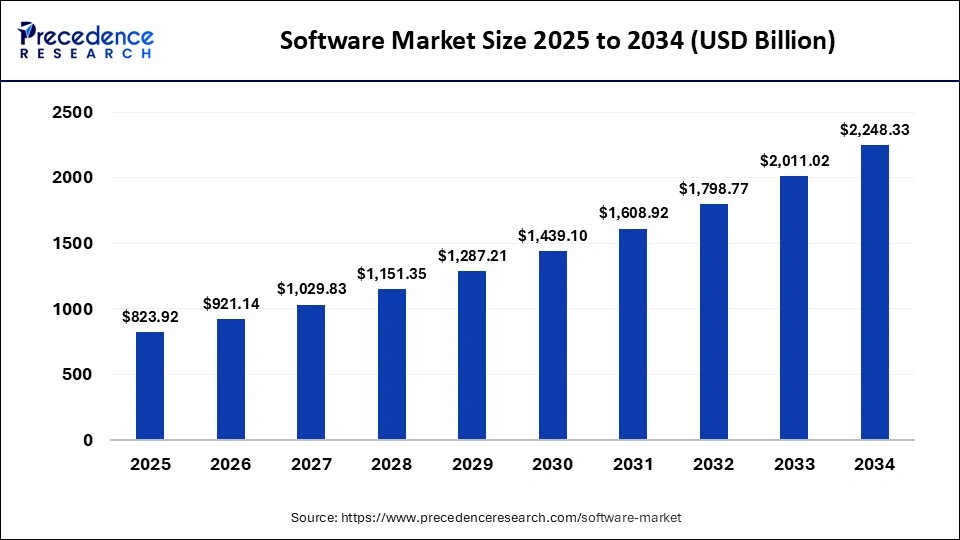
Software development is evolving as organizations adopt AI-based solutions to improve delivery efficiency and embed DevSecOps practices across the development lifecycle. The global software market is projected to reach USD 2,248.33 billion by 2034 growing at a CAGR of 11.8 % highlighting why tracking software development trends in 2026 is essential for informed planning.
28 Latest Software Development Trends
Understand the latest software development trends guiding modern enterprises toward smarter workflows, stronger security and future-ready digital transformation strategies.
1. The AI-led Development: Code to Production
AI is transforming all areas of the software development lifecycle, such as code writing, testing, deployment and monitoring. By 2026, machine learning-powered tools will lead to productivity and reduce human error and will deliver faster. AI forms one of the pillars of modern Software development processes.
Why AI will take over software development in 2026:
- Codes and debugs automatically.
- Increases predictive error detection.
- Faster release cycles, based on smart automation.
- Adapt software solutions to a customer.
- Powers are smarter and make predictive decisions.
- Savings on costs can be achieved through resource optimisation.
- Enhances consumer experience through AI-based capabilities.
2. The Low-Code & No-Code Takeover
The evolution of low-code and no-code development is witnessing the revolution of developing applications by professionals and non-technical users. It is also decreasing delivery time, cost decrease, and maximizing industry innovation in 2026.
Low-code and no-code are defining development in 2026:
- Empower non business users to actively contribute to development
- Rapid prototyping
- Limit development cost
- Offer drag and drop ease with integrations
- Close the gap between business and IT
- Support instant scaling of business solutions.
3. Python & JavaScript Still Reign
Python and JavaScript dominate the software market despite of new software languages. By 2026, they will also become indispensable to developers due to their flexibility, learnability and ecosystems.
Why Python Stays Relevant:
- Applied to Artificial Intelligence, machine learning and robotisation.
- Novice-oriented and non-programmer-oriented.
- Has a large library ecosystem (e.g. TensorFlow, Pandas, Flask)
- Helps in the creation of web, desktop and server-side software.
- Trusted by industry leaders like Google and NASA.
JavaScript keeps the Web:
- The front-end Frameworks like React, Angular and Vue are supported by the language.
- Full stack support in Node.js.
- Inspirers Netflix, PayPal and Uber.
- Great contribution for hybrid and mobile apps.
- Everytime evolving and changing with times.
4. Rust, Go & Kotlin on the Rise
Rust, Golang and Kotlin are safe, efficient and fast. The software in future is assuming to shape and become popular in businesses.
Why They Matter in 2026:
- Rust: Performance and safety is cost effective, safe and performance-intensive applications.
- Go (Golang): Go applications are concurrent, scalable, and cloud-native, and are simple.
- Kotlin: Less code, more productivity and good for Android and cross-platform apps
- These are well developed, and are increasingly finding industry acceptance.
5. React Native: The Hybrid Superstar
React Native is a mobile application development platform that is used by startups and big organisations. It has the power to offer native-style performance when executing on a cross-platform with the same codebase.
The key advantages of React Native are:
- Android and iOS use the same codebase.
- Faster time to development and low cost.
- Quality Software integration with the device and plugins.
- Native such as UX, performance.
- With an active developer community.
- Relied upon by big corporations like Facebook and Instagram.
6. Microservices: The foundation of Scalability in apps
Microservices is a software design approach that emphasizes modularity, where each functionality performs a particular task and in so doing, the applications are easier to develop, scale and maintain.
Why Microservices Matter in 2026:
- Helps to deploy more quickly through autonomous service updates.
- Good with DevOps and Agile environments.
- Failure of a single module to withstand fault tolerations
- Demand is scaling without the other services.
- Enables teams to roll out multiple technology stacks on different components.
- Increases innovation and time-to-marketing.
- Minimizes complexity of system via service logic.
7. DevSecOps: Security Built In
Security is no longer an add-on; it is part of the entire development. DevSecOps incorporates security into DevOps CI/CD pipelines in a non-obtrusive manner to achieve compliance and reduce risk without decelerating delivery.
Why DevSecOps will be Necessary in 2026:
- Shifts security left: Determines threats at an earlier stage of the development pipeline.
- Accelerates compliance: Complying in real-time with governance and regulatory requirements.
- Minimises the risk of breach: Integrates automated security checks into CI/CD processes.
- Brings to life modern cloud-native environments: Compatible with AWS, Azure, and Google Cloud.
- Empowers cross-functional teams: Developers, security and ops all operate together.
- Employs real-time monitoring: Reduces the response time to threats.

Mordor Intelligence report projects the global DevSecOps market to reach USD 25.77 billion by 2030 growing at a CAGR of 23.65%.
8. The Rise of Cloud-Native Architecture
Cloud-native architecture design helps modern businesses to simplify their operations, minimise latency and deploy applications that are close to users. Distributed cloud allows services to be executed in multiple place and yet be centralised.
Why It Matters:
- Brings the power of the public cloud into on-prem and edge.
- Localises processing to support compliance and data residency.
- Increases the performance of the network by minimising the network delays.
- Decentralised deployment under centralised control.
- Grows demand across regions without difficulty.
- Allows accelerated delivery with containerised applications such as Kubernetes.
9. Blockchain Beyond Crypto
Blockchain Development is not about cryptocurrencies anymore, it is reinventing software approaches to trust, security and transparency. It is now being used in real-world cases by developers in industries.
Why is Blockchain important in software development?
- Decentralized structure does not have single points of failure.
- Records that cannot be tampered with are guaranteed to be secure and verifiable.
- Smart contracts enforce business logic and are automated.
- Healthcare, logistics, media, and legal tech Cross-industry applications.
- Blockchain developers will be in high demand in the year 2026 and onwards.
- Data that cannot be changed increases audit and compliance.
10. Internet of Things: Smart Powering of Everything
Internet of Things is still finding its way into homes, cars, and offices with even smarter and interconnected systems that are truly responsive. Its ability to drive efficient and data-driven operations makes it one of the best skills of a modern developer.
Key Highlights:
- More than 40.6 billion IoT devices will be in operation by 2034
- Consumer application into healthcare, agriculture, logistics and manufacturing.
Popular uses are:
- Smart meters to monitor energy in real time.
- Vital signs with wearables in healthcare.
- Smart cars that are efficient at directions and the road.
- Predictive maintenance of smart factories with sensors.
- IoT tags to track the supply chain assets.
11. CI/CD: Speed at Scale with Automation
CI/CD is the staple of modern software engineering. The 2026 pipelines enable businesses to stay competitive in the quickly changing digital world by automating, releasing faster, and creating fewer errors and not being limited to scaling.
Why CI/CD is critical in 2026:
- Accelerates the delivery of software through automation of the Software testing and deployment.
- Minimizes the degree of human error by way of repeatable and reliable pipelines.
- Enhances the partnership between the development and operations teams.
- Provides faster feedback loops to become better.
- Improves the quality and safety of the software by means of automatic checks.
- Supports customer scaling in a short period.
- Maintains agile and DevOps empowered environments.
12. PWAs Are Getting Smarter
Progressive Web Apps are functional and also provide businesses with a low-cost alternative to native applications. PWAs are emerging as the most frequently used application to open applications quickly, reliably, and conveniently.
Why PWAs Matter in 2026:
- The market of PWA is estimated to reach 10.44 billion dollars in 2027.
- Applied to Pinterest, Adobe and Twitter.
- Ideal for mobile-first users.
Key Benefits of PWAs:
- Offline Access: It can be accessed even when the internet is not stable.
- Push Notifications: Remind customers of their return like the native applications.
- Hardware Access: GPS, camera etc.
- Multi-Platform: Web, desktop and mobile operating on the same codebase.
13. Cybersecurity Becomes a Priority
With the increasing sophistication and scale of digital threats, cybersecurity has become not a response to a threat, but an aspect of software development. Organisations are currently integrating digital immunity in their systems at the point of inception.
The Reason Cybersecurity has become a Development Focus:
- Talent shortages: More than three out of five companies have trouble recruiting and retaining qualified cybersecurity experts.
- Digital immune systems: AI and automation-based structures sense, react and repair themselves in real-time.
- Shift-left resiliency: DevSecOps is the integration of security into development pipelines.
- Expensive breaches: One cyberattack is likely to result in millions of dollars and a lost reputation.
- Smart tools: Small teams can afford to gain access to massive infrastructures using enterprise-grade tools.
- Continuous validation: Chaos engineering and autonomous testing are used to verify that systems can withstand real-world stresses.

The global AI in cybersecurity market is projected to reach USD 163.0 billion by 2033 growing at a CAGR of 22.3% reflecting increased investment in automated threat detection.
14. The Rise of AutoML and ML-Embedded Software
Machine learning is accessible like never before. AutoML and embedded ML are changing the way intelligent systems are developed, as manual scripting can be substituted with an automated and scalable solution.
Key Advantages:
- Accelerated model development: AutoML automates preprocessing, model selection and tuning.
- Better automation: Bots are now able to make decisions rather than merely repeat the action.
- Scalability of the enterprise: ML- based automation can easily process large volumes of work.
- Self-learning systems: The Model is constantly refined with new information.
- Cross-platform integration: Integrates natively in web, mobile and enterprise applications.
- Business efficiency: Automates business processes, which saves money and reduces manual errors.
15. Edge computing leads the way
As data processing gets closer to its source, edge computing is making faster and more secure and real-time applications possible. Together with 5G, it is becoming part of the contemporary software teams.
Important Benefits of Edge Computing:
- Real-time responsiveness at ultra-low latency.
- Better privacy of the data by local processing.
- Less bandwidth consumption and less dependency on the cloud.
- IoT heavy and high frequency scaling.
- Distributed computing node resilience.
- Pivotal to 5G integration, AR/VR and industrial automation.
16. 5G Unlocks Real-Time Dev Possibilities
The 5G rollout around the globe is transforming the software-physical relationship. Real-time development is the new standard with ultra-low latency and superfast data transfer.
Why 5G matters in software development:
- Provides real-time performance with almost instantaneous data transfer.
- Connects the IoT with trusted, low-latency connectivity.
- Allows working remotely and mobile-first at scale.
- Increases AR/VR and live streaming and edge computing potentials.
- Prepares smart cities, autonomous cars and Industry 4.0 apps.
17. UX-Driven Software: Function Meets Emotion
The UX motivated software is concerned with the experience of using it. By 2026, emotional appeal will be performance-based based on the design choices that are informed by UX.
Key Focus Areas:
- Emotional Intelligent Interfaces – Applications have now become attuned to their behavior, tone and preference.
- Three-D UI Elements – AR, VR, and 360 are not overused and do not bombard the user.
- Design-Accessibility-First – All-Inclusive UX All users including those with disabilities will have a smooth experience.
- Microinteractions & animation – Smart animation makes usability and a good touch.
- Individual User Experiences – Customization applies data to build greater product loyalty and engagement.
- Minimalistic Functional Layouts – Simple interfaces that are clear and easy to use are winning over graphical interfaces.
18. The API Economy Keeps Booming
Modern, scalable applications are now powered by APIs. The current software environment is not about tools; APIs are about business enablers.
Key Highlights:
- RESTful APIs are based on well proven HTTP protocols
- Client-server model enhances portability and code separation.
- Cacheable responses improve performance.
- Standardized interfaces are predictable and easy to develop with.
- Layered architecture enhances stability, flexibility and resilience.
- REST APIs shows simple, scalable and fast.
19. Distributed Development Teams Are the New Normal
Remote and hybrid work has changed forever how software developers work. Distributed teams are not an exception, they have become the paradigm of scaling productivity and innovation across the world.
Key Drivers of This Trend:
- Facilitates access to talent around the world without relocation.
- Increases productivity based on asynchronous workflows.
- Cuts down on the cost of doing business to firms.
- Gives more flexibility to developers and engineers.
- Backed by the collaboration tools such as GitHub, Slack, and Zoom.
- Enhances business continuity and resiliency of disasters.
- Promotes round-the-clock development cycles in the region.
20. Mobile-First Remains King
Businesses are becoming more mobile-first because users expect to have seamless interactions across all devices in real time. The concept of dual-speed development is no longer considered relevant, but instead mobile-first models are being built, where agility is put first.
Why the software development trends of 2026 are being mobile-first:
- Suits well with time requirements of the user.
- Reduces the time to market with specific design and development.
- Gives better performance even in low bandwidth networks.
- Improves the SEO, experience and conversion of any industry.
- Important on progressive web apps and hybrid frameworks.
- Enables more cross-platform compatibility at an earlier stage of the design.
21. Quantum Computing: From Theory to Pilot
Quantum computing is leaving the research laboratories behind and moving to pilot projects. It is breaking new ground in science, security, and enterprise invention by tackling problems too complicated to be done with classical machines.
Key Highlights:
- Unprecedented speeds that are not attainable by traditional computers.
- Best at optimization, cryptography, and complicated simulations.
- Pushing drug discovery, climate modeling, and AI training.
- Tech champions (IBM, Google, Microsoft, Amazon) spending lots on pilots.
- Applications: quantum-secure communication, risk modeling (early).
- Increasing interest in Quantum-as-a-Service (QaaS) in the cloud ecosystems.
22. Predictive Analytics Will Power Smarter Apps
Predictive analytics is transforming applications make decisions based on historical data and machine learning to predict behaviours, risks and system requirements.
Why It Matters in 2026:
- Real-time insights to customise and target.
- Enhances the decision-making of enterprise software and SaaS solutions.
- Improves security through foresight of threats.
- Performs smart workload optimisation.
- Substitutes older batch solutions (e.g. Hadoop) with newer tools.
- Brings in ROI through identifying trends and future opportunities.
23. Infrastructure as Code (IaC) Adoption Accelerates
Infrastructure as Code is transforming the IT operations into a software-based management of infrastructure. Rather than manually configured setups, teams describe and supply environments using code-making delivery quicker, safer and more reliable.
Key Advantages of IaC:
- Provisioning of servers, containers and cloud resources is automated.
- Provides cross-environment consistency and repeatability.
- Eliminates manual procedures and human error.
- Enables the scalability of cloud-native.
- Increases agility through quick experimentation and deployments.
24. Digital Immune Systems: Building Resilient Code
The biologically inspired digital immune systems implement automation, observability, and resilience to identify and respond to, and recover in real time to cyber threats. These systems protect code, as well as guarantee the ability of code to retaliate.
Essential Building blocks that enable digital immunity:
- Autonomous Testing – Exposes vulnerability at the head of the pipeline.
- Chaos Engineering – simulates outages to find latent faults.
- Auto-Remediation – Automatic solutions are less time consuming.
- Observable – Surveys the conditions and actions of systems over time.
- Continuous Checking – Checks that the new code is not what creates low resilience.
Once such practices are incorporated into the development lifecycle, software that is not only functional, but also self-defending in nature can be created by teams.
25. FinOps & GreenOps: Smarter, Greener Development
FinOps will ensure the migration to the cloud is cost-effective, and GreenOps is designed with the goal to reduce the energy usage and carbon footprint and to make the technology business-worthy and sustainable.
Why FinOps and GreenOps are important in 2026:
- Helps organisations reduce unproductive cloud expenditure.
- Gives openness in terms of allocation and use of resources.
- Aligns engineering organizations with financial responsibility.
- Promotes environmentally friendly activities by using energy efficient codes and structures.
- Addresses the increased demand of consumers on sustainable digital products.
- Minimises the carbon emissions of the data centres and cloud usage.
- Develops a sustainability between profitability and the environment.
26. The Emergence of XOps (AIOps, MLOps, EverythingOps)
XOps is a hybrid of operational DevOps, AIOps, MLOps and SecOps. XOps can remove silos and offer AI-supported automation to allow organisations to develop software faster, safer and at scale.
Key Benefits of XOps in 2026:
- Better cross-domain and inter-team cooperation.
- Automated processes with the use of machine-learning and neural networks.
- Less release delay, less downtime.
- In-built security.
- Sensitivity to meet the market needs.
- Elastic and growth capable pipelines.
27. Web 3.0 & IoB: The Human-Centric Digital Frontier
Web 3.0 and Internet of Behaviour (IoB) are changing the way software talks to users. It integrate decentralised technology with behavioural data to enable apps to deliver personalised, predictive and privacy-conscious experiences.
Why This Trend Matters:
- Increased customisation by studying the behaviour of users on devices.
- Predictive UX, which is an app that personalises the responses in real-time.
- Increased customer loyalty by trips tailored to the customer.
- Frontend and Backend logic fully automated.
- Privacy balancing design.
- Strikes a balance between profitability and environmental responsibility.
28. Kubernetes: The Engine Behind Scalable Cloud-Native Apps
Kubernetes Development is emerging as the new standard of cloud-native development, and organisations are finding it easier to deploy, scale, and manage containerised applications. It is the 2026 standard of multi-cloud resiliency infrastructure.
The major advantages of Kubernetes in 2026:
- Operates on-demand in real time.
- Makes the best use of clouds in terms of resources.
- Supports a good multi-cloud and hybrid environment.
- Removes server administration and allows developers to get creative.
- Container runtimes and docking pipelines of CI/CD.
- Kubernetes is not a product, it is the machine behind which software is executed on a large-scale basis.
Frequently Asked Questions
What is the biggest 2026 software development trend?
The biggest trend of software development in 2026 is AI-based development. AI is not only transforming all the lifecycle but also by testing and deploying it automatically. It makes the delivery quicker, intelligent, and of superior quality, and therefore, the most powerful force in shaping the future of software engineering today.
What will programmers need to know in 2026?
Pay attention to the uptake of AI/ML, cloud-native projects such as Kubernetes and security-oriented projects such as DevSecOps. These are the competencies that keep you alive in a rapidly moving technical world.
What will be the fastest software development trends in 2026?
The fastest software trends includes:
- Artificial intelligence development algorithms.
- Kubernetes cloud native.
- Quick-service low-code / no-code.
- Improved cybersecurity through DevSecOps.
- Immersion-based technology (AR/VR) enterprise solutions.
Which software competencies will be in the highest demand?
These are the software, that are on highest demand:
- JavaScript and Rust and Python.
- DevOps, cloud knowledge.
- Data security competence and compliance.
- Reactive mobile-first U/UI.
- API-first development.
What is the future of software development?
The future of software is robotic and AI-based and must be:
- Further cross platform and hybrid development.
- Increase the performance with edge and cloud computing.
- Sustainability defining the architecture (GreenOps).
- Predictive analytics that leads to decisions.
- Reliance on customer design when designing each product.