
API Assessment
What's connectable, what isn't

- Enterprise integration architecture aligned with business needs
- Secure connectivity across essential business applications
- Experienced teams for complex integration environments
- Ongoing support for changing system requirements
30 minutes · no commitment · reply within 24 hours
WHAT YOU GET BEFORE YOU COMMIT
-
Days 1–3 ↗
-
Assess Fit ↗Integration TypesThe integration options we support
-
View List ↗Named SystemsThe systems we've actually connected
-
View Process ↗How We WorkThe framework behind how we deliver
-
Verify ↗AWS Advanced Tier PartnerVerified partner status with AWS
The argument
Integration Isn't Just a Project. It's an Ongoing Operation
This simple distinction is the key to whether your integration efforts pay off in the long run. A connection is not a one-off project that you check off your to-do list and forget about. It's an ongoing relationship with other systems that you don't control, and that can change at any time.
THE PROJECT MODEL
Built, handed over, forgotten
A lot of consultants approach integration in this way, they build the connections, test them out, document the work, and then hand it off to someone else. But the reality is that this model just isn't sustainable when systems are changing all the time and business requirements are getting more complex.
- Unexpected costs increase when scope changes or urgent maintenance becomes necessary
- Longer delivery timelines delay business value and place pressure on operations
- Custom solutions create technical debt and increase maintenance dependence
- Limited documentation leaves internal teams without enough implementation knowledge
- Uncontrolled API adjustments could lead to disruption of the whole system and processes
THE OPERATIONS MODEL
Built, monitored, adapted
In this approach, connections are always under active management after they go live. Always keeping an eye on performance, addressing vendor changes as they come up, and reporting issues before they have a chance to impact your dependent systems or business operations.
- Predictable monthly expenses can help avoid sudden invoices
- Established processes help teams deliver new integrations within shorter timelines
- Changes of vendors can be made without restarting the whole project
- Internal engineers remain focused on products instead of integration failures
- New systems can be added without rebuilding existing integrations
INTEGRATION TYPES
Choose Your Integration Route. We'll Get You There
These options are not just marketing categories. Each integration type contains unique engineering requirements, costs, dependencies, and failure risks. Select the option that best fits your environment or review the options in detail and understand the technical and operational requirements associated with each.
01

API Integration
2–4 weeksApplication Programming Interfaces (APIs) allow different programs to be integrated and communicate with one another. It’s a preferred method of integration where both systems have well-defined and stable APIs supported by the vendor. We build in a number of connection controls, including retry mechanisms, rate limiting, authentication refreshing, and idempotence.
- Direct application connectivity
- Real-time event exchange
- Controlled authentication renewal
- Production failure resilience
Best when: Both systems have modern REST or GraphQL APIs
Watch for: Rate limits and undocumented pagination
Scope it ↓
02

Enterprise Application Integration (EAI)
6–12 weeksIntegrate your systems using a common integration layer in order to ensure that data and transactions flow accurately between your accounting, HR, CRM, sales, and inventory systems. The main challenge with EAI is distinguishing which system “owns” which fields, along with maintaining conflicts.
- Central integration layer
- Cross-application transaction flow
- Business process connectivity
- Defined integration governance
Best when: Several core systems must share a common record
Watch for: Conflicting ownership of the same field
Scope it ↓
03

Legacy System Integration
8–16 weeksIntegrate legacy systems when a full replacement isn't possible. Typically, these systems store important business logic and data which can be significantly expensive, time consuming, and risky to move. When there are no available APIs, other options may include database access, file transfers, screen automation, and/or adapter layers.
- Existing process continuity
- Alternative connection methods
- Legacy environment assessment
- Modern application compatibility
Best when: Replacement is not currently practicale
Watch for: Limited documentation, missing vendors, or unavailable system knowledge
Scope it ↓
04

Cloud Integration
5–10 weeksIntegrate cloud applications with internal resources and on-premises systems in hybrid environments. The challenge usually is to move data securely from one system to another system with different access models and disparate infrastructures. In these cases we manage identity federation and secure data movement across environments, considering the legacy internal systems architecture.
- Hybrid infrastructure connectivity
- Cross-environment data exchange
- Identity federation support
- Controlled external access
Best when: Workloads are split across cloud and on-premise
Watch for: Identity controls and network boundaries
Scope it ↓
05

Business-to-Business (B2B) Integration
3–6 weeksAutomate interactions and transmission of documents between companies to connect systems including supplier ERP platforms, retail systems, and logistics applications to eliminate the processing of transaction documents, and increase transaction accuracy. B2B Integration requires coordination with another company who has control of the connection. Versioned interfaces assist in accommodating partner changes.
- Partner system connectivity
- Automated transaction processing
- Reduced manual intervention
- Controlled interface versions
Best when: Partner volume makes manual data exchange costly
Watch for: Limited control over the partner's release cycle
Scope it ↓
06

IoT and Device Integration
6–14 weeksEDI automates the exchange and processing of common documents such as invoices, purchase orders, and delivery notes. EDI helps trading partners receive documents in a reliable and consistent manner. EDI is used in many retail, logistics, healthcare, and other industries that have standardized transactions mapped to each individual trading partner.
- Standardized document exchange
- Trading partner connectivity
- Automated document handling
- Partner format support
Best when: Device data needs to trigger operational actions
Watch for: Data volume, connectivity gaps, and clock drift
Scope it ↓
07

Electronic Data Interchange (EDI)
5–10 weeksCreate integrations that allow tools or machines to transmit data to the relevant company systems via sensors and/or controllers. This creates a closed-loop system that allows the system to perform business functions based on machine data. Device integrations handle large data transfers, constant connectivity, and inconsistent time stamps.
- Device event processing
- Equipment data collection
- Operational system connectivity
- Buffered data transmission
Best when: A trading partner requires EDI
Watch for: Partner-specific variations within the same standard
Scope it ↓
08

Middleware and iPaaS Implementation
10–20 weeksConsider implementing middleware or an iPaaS solution when multiple connections are similar in their need for jointly performed routing, transformation, monitoring, or error handling. A service integration platform allows for the elimination of the same or similar logic in several integrations. We implement multiple middleware using MuleSoft, Boomi, Azure Logic Apps, Workato, and open source frameworks.
- Centralized integration management
- Reusable transformation logic
- Shared routing framework
- Central error handling
Best when: There are more than approximately 10 connections or complex many-to-many routing
Watch for: Licensing costs increasing faster than operational value
Scope it ↓
NAMED SYSTEMS
The Systems We've Actually Connected, and How Often
Most vendors say "CRM, ERP, and third-party applications." We describe the systems we actually connect and the number of integrations we have completed. This makes our experience credible. We will provide a reference for any system listed.
CRM and sales
- HubSpot 12
- Microsoft Dynamics 365 7
- Zoho CRM 5
- Zendesk Sell 17
- Pipedrive 4
ERP and finance
- NetSuite 11
- QuickBooks 9
- Oracle Fusion Cloud ERP 6
- Microsoft Dynamics ERP 4
- Xero 6
Payments and commerce
- Stripe 21
- Razorpay 7
- Shopify 14
- PayPal 8
- Adyen 4
Sector and legacy
- Epic (HL7 / FHIR) 9
- Snowflake 13
- Workday 4
- Legacy / bespoke 22
- EDI trading partners 15
If your system is not listed, we analyze your requirements and come up with a systematic evaluation. We won't just say we have the experience. We will point out the gap in our capabilities prior to the assessment and not after a few weeks of development.
WHAT ACTUALLY BREAKS
Failure Modes We Design for by Default
Integration failures rarely begin with the initial build. They often emerge months later as connected systems change, dependencies shift, and operational conditions evolve. These failure modes account for many incidents we are asked to address.
-
Silent Success
The trickiest failures can look like total success but really aren't. A sync might finish up and move hardly any data because a filter got changed or credentials expired, for example. Our monitoring is designed to spot the data that's missing, not just the error messages the system is reporting.
-
API Deprecation and Vendor Change
Vendors can change their APIs or authentication methods without much warning. We keep an eye on API versions and treat deprecation notices as part of our regular maintenance rather than an emergency. Our operations model means this sort of work gets done without breaking the bank, even when vendors do change things unexpectedly.
-
Rate Limiting Under Load
An integration might be working just fine till the system gets hit with a lot more requests than usual; at this point the connected system will start enforcing rate limits. We build in backoff, queuing and burst handling right from the start, and we document the rate limits in our runbook and test them against real-world production volumes.
-
Partial Failure and Inconsistent State
Transactions can fail in one system and succeed in another, leaving data in an inconsistent state. To provide transactional boundaries, we use compensating actions and run jobs that provide a means to identify the inconsistent data in order to give teams a clearly defined path to address it before problems escalate.
-
Duplicate Delivery
A request can succeed even when the response times out, which means a retry can end up creating a second copy of the same record. We use idempotency keys and deduplication windows to safeguard our write operations, and we have reconciliation jobs that check the source counts against the number of records delivered across all connected systems to catch any discrepancies.
-
Accountability Gaps Between Vendors
When there are multiple suppliers involved in an integration, it can get really tricky to work out who is responsible and how to fix things. We make sure there is one owner on our side and one on yours before we even go live, and we set up a clear escalation path to make sure incident resolution stays straightforward and accountable.
Dealing With One of These Risks?
Share the integration risk you're facing. We'll show you how we account for it in architecture, implementation, and ongoing operations.BEFORE YOU START
Why Integration Projects Go Wrong
Integration projects fail due to multiple factors. Some are attributable to technical choices. Others to planning or ownership. One factor is partner selection. We would like to make this risk visible to you early in the process so that you can evaluate it before making a decision.

Data silos with real reasons
Data silos are sometimes created by different departments for legitimate reasons including data integrity, accessibility, and compliance. Removing a silo without understanding its reason can introduce undocumented security, compliance and quality issues.

Nobody owns the outcome
It's common that different teams control multiple systems. So, allocating ownership and accountability when things fail becomes nearly impossible. Complex integrations involve system owners, vendors, and internal teams. Accountability must be agreed upon prior to work beginning.

The target keeps moving
Integration projects take time while connected systems continue to change. A long implementation can become outdated before launch when a new system version arrives or the underlying workflow changes.

Cost overruns and delays
Integration projects will go over budget more often when there are dependencies or scope creep from the system that hasn't been documented. An early technical assessment addresses these factors prior to significant work being done.

Legacy systems that resist
Older systems may lack the technical capabilities needed to connect with newer software. Updating them can require significant time and investment, making the existing system a practical constraint rather than a simple technical issue.

Reliance on a provider, including us
Relying on an external provider can create operational risk when consultants leave, urgent changes arise, or integration knowledge remains with a few individuals. Your team needs access to the information required to manage the integration.
INTEGRATION SCOPE
Integration Built Around Your Business, Not a Fixed Package
Integrating different systems always has unique data flows, security controls, and operational limitations. We focus on the work specific to your environment to recommend the right solution architecture and manage integrations from design through production. We explain our technical decisions throughout the process.
| Connection type | Best For | Delivery | What We Handle |
|---|---|---|---|
| Standard one-way | Modern API, single direction | 2–4 weeks | Includes field mapping, retry & backoff, monitoring, absence alerts and a runbook that lets your team tweak things without needing to call in the experts. |
| Bi-directional sync | Systems that exchange data | 5–10 weeks | Everything above plus, it'll handle conflicts, prevent loops and do some matching of records for review. |
| Legacy or bespoke system | No usable API | 8–16 weeks | We'll build an adapter layer to access the system using whatever access method is available database and we'll document the integration logic even if it hasn't been documented before. |
| Middleware or iPaaS platform | Multi-system environments | 10–20 weeks | Routing data, centralised monitoring, error handling and finally, migrating point-to-point connections to the chosen platform |
| EDI trading partner | Trading partners & supply chains | 5–10 weeks | Document mapping for the partner’s specific format, acknowledgement handling, and the testing process required before the connection goes live. |
| Integration assessment | Before implementation | 3 days | Every system will be catalogued; we'll assess the feasibility of the connections, make a clear go/no-go decision for each, and we'll tell you when it's not worth building. |
DUE DILIGENCE
What to Ask Before You Sign With an Integration Partner
These questions can assist you before you pick an integration partner. We have used some of them in our approach. We think a firm should confidently and transparently respond directly to these questions. If they cannot do this, that may reflect a larger concern.
"What happens when the vendor changes their API?"
API changes are just a fact when it comes to integration ownership. Your partner should explain who keeps an eye on API deprecation notices, whether they'll get the support you need to make any required changes, and how much notice you'll get before an update hits production.
"Who owns the code, and where does it live?"
You should keep ownership of the integration code, and have control over the repository from the very start. If the code stays in a provider's account until handover can create unnecessary baggage and make it even harder to switch if needed in the future.
"Show me a runbook you've written for another client."
Even a redacted copy of a runbook can show whether the client's team could keep things running without relying on the original developers. The documentation should cover things like architecture, dependencies, operational procedures, and troubleshooting. A diagram and a handover call alone just aren't enough for ongoing ownership.
"What are the relevant credentials, and can I verify them?"
Integration requirements vary pretty widely, depending on the architecture, tech, and industry, so don't just take someone's word for it when it comes to credentials. Verify relevant certifications and qualifications rather than just taking their claims. In regulated environments or security-sensitive integrations, independently verifiable standards such as ISO can be super useful.
"What would you tell me not to integrate?"
A good integration partner should be willing to tell you when an integration just isn't worth bothering with. Some systems might be on the way out, produce pretty much nothing useful or need remediation first. Any decent partner should be able to spot cases where integration would just waste cost without giving you any practical value.
Integration work
Engineering Work that Delivers Real Business Outcomes
We partner with enterprises to solve complex engineering challenges combining scalable architecture, AI-driven automation, and secure delivery practices to build products that hold up under real-world demand.
Enterprise reduced Internal Communication Delays by 60% with a Unified Workforce Communication Platform
An internal email platform that lets you communicate with your team members without using external services. Here we can create, send, and track emails easily, and get feedback and insights on your email performance. It helps you to improve your communication skills, productivity, and collaboration.

Learning Platform increased Student Engagement by 3x through an AI-enabled Collaborative Education Ecosystem
Ethos Village is an educational web-based platform with various courses and activities to enrich users' lives and aid in the discovery of goals and purposes. On a single platform, different user roles like alumni, parents, coaches, teachers, and mentors are present.

Fitness Platform achieved 70% Member Retention through Personalized Health Tracking and Coaching Automation
The app is designed to help users maintain a healthy lifestyle by providing easy access to fitness information and tools on-the-go. A fitness app aims to empower users to take control of their health and fitness by providing tools, resources, and guidance to lead a more active and balanced lifestyle.

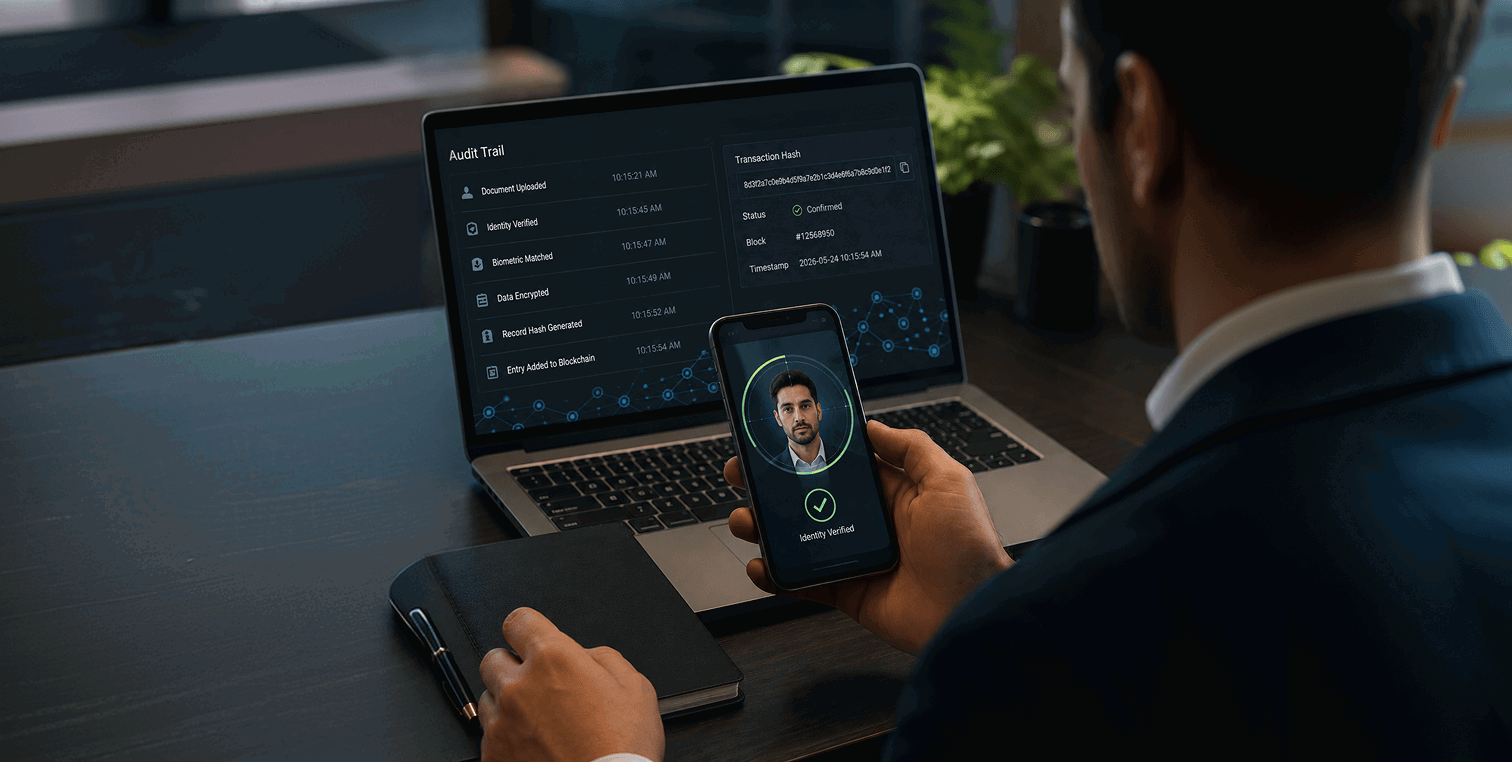
Enterprise eliminated 100% Identity Fraud Risks through Biometric Verification and Immutable Digital Audit Trails
A blockchain-backed digital agreement platform developed by eSparkBiz that combines biometric identity verification, smart contract automation, and compliance-driven contract execution into a single secure ecosystem. By validating signer identity, organizational authority, and contract conditions before execution, Pactvera delivers legally enforceable, tamper-proof agreements with comprehensive audit trails and cryptographic proof of authenticity.
Facing a Similar Problem?
Tell us where your teams lose time today. We'll show you how we approached it on projects like this one.
Client outcomes
Rated 4.9 across 68 reviews Verified on Clutch
We focus on making clients happy and always appreciate their opinions. We aim to provide superior services to earn trust and to become a go-to choice in the Software industry.






Onboarding speed
"
eSparkBiz delivered exactly what we were looking for—a robust Guest Experience Platform built on time, within budget, and with exceptional attention to quality. Their skilled team, responsive communication, and proactive project management made even a complex development process straightforward. They proved to be a trusted partner from start to finish.
Clutch


Athanassios Piliounis
RADEFY
"
eSparkBiz has been an outstanding technology partner. Their AI engineering expertise has helped us accelerate product development and tackle complex integration challenges while consistently meeting our high technical standards. The team is responsive, reliable, and excels at matching the right talent to our unique needs. We highly recommend eSparkBiz to any organization looking for skilled, dependable engineering support.
Clutch

Kristen Marcoe
Credo AI

Award
Top Enterprise Software Developers

Award
Top Artificial Intelligence Company

Ranking
Top Software Developers India

Award
Top Staff Augmentation Company

Ranking
Top Software Developers - Logistics

Award
Clutch Best 1000 Service Provider

Ranking
Top Software Developers 2025
WHY PARTNER
Why Work with eSparkBiz
With 400+ vetted professionals and 1,000+ projects delivered, we bring proven engineering expertise, enterprise-grade governance, and scalable AI capabilities to complex technology initiatives.
PLATFORM CAPABILITY
1,000+ Projects Delivered
400+ Engineers and Specialists
48–72 hr Team Ramp-up
10+ Time Zones Served
Multi-cloud: AWS, Azure, GCP
GOVERNANCE
ISO 27001:2022 Information Security
ISO 9001:2015 Quality Management
SOC 2 - Audited Controls
CMMI Level 3 - Appraised Processes
100% NDA-Protected Engagements
RECOGNITION
Top 10 Software Development Companies, US - IEEE Computer Society
Global Software Development Company - IPLocation
Enterprise Software Development Excellence, India - Clutch
Top AI Compliance Company - DesignRush
Software Development Outsourcing - Design Nominees
Certification & audit documentation available upon request under NDA.
Platforms
A Technology Stack Purpose-Built for Integration
We include only technologies related to integrations. Stuffing this section with unrelated frameworks provides no value. We believe the technologies shown here meet their purpose in the practical integration of systems, management of data transfer, and sustenance of an integration flow.

Integration platforms and middleware
MuleSoft
Dell Boomi
Azure Logic Apps
Workato
Informatica
Apache Camel
n8n

API management and gateways
Kong
Apigee
AWS API Gateway
Azure API Management
Tyk
OpenAPI / Swagger

Messaging and event handling
Apache Kafka
RabbitMQ
AWS SQS / SNS
Azure Service Bus
Redis Streams
Webhooks with signing

EDI and document standards
ANSI X12
EDIFACT
AS2
SFTP
HL7 v2
FHIR
cXML

Monitoring and observability
Datadog
Grafana
Prometheus
Sentry
OpenTelemetry
PagerDuty
Not sure which platform fits your environment?
Tell us what you're connecting, at what volume, and under what constraints. We'll recommend the technologies that fit, and explain why.
HOW WE WORK
The Delivery Framework Behind Every Engagement
The first stage determines whether a proposed connection is worth building from both technical and operational perspectives. If the assessment shows limited value or unacceptable constraints, we will recommend stopping at this point rather than proceeding with unnecessary development.

Assessment and Go/No-Go
We evaluate any system's API capabilities, rate limiters, the model for API authentication, and the API's change log to make a recommendation on whether the connection should proceed.

Stakeholders and Objectives
We determine the stakeholders in IT, Operations, and Management, and define measurable objectives to provide the intended outcome of the integration beyond a successful integration.

Mapping and contracts
Field-level mappings are agreed, data ownership is established, conflict rules are documented, and known failure scenarios are addressed before development begins.

Build and Shadow Run
The connection runs alongside the existing setup so discrepancies can surface before cutover. Production use begins only after reconciliation confirms that the data matches.

Operate or Hand Over
We keep the integration running smoothly or hand it over with clear documentation, knowledge transfer, and everything your team needs.
ENGAGEMENT MODELS
Different Engagement Models, Same Delivery Standard
The type of engagement depends on your project's scope, timeline, and what your team is able to handle. But no matter what, the real core doesn't change, it's the same level of technical care and accountability that we bring to every single project.
Prefer full ownership after the build?

Built and handed over
Once we deliver, your team takes full ownership. Runbooks and architecture documentation are provided along with transition support so your engineers can run the integration without our help.
What You Get:
- Complete Handover
- System Blueprints
- Operational Runbooks
- Transition Support
- Knowledge Transfer
- Independent Operation
Need support while your team operates it?
Shared operation
Your team runs the day-to-day operations, and we take care of escalations and vendor API changes. This model presents our routine ownership, but offers your team integration support when risks emerge.
What You Get:
- Shared Responsibility
- Escalation Support
- Vendor Change Monitoring
- API Updates
- Operational Guidance
- Ongoing Support
Want us to run it for you?

Built and operated
We assume full operational responsibility under the agreed SLA. During the Integration lifecycle, we take care of monitoring, incident management, vendor change and capacity management.
What You Get:
- Operational Ownership
- SLA-Based Support
- Integration Monitoring
- Incident Response
- Vendor Change Management
- Capacity Planning
Expert Insights
Expert Insights for Software Integration
We analyze software integration trends, architectures, and engineering practices to provide authoritative articles, industry updates, and practical insights that help technology leaders understand integration challenges, assess technical solutions, and make informed decisions.

 August 27, 2026

Questions
The Questions We Hear Most From Enterprise Buyers
Get the direct answer first, followed by practical details that matter when evaluating an integration project. The questions address cost, technical constraints, delivery considerations, and ongoing operational requirements that can affect implementation decisions and integration performance after launch.
How much does a software integration cost?
Simple integrations may cost $6,000 and $70,000 for complex integrations with legacy software.
For typical one-way integrations, expect to spend $6,000 to $14,000, and for bi-directional syncs, the cost may rise to $18,000 to $40,000. Expect to budget for $600 a month for each integration, and this cost may increase if you use software with third-party licenses. We provide a free estimate for integrations after a three-day assessment.
Who owns and maintains the integration in the future?
You have the option of handover, shared operation or maintenance services.
The integration code is embedded in your repository and under your control. There is no cost for the handover. In the shared operation, your team manages routine tasks while we manage the integration with the vendor and escalations.
What happens when a vendor changes their API?
API changes by vendors are considered planned maintenance for the integration rather than unexpected issues.
We track the API versions that the integrations depend on. In the deprecation notices, we consider those as tasks to be done. Under all of the operation models, required changes are addressed. Because we do not integrate the connectors with the application logic, vendor changes are contained within the integration layer.
Is it possible to connect a legacy system which has no API?
Legacy systems can usually connect through an alternative access method despite the absence of API.
In these situations, an assessment must be undertaken before a price can be quoted as there can be a lot of unpredictable complexity relating to unstructured systems. Database access, scheduled file exchange, an adapter, or even screen-level automation can be considered.
Is an iPaaS platform necessary, or will point-to-point connections enough?
Point-to-point connections will suffice for less complex situations, and iPaaS can be justified for more complex requirements.
The requirement for routing, rather than the number of connections, is what should drive the decision. Where data needs to go to a number of different systems in different formats, a centralized routing platform can justify the investment. In less complex requirements, licensing will add significant cost with little return.
How long does an integration take?
A simple integration can usually be achieved within two weeks. Complex integrations relating to legacy systems can take up to sixteen weeks.
A straight line, one-way integration will take approximately two to four weeks. A bi-directional sync will take five to ten weeks, and a legacy integration will take eight to sixteen weeks. The length of time is often more reliant on the decisions relating to field ownership and conflict resolution, as opposed to the line of code that needs to be written.
When shouldn’t we integrate two systems?
Integrating systems that do not have authentication, valuable functionality, or sufficient data to support the intended purpose is not recommended.
These issues are identified during the assessment and occur prior to the development of a connection. Certain connections may have to wait while a system is being removed, the associated data is unused, or the data is misaligned and needs to be corrected. The propagation of poor data should be avoided.
How does eSparkBiz evaluate an integration project before development starts?
Before development, system connectivity, data requirements, technical restraints, dependencies, and integration risks are evaluated by eSparkBiz.
The assessment considers the systems and APIs, data ownership, data authentication, dependencies, and restrictions around integration, and evaluates the connections that may take additional work or should be done later.
Show more

Reviewed by
Technical Lead, eSparkBiz · Integration architecture and delivery governance