
Modernization Signals
See what is holding your platform back

- Free two-week assessment before anything is committed
- Open formats. Your data stays portable
- Parallel run with row-level reconciliation before any cutover
- A named list of what we'd advise you not to migrate at all
30 Minutes · No Commitment · Reply within 24 hours
What you get before you commit
-
Why Now ↗
-
Solutions ↗Migration PathsLift, re-platform, re-architect, or phase
-
Services ↗Target ArchitectureSee what your modern platform could look like
-
How We Work ↗The Old Platform's ExitScheduled from day one, not an afterthought
-
Verify ↗ISO 27001:2022 · CMMI Level 3Audited, independently verifiable
WHY NOW
The Signs your Data Platform has reached its Limit
Legacy data platforms typically fail gradually. They slow down and lose trust, and are worked around, often by using unofficial workarounds. This creates an increased cost of operations and delay decisions across the business, long before anyone addresses it as a major concern.
| # | THE SIGN | WHAT YOU NOTICE | WHAT IT ACTUALLY COSTS YOU |
|---|---|---|---|
| 01 | Query times changed how people work The one nobody puts in a business case | A report takes forty minutes, so analysts stop running it, and keep their own extract in a spreadsheet instead. |
Multiple versions of the truth. Teams waste time to reconcile those numbers rather than using them. |
| 02 | Maintenance windows keep expanding | The nightly batch that finished at 2am now finishes at 6am, and when it fails, it creates missing morning reports. |
A shrinking operating window. More time goes into keeping the platform running, and leaving less room for change. |
| 03 | AI workloads the platform can't serve | Models need raw and historical data at volume but the platform mainly serves aggregated data to BI tools. |
AI initiatives start with an infrastructure project. Modeling work is put on hold as the new data foundation is built. |
| 04 | Licence renewal or end of support | A Teradata, Oracle or Informatica renewal arrives with a significant cost or the version you depend on reaches end of support. |
A deadline drives the architecture decision. You are forced to choose under pressure instead of planning the transition properly. |
| 05 | Nobody trusts the numbers | Two dashboards disagree, and the answer to which one is right becomes, “Ask someone who knows.” |
Decision making slows down. Analytics become less trusted as a reliable basis for business decisions. |
SERVICES
Start with the Problem, Not the Tool
A set of services you can engage individually, or bring together as one modernization programme. Each starts with the specific problem it exists to solve, not the tools or platforms used to solve it.

Target Architecture Design

Lakehouse Platform Build and Migration

Governance, Lineage and Cataloging

Self-Service Enablement and Semantic Layer
Target Architecture Design
Typically 4–8 weeks
THE PROBLEM
As platforms grow, misaligned architecture creates interoperability gaps, slows data delivery and makes scaling across domains increasingly difficult, usually requiring structural rework that costs more than the original build.
We redesign layers of ingestion, processing, storing, serving and governing, based on domains of your business, rather than the tools your business is currently using. Only in cases of true domain ownership does data mesh apply. The end result is an architectural target with a scheduled migration plan, rather than a diagram.
WHAT'S INCLUDED
- Domain aligned layers
- Data mesh, selectively
- Sequenced migration plan
- Dependency mapping
- No forced frameworks
DELIVERABLE:
Target architecture plus sequenced migration plan
INCLUDES:
Domain model and ownership map
Lakehouse Platform Build and Migration
Typically 3–14 months
THE PROBLEM
Legacy warehouses struggle to serve structured, unstructured and real time data together, which is exactly what AI workloads need and migrating away carries real risk of data loss or silent corruption.
We build unified lakehouse platforms on Databricks, Microsoft Fabric with OneLake or Snowflake, using medallion layering from raw to business ready data. Pipelines are rebuilt for modern batch and streaming, not lifted and shifted. Parallel validation helps detect a data loss or silent corruption before cutover.
WHAT WE BUILD
- Unified lakehouse build
- Medallion layered pipelines
- Open table formats
- Rebuilt, not lifted
- Batch and streaming ready
DELIVERABLE:
Production lakehouse with migrated workloads
FORMATS:
Delta Lake or Iceberg, open by default
Governance, Lineage and Cataloging
Typically 6–12 weeks
THE PROBLEM
Without consistent lineage and governance, data quality deteriorates, compliance risk becomes significant, and analytics outputs become less reliable, leaving teams without an honest baseline and no way to determine the source of a number.
We establish governance on Unity Catalog, Microsoft Purview, Collibra or DataHub, with metadata management and audit trails available as part of the platform. Column level lineage gives every metric a traceable source you can click through. Access controls support compliance across GDPR, CCPA, and HIPAA.
WHAT'S ENFORCED
- Column level lineage
- Policy automation
- Built-in audit trails
- Domain level access
- Multi-regulation compliance
DELIVERABLE:
Governed catalog with column level lineage
PRINCIPLE:
Governance at platform, not by policy document
Self-Service Enablement and Semantic Layer
Typically 8–16 weeks
THE PROBLEM
Business teams lose agility when every data request routes through engineering, creating a queue that slows decisions and pushes people back towards private spreadsheets, which is how a platform loses its authority.
We utilize governed self service models which combine semantic, curated data products, and layers owned by the domain. A single semantic layer permits every metric to be resolved in the same way by any tool. Domain layers stop dashboards from disagreeing. Role-based access and API-first are key aspects of the service.
WHAT YOU GET
- One governed semantic layer
- Curated data products
- Role based access
- API-first serving
- Governed, not free-for-all
DELIVERABLE:
Semantic layer plus curated data products
OUTCOME:
One definition per metric, enforced
SOLUTIONS
Not Every Platform Gets There the Same Way
Which route is right for you depends on how quickly you need to get your business up and running and how well the current model works for your business. Some occasions require rushing, while others require a complete rebuild. Click a route to see a description of that route, what it will cost later, and what it will require.
FASTEST EXIT
Lift-and-Shift
3–5 months
BALANCED
Re-platform
5–9 months
DEEPEST CHANGE
Re-architect
9–18 months
MOST COMMON
Hybrid
Phased
3–5 months
Move as-is
Lowest disruption
Lift-and-Shift: Move It, Change Nothing
You use the existing estate and replicate it on a new foundation without new designs. The right call when a contract expires, or support ends and a deadline is truly non negotiable. This gets you off the legacy platform with the least disruption to your consumers when compared to other avenues.
WHAT IT INVOLVES
- Existing architecture retained
- Workloads moved as-is
- Minimal application changes
- Fastest legacy exit
WHAT IT COSTS YOU LATER
You rebuild the same fractured architecture on new infrastructure. Every constraint goes with you, and the second project is normally more significant than the first, as it must be built simultaneously as the infrastructure is being developed and is active.
TEAM SHAPE
- 1 Platform Architect
- 3–4 Data Engineers
- Migration and Platform Support
CHOOSE IT WHEN
A licence expiry or end-of-support date can not move, and getting off the old platform matters more than what you land on.
5–9 months
Move most, rebuild worst
Mixed estate
Re-platform: Move Most, Rebuild the Worst
Most workloads migrate as is; the ones causing the most pain are rebuilt correctly. This is the pragmatic middle when you have some time pressure but also some visibility into which workloads are causing the pain. You can deliver significant improvements without going for a complete redesign.
WHAT IT INVOLVES
- Most workloads migrated
- Problem pipelines rebuilt
- Mixed estate managed
- Targeted architecture changes
WHAT IT COSTS YOU LATER
A mixed estate for a while: some modern patterns, some legacy logic sitting alongside each other. Entirely manageable when it is documented, genuinely confusing for a new engineer when it isn't.
TEAM SHAPE
- 1 Platform Architect
- 4–6 Data Engineers
- 1 Analytics Engineer
CHOOSE IT WHEN
You know which pipelines hurt, and you have enough runway to fix those without redesigning everything else.
9–18 months
Design target first
Highest ceiling
Re-architect: Design the Platform You'd Build Today
Start from the target rather than the source. Domain ownership, serving patterns, and governance models are designed based on how businesses function currently, and workloads begin to fit this model. The right call when the current model genuinely doesn't fit the business, or when AI workloads are the point rather than an afterthought.
WHAT IT INVOLVES
- Target architecture first
- Domain ownership redesigned
- Workloads reshaped
- Governance redesigned
WHAT IT COSTS YOU LATER
The longest wait before anyone sees value, and the highest exposure to scope drift. It needs real executive sponsorship and clear decision structure throughout the programme.
TEAM SHAPE
- 1–2 Platform Architects
- 6–10 Data Engineers
- Analytics + Governance Leads
CHOOSE IT WHEN
No hard deadline, a model that genuinely doesn't fit the business, and sponsorship that will outlast the programme.
Phased
Most common in practice
Our usual recommendation
Hybrid: Clear the Legacy Platform First, Modernize From a Stable Base
Lifting the licence cost and deadline pressure is key, so do it first. Modernize workloads one by one. Don’t let the deadline for each workload hold up the next one. This removes the urgent issues so the business can concentrate on deeper, more important workload modernization.
WHAT IT INVOLVES
- Phased legacy exit
- Workload-by-workload modernization
- Stable migration base
- Architecture evolves progressively
WHAT IT COSTS YOU LATER
It takes a lot of commitment to do Phase Two. If no plan and budget are set aside, the hybrid will likely become a lift-and-shift and will be recognized only when someone asks why the new platform looks like the old one.
TEAM SHAPE
- Starts Small in Phase One
- Scales at Phase Two
- Architect continuous throughout
CHOOSE IT WHEN
You have a deadline you can't move and a platform you do not want to live with. For many enterprises, that makes hybrid the practical choice.
We don't call a migration modernization just because the destination is new. Before anything moves, we make the next phase explicit about what changes, when it starts, and who owns it. If that phase is not funded, the honest answer is migration, not modernization, and we'd rather use the accurate word.
HOW WE WORK
Most Plans Stop before the Steps that Matter
The first few steps are usually the same. Last minute things like parallel validation and a committed decommission are dropped when a project gets close to being completed. They are the least important steps of the whole process, so are left for last.
Inventory and Classify
Every table, job, report, and consumer is cataloged based on usage data, not just guessed. Everything is classified based on whether it will be moved, rebuilt, or retained before anything is moved. Nothing is ever moved based on assumption or defaulted to be moved.
Move Data in Open Formats
Historical data will reside in Delta Lake, Iceberg, Parquet or other similar formats instead of a proprietary format of one of the vendors. This keeps the next platform decision truly in our hands purely on the merits of the decision instead of being forced into a decision due to lock-in or high switching costs.
Rebuild Pipelines, Don't Translate Them
ETL Logic should be rewritten for modern streams and batches, not mechanically translated. Translating legacy SQL literally, means we carry across the constraints, which essentially were the purpose behind the original code. Everything should be modernized.
Parallel Run
Both systems run simultaneously on the same inputs for a defined period. Row-wise outputs are compared for every workload, and not conveniently spot checked. Discrepancies are investigated and resolved, rather than being 'explained away' or 'ignored'.
Cutover on Clean Reconciliation
Customers wait for reconciliation to come back clean before they migrate, not when migration should occur according to the plan. Failure to resolve a known inconsistency under pressure will cause future trust issues and accumulate.
Decommission With a Committed Date
The legacy system is closed on the date agreed with the program initiation, with the final read-only archive and license cancellation already included in the plan. A deliverable must be identified with a responsible owner.
A migration is complete when the new platform is live. Modernization is complete when the old platform is gone, the numbers reconcile, and ownership is clear. Nobody should need the legacy environment just to keep the business running.
TECH STACK
Chosen against your Systems, Not Our Preferences
Each layer in the stack is chosen considering your systems, your teams’ skills and your budget. We have worked with our partners to build alliances and we will be transparent with you if we think an open source solution is most appropriate.

Lakehouse and Warehouse Platforms
Databricks
Microsoft Fabric
OneLake
Snowflake
Amazon Redshift
BigQuery
Azure Synapse
ClickHouse

Legacy Sources We Migrate from
Oracle / Exadata
Teradata
SQL Server
Informatica
Cloudera / Hadoop
Netezza
SAP BW
IBM DB2
SSIS

Open Table and Storage Formats
Delta Lake
Apache Iceberg
Apache Hudi
Parquet
Avro
Amazon S3
ADLS Gen2
Ingestion, Transformation and Orchestration
Apache Spark
dbt
Airflow
Dagster
Fivetran
Airbyte
Kafka
Debezium
Flink

Governance, Catalog and Quality
Unity Catalog
Microsoft Purview
Collibra
DataHub
Alation
Great Expectations
Monte Carlo
OpenLineage

Serving, Semantics and Analytics
Power BI
Tableau
Looker
dbt Semantic Layer
Cube
Superset
Metabase
Not sure which combination fits your platform?
Give us your existing constraints and systems. We'll give you the best fit lakehouse, formats and tools based on your environment rather than trying to squeeze it into a stack we happen to like.ENGAGEMENT MODELS
Pick the Model That Fits the Work
How we set up the relationship is dependent on the level of clarity we have on the current scope. We'll let you know if yours is still not clear enough for us to offer a fixed price. Offering a quote would not benefit either of us.
KNOW YOUR SCOPE AND CERTAINTY?

Fixed Scope
Defined deliverables, milestones, and acceptance criteria agreed upon in advance. Ideal for assessments, architecture design, or pilot domains where boundaries are truly known.
INSIDE THE ENGAGEMENT
- Milestone-based delivery
- Defined acceptance criteria
- Predictable timeline
- Fixed price upfront
- Structured handover
- Scope change process
WANT US TO OWN DELIVERY END TO END?

Dedicated Platform Team
Data engineers, architects, and analytics engineers collaborate to build priorities. This is relevant when the actual extent of work reveals the real extent of the project during the inventory.
INSIDE THE ENGAGEMENT
- End-to-end ownership
- Weekly progress reporting
- Scalable team size
- Defined Escalation Paths
- Shared priority setting
- Continuous delivery cadence
BUILDING YOUR OWN CAPABILITY?

Build and Transfer
We implement your first domains along with your team and then we transfer operational responsibility to your team via documentation, runbooks, training, and formal knowledge transfers.
INSIDE THE ENGAGEMENT
- Engineers embedded throughout
- Operational runbooks
- Structured knowledge transfer
- No handover charge
- Optional support retainer
- Full platform ownership
Our Featured Work
Engineering Work that Delivers Real Business Outcomes
We partner with enterprises to solve complex engineering challenges combining scalable architecture, AI-driven automation, and secure delivery practices to build products that hold up under real-world demand.
Enterprise reduced Internal Communication Delays by 60% with a Unified Workforce Communication Platform
An internal email platform that lets you communicate with your team members without using external services. Here we can create, send, and track emails easily, and get feedback and insights on your email performance. It helps you to improve your communication skills, productivity, and collaboration.

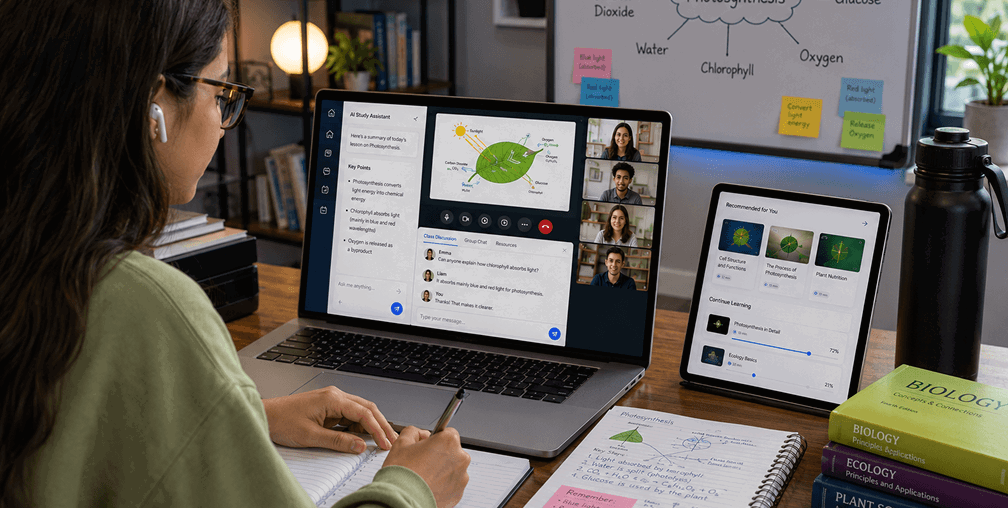
Learning Platform increased Student Engagement by 3x through an AI-enabled Collaborative Education Ecosystem
Ethos Village is an educational web-based platform with various courses and activities to enrich users' lives and aid in the discovery of goals and purposes. On a single platform, different user roles like alumni, parents, coaches, teachers, and mentors are present.
Fitness Platform achieved 70% Member Retention through Personalized Health Tracking and Coaching Automation
The app is designed to help users maintain a healthy lifestyle by providing easy access to fitness information and tools on-the-go. A fitness app aims to empower users to take control of their health and fitness by providing tools, resources, and guidance to lead a more active and balanced lifestyle.

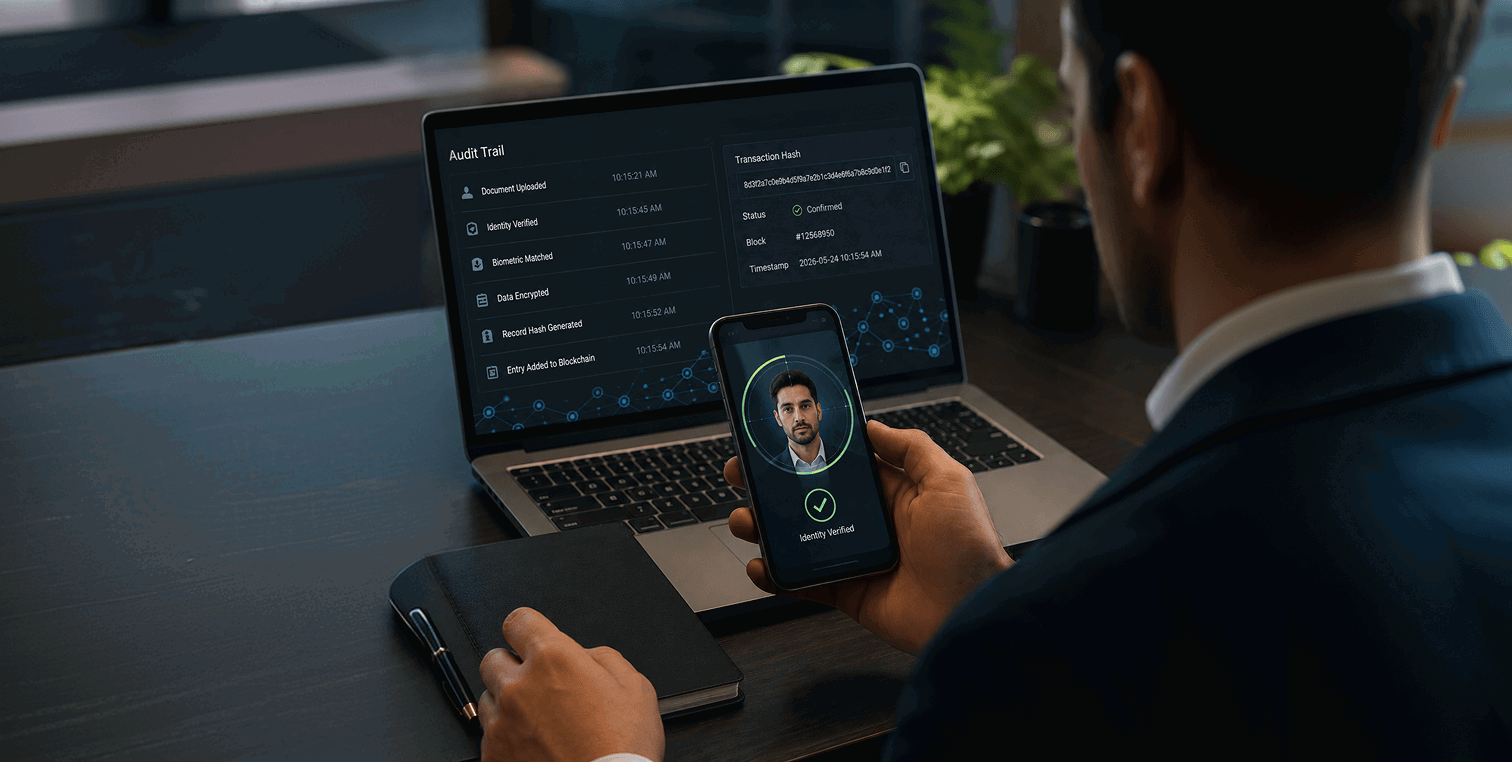
Enterprise eliminated 100% Identity Fraud Risks through Biometric Verification and Immutable Digital Audit Trails
A blockchain-backed digital agreement platform developed by eSparkBiz that combines biometric identity verification, smart contract automation, and compliance-driven contract execution into a single secure ecosystem. By validating signer identity, organizational authority, and contract conditions before execution, Pactvera delivers legally enforceable, tamper-proof agreements with comprehensive audit trails and cryptographic proof of authenticity.
Recognize the pattern?
Tell us which sign matches your platform today, slow queries, expanding maintenance windows or an AI initiative stalled on data access.
Client Outcomes
Rated 4.9 across 69 Reviews Verified on Clutch
We focus on making clients happy and always appreciate their opinions. We aim to provide superior services to earn trust and to become a go-to choice in the Software industry.






Onboarding speed
"
eSparkBiz delivered exactly what we were looking for—a robust Guest Experience Platform built on time, within budget, and with exceptional attention to quality. Their skilled team, responsive communication, and proactive project management made even a complex development process straightforward. They proved to be a trusted partner from start to finish.
Clutch


Athanassios Piliounis
RADEFY
"
eSparkBiz has been an outstanding technology partner. Their AI engineering expertise has helped us accelerate product development and tackle complex integration challenges while consistently meeting our high technical standards. The team is responsive, reliable, and excels at matching the right talent to our unique needs. We highly recommend eSparkBiz to any organization looking for skilled, dependable engineering support.
Clutch

Kristen Marcoe
Credo AI

Award
Top Enterprise Software Developers

Award
Top Artificial Intelligence Company

Ranking
Top Software Developers India
Award
Top Staff Augmentation Company
Ranking
Top Software Developers - Logistics

Award
Clutch Best 1000 Service Provider

Ranking
Top Software Developers 2025
Why Partner
Why Work with eSparkBiz
With 400+ vetted professionals and 1,000+ projects delivered, we bring proven engineering expertise, enterprise-grade governance, and scalable AI capabilities to complex technology initiatives.
PLATFORM CAPABILITY
1,000+ Projects Delivered
AWS Certified Solutions Practice
Multi-cloud: AWS, Azure, GCP
Depth in AI, Cloud, Blockchain
10+ Time Zones Served
GOVERNANCE
ISO 27001:2022 Information Security
ISO 9001:2015 Quality Management
SOC 2 Audited Controls
CMMI Level 3 Appraised Process
100% NDA-protected Engagements
REGISTRATION
Incorporated 2010, India
DUNS 650816981
CIN U72900GJ2013PTC073284
HubSpot Solutions Partner
US Entity Registered, Delaware
Full Certification Documents and Audit Reports available on request under NDA.
RESOURCES
Insights from Our Engineering Leaders
Based on the actual work we do and the code provided by real clients rather than general industry content. Some lessons on best practices for architecture, migration and governance, are published as we learn because our case studies are relevant and unique.
Agentic AI in GCCs: How Autonomous Agents are Changing the Way Teams Work

 September 16, 2026
Agentic AI in Software Development: How It Works, Use Cases & Strategy
September 16, 2026 
FAQs
What Leaders Ask Before Modernizing
Directly answered in line one, elaborated in the subsequent lines. These questions are all derived from client interactions about architecture, cost, time, and what the client is concerned with regarding the fate of their legacy platform post implementation of the new platform.
How do we migrate off a legacy warehouse without downtime or data loss?
Parallel run with row-level reconciliation, then cutover on clean evidence rather than on a calendar date.
Both systems will be run against the same inputs for 4-8 weeks, while outputs are compared row by row and not spot-checked. Users transfer only when the reconciliation is clean and not on a scheduled date.
What drives the cost of a modernization programme?
Pipeline complexity, amount of retirement allowed, source system accessibility, regulations, number of consumers, how quickly the data needs to be settled, and the ownership of the data.
| Cost Driver | Why It Matters |
| Pipeline count and complexity | More undocumented logic means more rebuild work |
| Retirement willingness | What you retire vs keep changes total scope |
| Source system accessibility | Harder-to-reach sources slow extraction, raise risk |
| Regulatory obligations | Compliance adds governance and audit work upfront |
| Number of consumers moving | Every downstream report adds reconciliation work |
| Speed of ownership decisions | Slow ownership calls stall everything behind them |
Data volume isn’t on that list. Rather, the main cause is pipeline count and unwritten code. It is easier to manage a hundred terabytes of data moved by twelve clean pipelines than it is to move two terabytes of data by four hundred.
Will our infrastructure spend go up or down?
Down over a three-year view in most cases, but up first, because you run both platforms during migration, typically for three to nine months.
That interval and the associated cost should be described in the business case during the first pass. Cloud compute pricing is consumption based, so fixed-license teams experience sticker shock on the first bill. For both of these examples, we provide modeling and cost guardrails before launching the system.
Which modernization route should we choose?
The route depends on your deadline, how well the current architecture fits the business, and how much disruption you can absorb.
| Route | Typical Timeframe | Best Fit |
| Lift-and-Shift | 3–5 months | An immovable licence or support deadline |
| Re-platform | 5–9 months | Targeted improvement without a full redesign |
| Re-architect | 9–18 months | Fundamental architectural change |
| Hybrid | Phased | Immediate legacy exit, then deeper modernization |
Pure lift-and-shift works best with an immovable deadline, however, the architecture will be just as fragmented as before, but this time on a more expensive infrastructure. We always let our clients know where phase two begins and what it entails.
How long does modernization take?
- Pilot domain: 6–10 weeks
- Lift-and-shift: 3–5 months
- Re-platform: 5–9 months
- Full re-architecture: 9–18 months
We suggest almost always starting with a pilot. This allows for testing the methodology with real data prior to incurring the full cost. Speed of decisions with respect to data ownership moves the timeline more than the technical issues do.
What happens to the old platform?
There will be a planned decommissioning date. The final plan will include a read-only archive and license cancellation.
This is the most likely step in a project plan to be skipped if there is a delay in implementation. Because of this, there are a lot of “successful” platform modernizations that run two active platforms for several years. Modernization at this step is only half done if the plan ends at the cutover.
What happens to governance and compliance during the migration itself?
Access Controls, Audit Trails and Lineage move with the data from Day 1. Governance is not a phase-two add-on.
Governance is implemented on the target platform in conjunction with the build. Because of this, all migrated workloads have built in traceability. Both platforms continue to enforce obligations associated with GDPR, CCPA, and HIPAA during the parallel run.
Does modernization actually help with AI and ML workloads, or is that just a talking point?
Yes. Modernization does actually help. Most legacy warehouses only serve aggregated, BI-ready data. Models need raw data, and a lot of it.
That gap is typically the reason why most AI initiatives on legacy platforms begin with an unplanned data project. A lakehouse with open table formats makes that data queryable. While modernization helps build AI movement and doesn’t build a working AI team by itself, it does build the foundation for AI.
Show more

Reviewed by
Chief Technology Officer, eSparkBiz