
Estate Assessment
What's connectable, what isn't

- ETL/ELT, change data capture, event streaming, and AI ready pipelines
- Cost per pipeline published, in addition the platform running cost nobody mentions
- Data quality SLAs: freshness, completeness and accuracy, monitored
- Three ownership models after handover, chosen by you, not assumed
30 Minutes · No Commitment · Reply within 24 hours
WHAT YOU GET BEFORE YOU COMMIT
-
Days 1–5 ↗
-
Included ↗Pattern RecommendationBatch, CDC, or streaming, with reasoning
-
View Timelines ↗Delivery TimelinesTypical delivery by integration type
-
Detail ↗No-lock-in CommitmentOpen formats, portable logic
-
Verify ↗ISO 27001:2022 · CMMI Level 3Audited, independently verifiable
ARCHITECTURE DECISION
Which Integration Pattern Does Each Source Actually Need?
This decision determines cost, latency, and the amount of inherited maintenance, and is made on a per-source basis rather than a single decision for the entire estate. The failure of many projects is due to applying one pattern uniformly throughout the entire project.
| Pattern | Latency | Use It When | Cost to Run | The Trade-Off |
|---|---|---|---|---|
| Batch ETL / ELT Scheduled extract | 1–24 hours | Month-end close, standard BI reporting or any source where “as of yesterday” does not change the decision. | Lowest | Downstream systems never see real time state, but reruns are simple, and simple recovery is worth more than it gets credit for. |
| Change Data Capture Log based replication | Seconds–minutes | Transactional databases that need to stay in sync with a warehouse without additional query load hitting production. | Moderate | Requires log access and retention configured correctly from the first day. Schema drift has to be caught and handled, not silently dropped. |
| Event Streaming Kafka, Event Hubs | Sub-second | Situations where a delayed decision is a wrong decision, such as fraud detection, live inventory, real time alerting or AI agent acting on current business state. | Highest | Delivery guarantees, ordering, and replay are nontrivial to build correctly. Pay this premium only where latency has a dollar value attached. |
| Federation / Virtualization Query in a place | Query-time | Regulatory data residency, a system on its way to retirement or a source too small in volume to justify a dedicated pipeline. | Low build, variable run | You assume the performance and uptime of the source system. Decent for one-time analysis, but not for business operations. |
| Reverse ETL Warehouse back to apps | Minutes–hours | Cleaned data, pre-built data models can be sent back to the CRM and support applications to allow direct usage by the Sales and Service teams, rather than just the Analytics team. | Moderate | There are limits to the destination application’s API, and conflict resolution rules must be set before the data can be written back. |
CAPABILITIES
Where We Engineer the Difference
The outcome you want always comes first. After, you consider the advantages for your team and how you can implement it, including messaging and implementing batch pipelines, CDC, and streaming data pipelines to be used in concert with AI, ready to use.

ETL and ELT Pipelines
Trusted data from multiple sources is made available in your warehouse or lakehouse. Your pipelines do not need to be rebuilt each time your source systems change or your downstream analytics and AI workloads adapt.
- Versioned and tested transformation logic
- Schema changes isolated from downstream logic
- Mirroring and zero copy where supported

Real-Time and Streaming Integration
Give real time decision making systems, automated workflows, and AI systems seconds to act on the output of their work based on the business case, and not on arbitrary speed.
- CDC and event streaming architecture
- Latency tuned to business requirements
- Batch reprocessing from the same streams

Custom and Legacy Integration
Move customer and operational data across your environment by integrating your legacy systems, ERPs, CRMs & modern SaaS tools without making every source conform to the single pattern.
- Custom connectors across cloud and on-premise
- API-led and iPaaS integration approaches
- Monitoring, retries, and governance built-in

AI-Ready and Agent-Ready Data Pipelines
Ensure LLMs, RAG systems, and data agents have access to the most recent business data while keeping permissions, lineage, and context intact for all connected data.
- Structured and unstructured data ingestion
- Embeddings and vector storage options
- Access controls and lineage preserved
WHAT ACTUALLY BREAKS
Six risks we engineer out from day one
Everyone claims their pipelines are reliable, but most don't say what they mean by that. We get called to solve issues that include mention of these failure modes, such as silent failures or data landing in unexpected locations.
-
Silent Success
Failure that gets you in the end, because it is invisible. A job completed, the status is green, zero rows had an update, an upstream filter changed, or a credential has expired. It shows itself many weeks later, when the board deck number is off. We alert about missing volume and not only about the error. A pipeline that processed 12 rows instead of 40,000 is still an incident, regardless about the status.
-
Schema Drift
A source team makes a simple change, maybe they add a column, rename a field, change a data type, and go about their day. Downstream logic is isolated from source connectors, so change lands in a contained layer instead of spreading through the whole estate. Non breaking changes are absorbed automatically, whereas breaking changes drive a change management event that is linked to your release cycle, not discovered in production.
-
Duplicate Delivery
Once a successful request has been processed, a network error initiates a request retry, and as a result, the transaction happens twice and is generally noticed during reconciliation and not by the request causing system. Using an idempotency key and a deduplication window at the ingestion layer stops this at the source, and is backed by a reconciliation check to confirm landed counts against source counts rather than trusting the pipeline's log.
-
Late Arriving and Out-of-Order Data
Data can arrive sometime after midnight, but be timestamped an hour earlier. With time zones, situations where data crossing systems is upstream, and daylight savings, this can leave you with data that is out of sync. Event time processing, watermarking, and defined lateness windows are built in from the start, with a clear rule for data that arrives after its window has closed.
-
Backfill Cost and Blast Radius
A pipeline runs wrong for six weeks and the fix means reprocessing all of it. On a compute billed warehouse, a careless backfill can cost more than the original build. Pipelines are architected to be replayable within bounded windows, and every backfill gets an estimated compute cost calculated in advance, never a surprise line item after the fact.
-
Sensitive Data Landing Where It Shouldn't
New sources with personal or payment data that were not flagged during onboarding will be stored on a lake half the organization can query. Classification is enforced at the point of ingestion, masking, tokenization or exclusion applied before storage, because finding it afterward means chasing down, and deleting every downstream copy it has already reached.
Recognize One of These?
Tell us which failure mode already costs you time. We'll show you exactly how we design against it.QUALITY BY CONTRACT
What We Commit to, and How It's Measured
“High quality data” is not a commitment. Commitments which differ from it include the following: Each is agreed pipeline by pipeline before build with measurable thresholds and clear breach conditions, rather than described after the fact.

Freshness
Data is no older than agreed
Each pipeline has a maximum age of 15 minutes for CDC and 4 hours for batch reporting. Violations trigger an alert to the agreed upon on-call group.

Completeness
Expected volume actually arrived
Row counts are compared to source for each run, with tolerance bands established from historical variation. This is the check that catches “silent success” before anyone else even notices.

Validity
Values conform to their contract
Type, range, referential integrity, and null checks are performed inline with the pipeline. An invalid data batch is placed in quarantine rather than allowing it to be processed to the target table.

Lineage
Every field traceable to source
Unity Catalog, Microsoft Purview, or OpenLineage are used to track lineage. When a downstream report fails, lineage is used to trace the reason to the source where it originated.
These thresholds appear in a runbook and monitoring configuration, and not just in a proposal. Prior to running a pipeline, we do not miss a threshold and communicate this during the design phase.
DELIVERY TIMELINES
Data Pipelines Built for Production, Not Demos
Every data environment is different. We scope the work around your sources, data volume, security requirements, and downstream use cases, then give you a clear delivery plan before implementation begins.
| PIPELINE | BEST FOR | Timeline | What's included |
|---|---|---|---|
| Standard batch pipeline | SaaS, APIs & databases | 2–3 weeks | Extraction, transformation, testing, monitoring, data-quality controls and documentation |
| Change Data Capture | Operational databases | 4–6 weeks | Initial snapshot, incremental replication, schema evolution, reconciliation and replay |
| Event Streaming | Real-time applications | 6–10 weeks | Event design, ordering, delivery guarantees, dead-letter handling, watermarking and reprocessing |
| Legacy & On-premise Integration | Complex or older systems | 8–14 weeks | Source assessment, custom extraction, transformation, reliability engineering and operational handover |
| AI-ready Data Pipeline | RAG, ML & AI applications | 6–12 weeks | Document processing, chunking, embeddings, vector storage, access controls and refresh workflows |
| Data Estate Assessment | Before modernization | 2–3 weeks | Source inventory, dependency mapping, prioritization, architecture recommendations and modernization roadmap |
Portability
How We Keep You From Being Locked In, Including to Us
We understand that one day, you may want to replace your integration vendor, so your architecture does not need to change. From the very first line of our code, we design for portability as this is not a last minute exit plan.
WHAT WE COMMIT TO
Portable by construction
- Open data formats like Avro, Parquet and JSON Schema, so what's stored does not matter who stored it
- Transformation logic written in patterns portable across iPaaS vendors and runtimes
- Connectors decoupled from business logic, so replatforming touches integration code rather than your rules
- Everything under your account in your repositories from the very first commit
- Keep your existing MuleSoft, Informatica or Boomi investment, and run new patterns alongside it
WHAT WE WON'T DO
Practices that create dependency
- Recommend a replatform when your current iPaaS handles the workload adequately
- Build proprietary connectors or frameworks only we can maintain
- Maintain your credentials, infrastructure, and accounts in our name
- Write transformation logic that only makes sense with our documentation
- Charge for handover or make leaving harder than arriving
When you choose to transition from Boomi to MuleSoft, or from a managed iPaaS to an open-source stack on Airflow, the rewrite should cover integration code and not your business logic. That is what we test for, and it is a reasonable first set of questions we will receive during a call.
Integration work
Engineering Work that Delivers Real Business Outcomes
We partner with enterprises to solve complex engineering challenges combining scalable architecture, AI-driven automation, and secure delivery practices to build products that hold up under real-world demand.
Enterprise reduced Internal Communication Delays by 60% with a Unified Workforce Communication Platform
An internal email platform that lets you communicate with your team members without using external services. Here we can create, send, and track emails easily, and get feedback and insights on your email performance. It helps you to improve your communication skills, productivity, and collaboration.

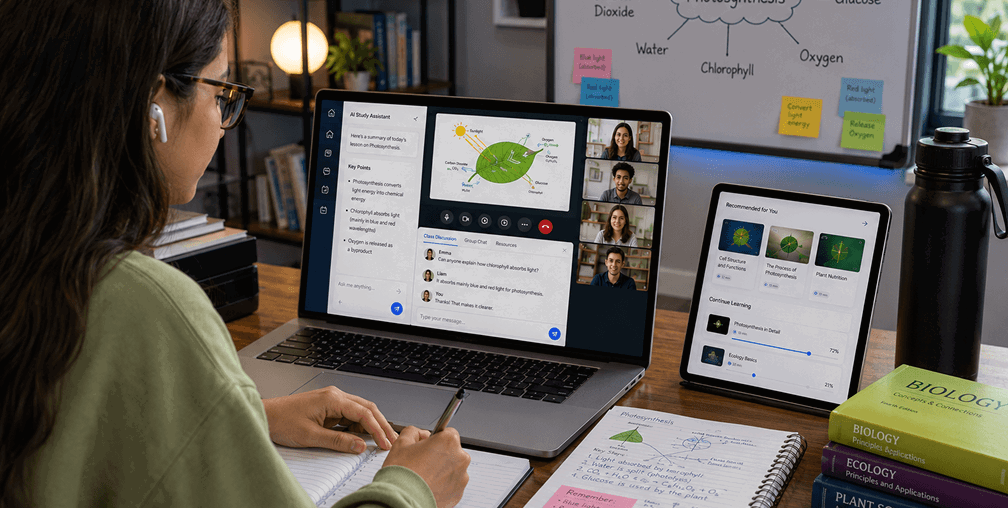
Learning Platform increased Student Engagement by 3x through an AI-enabled Collaborative Education Ecosystem
Ethos Village is an educational web-based platform with various courses and activities to enrich users' lives and aid in the discovery of goals and purposes. On a single platform, different user roles like alumni, parents, coaches, teachers, and mentors are present.
Fitness Platform achieved 70% Member Retention through Personalized Health Tracking and Coaching Automation
The app is designed to help users maintain a healthy lifestyle by providing easy access to fitness information and tools on-the-go. A fitness app aims to empower users to take control of their health and fitness by providing tools, resources, and guidance to lead a more active and balanced lifestyle.

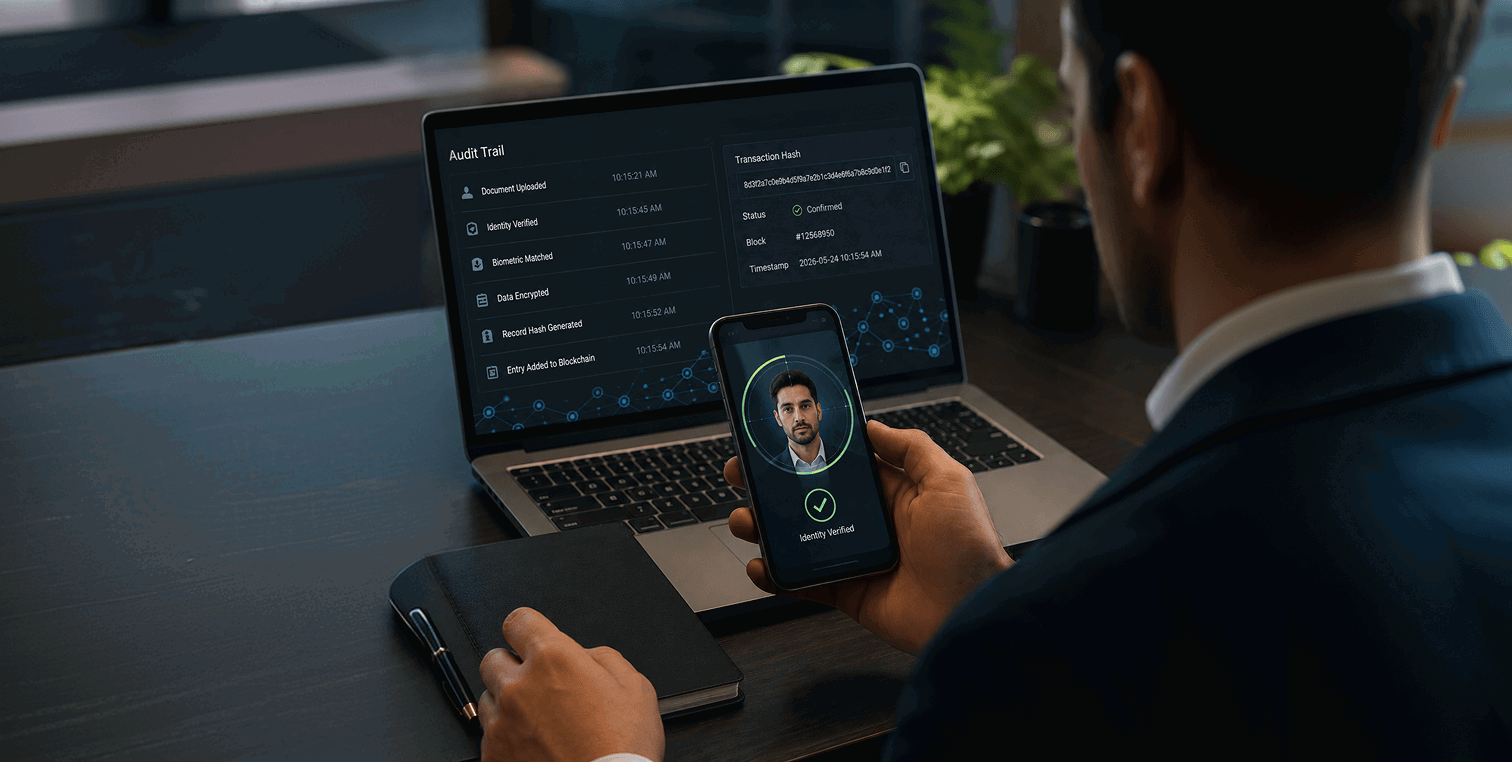
Enterprise eliminated 100% Identity Fraud Risks through Biometric Verification and Immutable Digital Audit Trails
A blockchain-backed digital agreement platform developed by eSparkBiz that combines biometric identity verification, smart contract automation, and compliance-driven contract execution into a single secure ecosystem. By validating signer identity, organizational authority, and contract conditions before execution, Pactvera delivers legally enforceable, tamper-proof agreements with comprehensive audit trails and cryptographic proof of authenticity.
Facing a Similar Problem?
Tell us where your teams lose time today. We'll show you how we approached it on projects like this one.
Client outcomes
Rated 4.9 across 68 reviews Verified on Clutch
We focus on making clients happy and always appreciate their opinions. We aim to provide superior services to earn trust and to become a go-to choice in the Software industry.






Onboarding speed
"
eSparkBiz delivered exactly what we were looking for—a robust Guest Experience Platform built on time, within budget, and with exceptional attention to quality. Their skilled team, responsive communication, and proactive project management made even a complex development process straightforward. They proved to be a trusted partner from start to finish.
Clutch

Athanassios Piliounis
RADEFY
"
eSparkBiz has been an outstanding technology partner. Their AI engineering expertise has helped us accelerate product development and tackle complex integration challenges while consistently meeting our high technical standards. The team is responsive, reliable, and excels at matching the right talent to our unique needs. We highly recommend eSparkBiz to any organization looking for skilled, dependable engineering support.
Clutch

Kristen Marcoe
Credo AI

Award
Top Enterprise Software Developers

Award
Top Artificial Intelligence Company

Ranking
Top Software Developers India
Award
Top Staff Augmentation Company
Ranking
Top Software Developers - Logistics

Award
Clutch Best 1000 Service Provider

Ranking
Top Software Developers 2025
WHY PARTNER
Why Work with eSparkBiz
With 400+ vetted professionals and 1,000+ projects delivered, we bring proven engineering expertise, enterprise-grade governance, and scalable AI capabilities to complex technology initiatives.
CAPABILITY
1,000+ Projects Delivered
400+ Engineers and Specialists
Multi-Cloud: AWS, Azure, GCP
AI, Cloud & Blockchain Expertise
10+ Time Zones Served
GOVERNANCE
ISO 9001:2015 Quality Management
ISO 27001:2022 Information Security
SOC 2 - Audited Controls
CMMI Level 3 - Appraised Processes
100% NDA-Protected Engagements
RECOGNITION
Cloud Consulting Excellence in India – Clutch
Legacy Modernization Services Provider – Clutch
Top Enterprise Software Developers, India – Clutch
Certified AWS Advanced Tier Partner, with 5+ certifications
4.9 / 5.0 Clutch Rating, 69 Reviews
Certification & audit documentation available upon request under NDA.
Platforms
Built on Your Stack, Not Our Preference
We work on managed platforms and open source stacks. Which works better for you will depend on your team, your budget, and how much operational responsibility you are willing to take on. For us this is not about which partnership we prefer to promote.

Ingestion, orchestration and transformation
Azure Data Factory
Microsoft Fabric
Databricks
dbt
Apache Airflow
Dagster
Airbyte
Fivetran
AWS Glue

Streaming and change data capture
Apache Kafka
Azure Event Hubs
Debezium
Amazon Kinesis
Fabric Mirroring
Apache Flink
Confluent

Warehouses, lakehouses and vector stores
Snowflake
Databricks Lakehouse
BigQuery
Redshift
ClickHouse
Delta Lake
Apache Iceberg
Pinecone
Weaviate
pgvector

iPaaS and enterprise integration
MuleSoft
Informatica
Boomi
Azure Logic Apps
Workato
Custom API-led

Governance, catalogue and observability
Unity Catalog
Microsoft Purview
OpenLineage
DataHub
Great Expectations
Monte Carlo
Soda

Analytics and BI
Power BI
Tableau
Looker
Metabase
Apache Superset
Not sure which integration tools you actually need?
Share your systems and requirements. We'll recommend the right technologies without forcing your estate onto a predetermined platform or iPaaS.
How it runs
Every Stage Ships Something, Even If You Stop After One
Each stage ends with a document, contract or running pipeline that you keep regardless of whether the engagement continues, so progress remains tangible and useful even if you stop after a single stage.

Estate Assessment
Every source is assessed for its protocol, the frequency and rate of changes, ownership, sensitivity, and the type and extent of the business impact, and is then matched to a pattern.
- Source inventory with connectability rating
- Pattern recommendation with reasoning
- Prioritized roadmap and cost model

Contracts and Design
Schema contracts are agreed upon with source owners, quality thresholds are set, and explicit design done to manage failure modes, as opposed to discovery of failure modes in production.
- Schema contract per source
- Quality SLA per pipeline
- Target model and lineage design

Build and Shadow Run
Pipelines run in parallel with existing systems, so it is possible to see potential discrepancies before reliance builds. A cutover happens only after reconciling and confirming that the numbers are clean.
- Parallel run with reconciliation report
- Monitoring and alerting live before cutover
- Runbook written during the build, not after it

Operate or Hand Over
Whichever ownership model you choose, documentation is written for someone who wasn't on the project, not just for the team that built and operated the pipelines.
- Quality SLA reporting
- Source change management
- Platform cost review each quarter
Industries We Serve
Proven Expertise across Diverse Industries
We deliver tailored technology solutions across diverse business domains, addressing complex operational challenges with practical, scalable approaches that improve efficiency, strengthen capabilities, and drive measurable, sustainable business growth.

Healthcare

Finance

EdTech

Real Estate

Logistics

Food & Beverages

AgriTech

Sports
Engagement models
Who Operates the Pipelines, Three Models
Decided during the engagement based upon the capacity of your team and the size of the integration surface area. This was not assumed by us upfront and left for you to find out once the pipelines are already running.
ALREADY HAVE A DATA ENGINEERING TEAM?

Self-Operate
Take full ownership, backed by documentation, runbooks, and a defined transition window. Best when you already have a data engineering function.
Inside the Engagement
- Full Documentation
- Runbook + Training
- Defined Transition Window
- Direct Access to Our Team
- No Ongoing Cost
- Team Trained on Handoff
WANT US ON CALL, NOT ON PAYROLL?

Co-Operate
Run day-to-day operations yourself; We remain on-call for situations and changes to the source-systems. The most common choice for most teams.
Inside the Engagement
- Business-Hours Response (4h)
- Escalation Path
- Source Change Management
- Monthly Retainer
- Shared Monitoring
- Direct Line to Engineers
WANT US TO OWN IT, START TO FINISH?

Managed Operations
We do operations for you under agreed upon SLAs. This is best suited if you have no data engineering function and have no intention of building one.
Inside the Engagement
- Full Operational Ownership
- Per-Severity SLA Response
- Monitoring + Incident Response
- Source Change Management
- Capacity Planning
- Cost Management
Expert Insights
Expert Insights for Software Development
We actively analyze emerging technologies and applications, publishing insightful articles. Access our latest expert blogs and updates for valuable industry knowledge.
How to Scale Your AI Software Product Without Growing Your In-House Team?

 September 01, 2026

Questions
What Data Leaders Actually Ask
Before committing to an integration approach, data leaders need clarity on cost, ownership, risk exposure, tools, and how the integration will be executed, operated, and governed in production.
Who operates the pipelines after handover, your team or ours?
You choose how the work is delivered. Engagement models will be determined during scoping exercise, not as an afterthought.
- Staff Augmentation: Your engineers and ours work together in an integrated manner, with our staff incorporated in your existing workflow.
- Dedicated Delivery Team: A dedicated team runs the integration work end to end, with your team setting direction and reviewing milestones.
- Fixed Price: Scope, timeline, and cost are agreed upfront based on the estate assessment with a defined deliverable and fixed cost.
Could we have real time pipelines while keeping our existing iPaaS or would that mean we need to replatform?
You can indeed keep it. If you have to choose between options, do not replatform as a default. Existing MuleSoft, Informatica or Boomi investments can stay as is while new integrations can run alongside the existing investments.
What happens if the source systems change once the pipelines are built?
Non breaking changes are seamless and automated, while breaking changes are governed. Source connectors are logically separated from the downstream components, meaning changes impact only the part containing the source connector and do not impact the rest of the pipeline.
How do you prevent lock-in to an iPaaS, integration platform or vendor?
Portability is built in from the first commit, not promised as an afterthought.
| What We Commit To | What We Won’t Do |
| Open data formats: Avro, Parquet, JSON Schema | Recommend a replatform you do not need |
| Transformation logic portable across iPaaS vendors | Build proprietary connectors only we can maintain |
| Everything in your repositories, under your account | Hold credentials, or accounts in our name |
What does data integration actually cost?
It depends on the work type, but every price is published, not quoted blind.
- Standard batch pipeline: $4k–$12k to build, from $300/mo to run
- Change data capture stream: $15k–$30k to build, from $1.2k/mo to run
- Event streaming pipeline: $22k–$45k to build, from $2k/mo to run
- AI-ready ingestion pipeline: $20k–$50k to build, from $700/mo to run
Platform compute is separate. Warehouse or lakehouse compute is estimated upfront rather than discovered later on an invoice.
How do you govern and monitor integrations once they are in production?
Through the commitment of four measurable criteria for each pipeline before build, not described as an adjective afterward
- Freshness: The maximum data age is set and breaches are alerts
- Completeness: Reconciliations of row counts against the source are made to identify failures of invisibility
- Validity: Bad batches are held under quarantine by type, range, and integrity checks
- Lineage: Maintaining the field’s source in Unity Catalog, Microsoft Purview or OpenLineage
Do we need real time, or is a batch enough?
Most sources do not need real time. Batch is the lowest cost, lowest complexity pattern and remains correct for the majority of reporting and analytics use cases. Real time earns its higher cost only, where a delayed decision is genuinely a wrong decision, such as fraud scoring, live inventory or an AI agent acting on current state. We recommend per source, not per project.
When should we not integrate a source at all?
When the volume is too low, the system is being decommissioned soon or federation is a better fit than a dedicated pipeline. Part of the estate assessment is an honest note on which sources aren’t worth connecting yet, because not every source justifies the build.
Show more
Reviewed by
Chief Technology Officer, eSparkBiz