



Behind every smooth product launch is a lifecycle most people never see the strategic decisions, continuous improvements, and one big build or buy choice. Here's what you'll get:
- How the digital product lifecycle works
- How this differs from traditional PLM
- Where AI is actually changing the work
- Guidance on in-house vs. outsourced delivery
The fastest way to kill a good product idea is to treat the lifecycle as a suggestion. Skipping even one stage may not hurt today but it can hurt six months from now through stalled growth, wasted budget and a decline nobody saw coming.
As the digital products market is expected to grow to $521.40 billion by 2033 with a projected 12.70% CAGR, structured lifecycle management is becoming increasingly important. At the same time, Artificial Intelligence is reshaping the way teams develop digital products from development and testing to launch and continuous improvement.
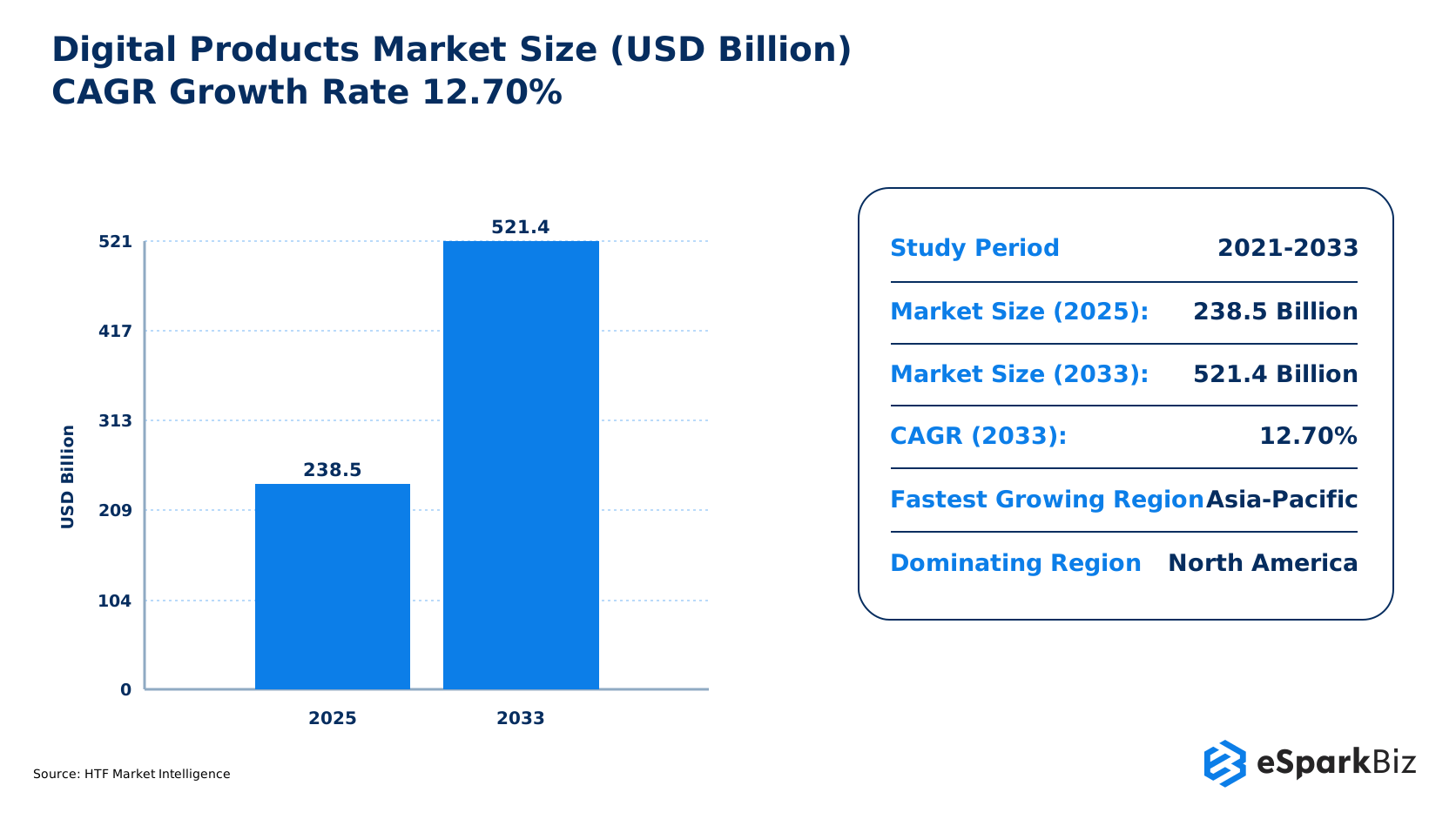
Before going further let’s look at how the digital product lifecycle connects customer needs with strategy, development, launch decisions, and continuous improvement.
What is a Digital Product Lifecycle?
A digital product lifecycle covers the full journey of a software product from the initial idea through development, launch, ongoing improvement and eventual retirement.
In practice, this journey includes everything from turning an idea into a design to building, launching, growing and improving the product as per user needs and market conditions change.
Here’s the part that people miss: a digital product does not end at launch. Updates, customer feedback and market shifts that keep the lifecycle moving.
That is precisely why decision makers should take care. Where a product sits in its lifecycle shows where investment is needed, where risks may emerge and what decision comes next.
Why the Digital Product Lifecycle Matters
A digital product lifecycle matters because every stage can affect what comes next. Poor lifecycle management can lead to late launches, rising costs, quality risk and products that struggle to maintain growth after launch.
AI is also changing how product teams approach lifecycle work. Industry projections indicate that Generative AI capabilities would be included in 50% of PLM vendor solutions by 2026 compared with about 5% previously.
For decision makers, lifecycle management is ultimately about making better decisions with less uncertainty. It provides visibility into where investment is needed, where risks may emerge, and how product decisions can affect customer value and long term performance.
Did you know?
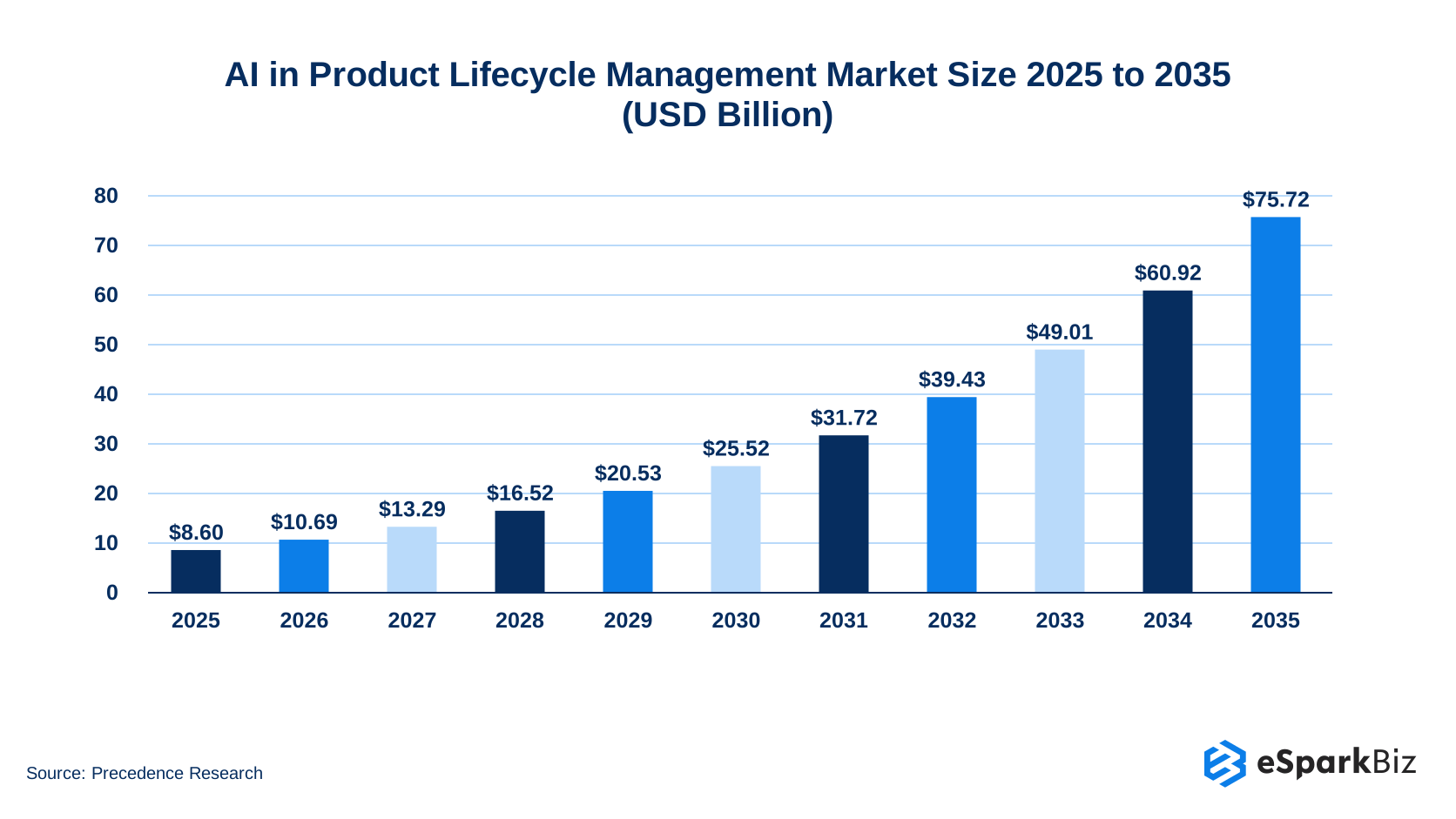
The Global AI in PLM Market is projected to reach roughly $75.72 billion by 2035 growing at a 24.3% CAGR with generative AI as its fastest expanding segment at 37.2% CAGR.
What are the 7 Stages of the Digital Product Lifecycle?
A digital product moves through distinct stages, and each one answers a different question from whether the idea is worth building to whether the product should keep evolving. Here is what happens at each stage and where key product decisions shape the new journey.
Practitioner Perspective
A Quora discussion describes the traditional product lifecycle through 4 broad phases – introduction, growth, maturity and decline with each phase shaping investment and product decisions.
1. Strategy and Discovery
Every product starts with a question: is this idea actually worth building?
This stage turns an initial idea into a clear product direction. Teams focus on:
- Product vision and business goals
- Market research and user personas
- Customer problems and needs
- Technical and financial feasibility
The purpose is very simple: reduce risks before actual development spending begins.
2. Design
Before writing code, create something users can actually respond to.
Wireframes, prototypes, UX flows and UI designs help to turn product requirements into a clear and usable experience.
The important step is validation. Test prototypes with real users before starting the full build. Their feedback can reveal confusing navigation, unnecessary steps or missing features while changes are still easier and less costly to make.
Think of design as the stage where you can still fix major product decisions without spending too much on that.
3. Development
This is where the approved idea becomes working software.
Teams move through sprints, write code, integrate systems, and test features as the product takes shape.
AI is becoming part of Software Development workflows. Stack Overflow’s 2026 pulse survey found that 59% of developers use AI agents nearly double the previous year’s 31%, although 63% of technologists rarely or never let agents operate fully autonomously
Illustrative example: A team could use AI to generate test cases for signup, payments, and password recovery then have engineers review and validate them before use.
4. Launch
Launch day is not the end line. It is the first real test.
Teams may choose a:
- Soft launch for limited exposure
- Phased launch for controlled rollout
- Full launch for broad availability
The product also needs support preparation, monitoring systems, analytics, documentation and a clear plan for handling issues when they occur.
A successful launch depends on the work completed before customers ever click “Sign Up.”
5. Growth
Once people start using the product, the questions change.
Now teams need to understand:
- Are users staying?
- Where do they drop off?
- Which features create value?
- Can the product scale?
- Is the business model working?
Product analytics helps to answer these questions by connecting them with real user behavior. A published NBC case study reported 2x Day 7 retention after applying product intelligence and experimentation.
The goal is not to track every possible metric. It is to focus on the data that helps teams to make better product decisions.
6. Maturity and Optimization
A mature product does not always need more features. Sometimes it needs fewer problems.
At this stage, teams may focus on:
- Improving performance and reliability
- Reducing operating costs
- Removing low value features
- Refining customer journeys
- Improving retention and efficiency
AI can help with monitoring, analysis and routine technical tasks. However, human review remains important. Recent 2026 industry discussions continue to highlight concerns around AI output accuracy, making human validation an important part of digital product development.
The goal here is steady improvement not to change for its own sake.
7. Decline and Retirement
Every product eventually faces the same question: keep investing, change direction or let it go?
Decline may appear through:
- Falling usage or retention
- Rising maintenance costs
- Outdated technology
- Changing customer needs
- A stronger replacement of product
Before retiring a low usage feature, compare its adoption, revenue contribution, customer importance and maintenance costs. Continue improving it if it serves an important customer need or supports renewals. Consider sunsetting it if usage remains low, a better alternative exists and its maintenance costs outweigh its value.
Retirement should be planned, not abrupt. Give customers advance notice, provide a migration path or suitable alternative, enable data export where applicable and prepare a support plan. Set a clear retirement date based on customer impact, contractual obligations and migration complexity.
For clear accountability, assign an owner to each stage, define its key deliverables and set exit criteria before moving forward. For example, the product manager validates feasibility, the designer validates usability and the engineering lead ensures quality checks pass before launch.
A product’s final stage still shapes the customer experience.
Worth Watching
Not every product lifecycle follows the same stage count. This video presents a 5 stage model such as development, introduction, growth, maturity and decline showing how frameworks can vary by product and context.
What 2026 Data says about Digital Product Development
Numbers tell a clearer story than predictions. These below figures highlight the forces influencing how digital products are built, improved and funded in 2026.
- AI in product design: 71% of automotive development professionals surveyed in 2026 report using AI in product design.
- Software complexity: 53% identify managing software complexity as their biggest quality concern up from 28% in the previous year’s survey.
- AI in software development: 90% of professional developers use AI coding agents at work at least weekly.
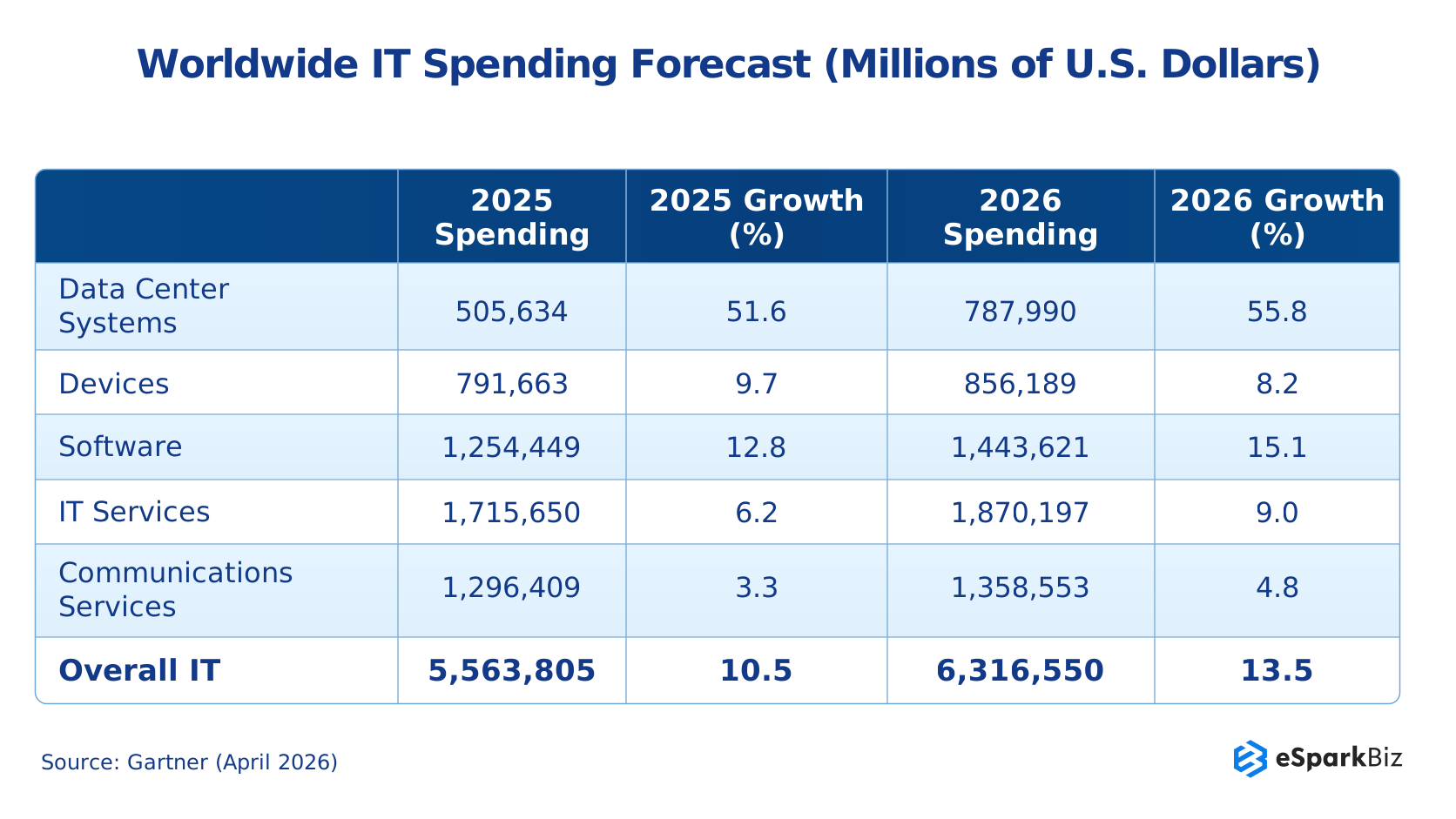
- Global IT investment: Worldwide IT spending is forecast to reach $6.31 trillion in 2026 a 13.5% increase from 2025.
Best Practices for Managing the Digital Product Lifecycle
A lifecycle works better when teams can see what is changing, understand why it matters and act before problems become expensive.
| Practice | Focus | Why It Matters |
| Living product strategy | Update goals and priorities | Keeps decisions aligned with current conditions |
| Shared lifecycle visibility | Connect data across teams | Reduces disconnected decisions and blind spots |
| Embedded AI | Build AI into relevant workflows | Makes AI part of everyday product work |
| Early retirement planning | Prepare for the product’s end | Reduces disruption when retirement becomes necessary |
| Quarterly feature reviews | Review usage, value and maintenance costs | Helps teams to improve or retire features before complexity grows |
The common thread: lifecycle management should account for both the product’s current needs and its eventual next move.
Common Post Launch Mistakes to Avoid
Post launch success depends on how well teams respond to user needs, product performance and changing risks. Avoid these common mistakes to maintain product quality and user trust.
- Ignoring user feedback: Unresolved complaints reduce satisfaction. Review feedback regularly and prioritize recurring issues.
- Tracking vanity metrics: Downloads alone do not show product success. Monitor retention, churn and active users.
- Releasing untested features: Changes can introduce usability issues or bugs. Test features before a wider rollout.
- Neglecting security and performance: Slow response times and vulnerabilities erode trust. Schedule security checks and monitor performance.
- Postponing maintenance: Technical debt grows when updates are delayed. Plan regular bug fixes, dependency updates and improvements.
Product Health Check: Is Your SaaS Product Maturing or Declining?
Imagine you run a 25 person B2B SaaS company, but growth has flattened. Before investing in new features, assess four signals:
- Retention: Are customers renewing or leaving?
- Expansion revenue: Are existing customers upgrading?
- Support tickets: Are recurring complaints increasing?
- Feature usage: Are customers still using core features?
What it means: Stable retention and core feature usage may indicate maturity. Rising churn, falling feature usage and weakening expansion revenue may signal decline.
Review these trends over several months before deciding whether to optimize, reposition or retire the product.
In-House vs. Outsourced: Who should Manage the Lifecycle?
Your product does not necessarily need one team for every stage. The right delivery setup depends on what your organization already has and what the product still needs.
- Choose in-house ownership when direct control, internal knowledge and long term capability are priorities.
- Consider an external partner when you need experienced support, extra capacity or more flexible delivery..
- Use a blended approach when internal teams should retain ownership, while external specialists fill specific capability or capacity gaps.
This is also a common question among product teams on Reddit and Quora: how much product work should stay in-house and when does outside support make more sense?
There is no single answer. Factors such as product complexity, budget, security needs, available skills, timelines and ownership requirements all play a role in the decision.
How is the Digital Product Lifecycle different from Traditional PLM?
A digital product may borrow the lifecycle concept from traditional PLM but software changes the rules. Instead of moving steadily toward physical retirement, digital products can return to earlier stages whenever data, users or market conditions call for change.
| Dimension | Digital Product Lifecycle | Traditional PLM |
| End state | Continuous updates and iteration | Physical retirement or replacement |
| Change driver | Usage data and user feedback | Wear, redesign, production limits |
| Tooling | Cloud product and analytics platforms | Engineering and manufacturing PLM tools |
| Update cycle | Often weekly or monthly | Usually tied to production cycles |
| Stage flow | 6-8 stages, often revisited | Generally linear |
Digital products keep changing. Their lifecycle is not just about finishing one stage and moving to the next one. Teams keep making changes based on what the product needs.
When Do Software Teams Need PLM Tools vs. Product Analytics?
Software teams use different tools depending on whether they need to manage product development or understand user behavior.
- PLM tools: Help manage product requirements, development workflows, releases, dependencies and technical documentation. They are useful when teams need better control over complex software projects.
- Product analytics tools: Track user behavior, feature adoption, retention and drop-off points. They help teams to identify what users need and which product improvements to prioritize.
Should you use both? Yes. PLM tools help teams to manage how they build and maintain software while product analytics helps them to decide what to improve based on actual user behavior.
When Should You Hire a Product Engineering Partner for Your Lifecycle?
A product engineering partner can help when your in-house team lacks the capacity or expertise to move a product forward. The right time depends on your biggest challenge at each stage.
- Design: Bring in a partner when user research, UX or interface design needs specialist support.
- Development: Consider one when your roadmap exceeds internal engineering capacity or requires skills your team lacks.
- Growth: Seek support when performance issues, product analytics, scalability, or feature improvements slow progress.
- Maturity: Get help with modernization, technical debt, maintenance, and ongoing optimization.
Should you outsource or build in-house? Keep product strategy, customer knowledge and core business decisions close to your team. Consider a partner for specialist execution or additional delivery capacity. Learn more about product engineering services to understand how external expertise can support your product goals.
How eSparkBiz Supports Every Stage of the Digital Product Life Cycle
At eSparkBiz, we help businesses plan, build, launch, and maintain digital products around their business goals and user needs. Our digital product development services cover all key stages of the product life cycle, from early planning to ongoing improvements.
How we support your product journey:
- Plan with purpose: We clarify business goals, user needs, technical feasibility and MVP requirements before development begins.
- Design around users: We create user journeys, wireframes and prototypes to help validate product ideas and usability.
- Build and validate: We develop features, integrate systems and test functionality, performance and security.
- Launch and measure: We support deployment and help teams to monitor product performance, adoption and user feedback.
- Improve or retire: We help plan feature upgrades, address technical limitations, and assess when a product needs major changes or retirement.
What should you confirm before starting? We recommend agreeing on project scope, deliverables, timelines, costs, source code and IP ownership and post launch responsibilities in writing. These details give both sides a clear basis for managing delivery and future product decisions.
Frequently Asked Questions
What are the stages of a digital product lifecycle?
The lifecycle typically covers strategy and discovery, design, development, launch, growth, maturity and optimization then decline and retirement.
How is software product lifecycle management different from traditional PLM?
Software product lifecycle management focuses on managing software from planning and development through launch, maintenance and retirement. Unlike traditional PLM, which often centers on physical products and manufacturing, software lifecycle management emphasizes continuous updates, user feedback, performance and security.
How long does each stage of a digital product lifecycle typically take?
The time can vary depending on the product, team and goals.
- Strategy and discovery: A few weeks to several months
- Design and development: A few weeks to several months
- Launch, growth and optimization: Ongoing
- Retirement: Depends on the product and business needs
What role does AI play in the digital product lifecycle in 2026?
AI can be supported in research, coding, testing, analytics, monitoring & other lifecycle activities while teams remain responsible for decisions and oversight.
How do you know when a digital product has entered decline?
A product may be entering decline when,
- Users are using it less often
- Revenue or retention starts to drop
- Maintenance costs are no longer worth it
- The product no longer meets user needs
What is the difference between a software development lifecycle and a digital product lifecycle?
The software development lifecycle focuses on building software while the digital product lifecycle covers strategy, growth, optimization and retirement.
What is the difference between in-house and outsourced product engineering services?
In-house teams offer direct control and ongoing collaboration, while outsourced product engineering services provide access to external expertise without the need to hire every specialist internally.
What happens during the maturity stage of a digital product lifecycle?
The product is already developed so the focus shifts to keeping it working well, making small updates, monitoring its performance and keeping costs under control.
How much budget should I plan for each stage of a digital product lifecycle, from MVP to maturity?
There is no set price. The cost depends on several factors such as product size, team, technology, features, maintenance, and how the work is handled.
What is the best way to plan for retiring a digital product responsibly?
The budget depends on product complexity, features, integrations, and ongoing maintenance needs. eSparkBiz lists basic MVP development starting at $10,000 and SaaS product development at $40,000+. These are starting prices, not fixed costs for individual lifecycle stages.
Plan separately for strategy and design, development, launch, post launch improvements and ongoing maintenance. Request a stage wise estimate based on your product scope rather than dividing the total budget equally across all stages.
How much does it cost to outsource digital product development from discovery to launch for a B2B web platform?
The cost of outsourcing the complete digital product lifecycle typically ranges from $10,000 to $250,000+, depending on product complexity, integrations, security and team location. These figures are estimates and may vary based on your project scope and requirements.
What are the best product engineering services companies for US businesses?
Companies to consider include eSparkBiz, Accenture, TCS and EPAM Systems. Compare their lifecycle coverage, post launch support, product analytics expertise and relevant client references before choosing a partner.


 August 14, 2026


