
 Last update date:





Quick Summary :-
Mobile application development has become the talk of the town these days, but earning revenue from them is a challenge. Here, in this blog, we present some money making business models for mobile applications starting from freemium, affiliate marketing to subscription and paid apps to let the readers know how to monetize the app.The smartphone sector has seen a tremendous boom in recent years. With companies launching affordable phones and having a wide distribution network, they have been able to penetrate the markets exponentially and reach every sector of the economy.
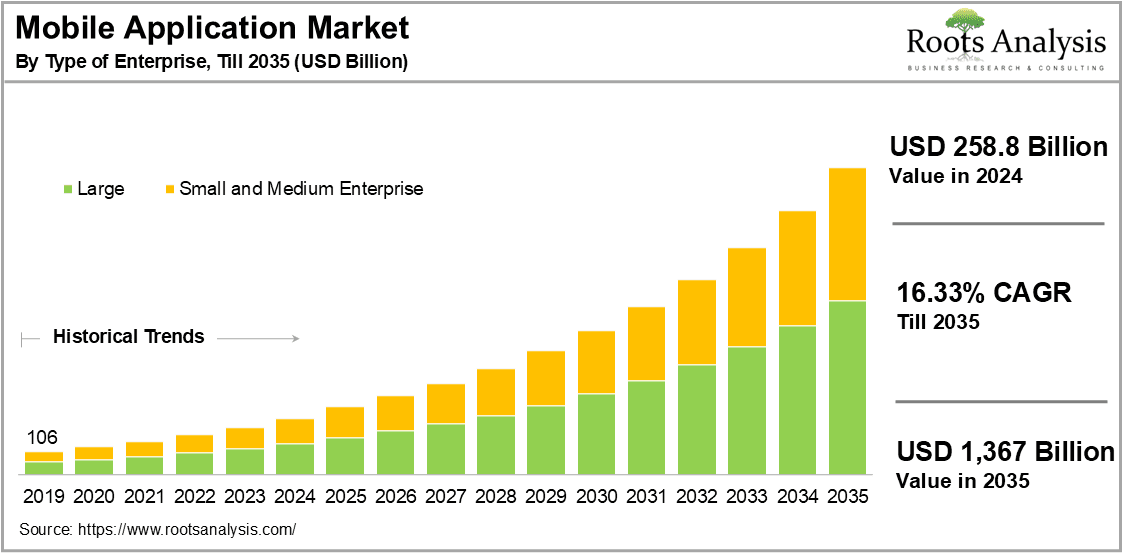
If mobiles are the engines, apps are their fuel. In probable circumstances, you must be reading this article through an app! Now, developing an app sure costs money and resources. The mobile application market size is projected to grow to USD 1,367 billion by 2035, representing a CAGR of 16.33%, during the forecast period till 2035.
Naturally, anyone who develops an app will want to have a source of revenue from the same. With advancements and innovations, a bunch of possibilities have opened up to make this a reality.
Developing an app yourself and facing the dilemma of which business model to apply? Let us analyse all the available options of Business Models for Mobile App Development, one after the other, to make the right choice.
A Quick Comparison of the Top 10 Business Models for Mobile App Development
Here’s a simplified table summarizing the monetization models mentioned in the blog for easy comparison and understanding:
| Business Model | How It Works | Best For | Pros | Cons |
| Freemium | Basic features free; pay for premium via in-app purchases or subscriptions | Games, utility apps | Large user base, easy onboarding | Low conversion rate (~2%) |
| Advertisements | Display ads in-app; earn via impressions/clicks | Apps with large user base | Easy to set up, passive income | Can harm UX if overused |
| Subscription (SaaS) | Monthly/annual payment for full access | Streaming, content, tools apps | Predictable revenue, loyal users | High churn rate if not consistently valuable |
| Sponsorships | Partner with brands to promote within your app | Niche or high-traffic apps | Extra income without user cost | Requires strong niche presence or user base |
| Affiliate Marketing | Promote third-party products; earn commission on sales | Review, content, recommendation apps | Non-intrusive, scalable | Depends on conversion rate and trust |
| E-commerce | Sell own products or allow others to sell on your platform | Retail, delivery, marketplace apps | Direct revenue or commissions | Logistics and inventory may be challenging |
| Paid Apps | Charge upfront for downloading the app | Utility, professional niche apps | Instant revenue per install | Limits user acquisition; app store commissions |
| Commission-Based | Connect two parties; charge a fee per transaction | Booking, delivery, freelance apps | Scalable and proven model | Need a reliable service ecosystem |
| Selling User Data | Sell user behavior or contact info to 3rd parties | Data-driven apps (discouraged) | High revenue potential | Serious privacy/legal risks |
| No Monetization Yet | Focus on growing users; monetize later | Social, viral, or investor-backed apps | No friction for users | Risky without funding or a future plan |
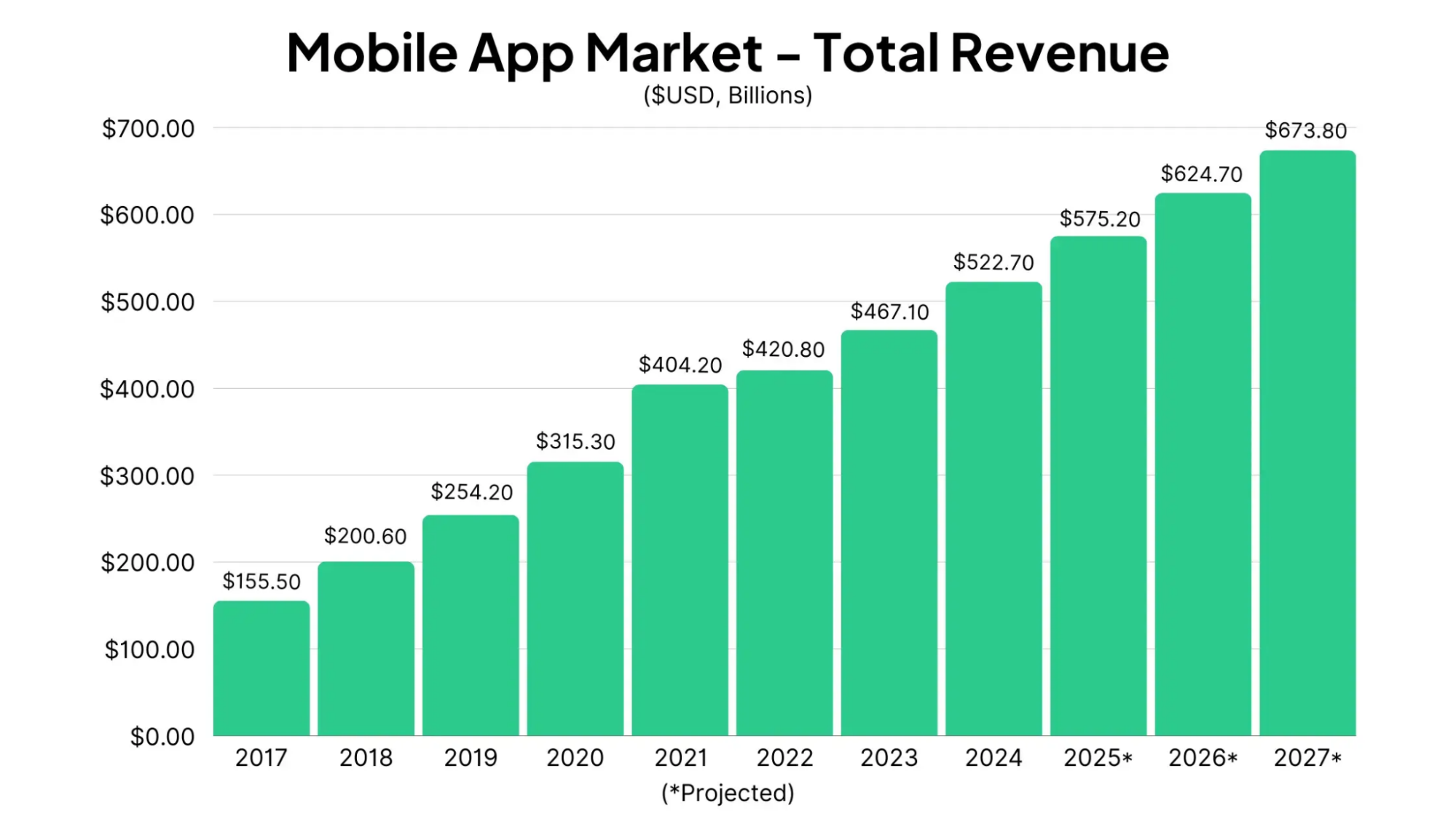
Did You Know?
“Worldwide mobile app revenue was worth just $155.51 billion in 2017. The market has grown nearly 3.5x in seven years, and is projected to reach $673.79 billion by 2027, an increase of around 29% in three years.”
Freemium models
More than 7 billion people populate our world. Naturally, more people are inclined towards things that are free than what is paid.
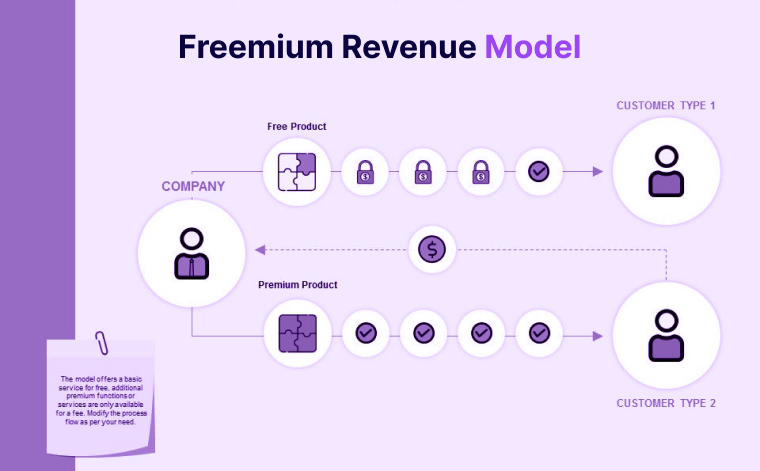
The freemium model allows the developers to get a massive user base because it’s free for the user.
For the revenue, it offers the option for users to enhance their experience through purchases and subscriptions within the app, also called in-app purchases.
Do note that only around 2% of the users will get converted in the best case, but the other 98% help you reach the potential audience. The reach makes the model very powerful and is widely popular for games and other mobile applications
Advertisements
Digital advertisements have become widely prevalent and easy to integrate. Several platforms like Google Ads allow app developers to run ads in their app’s interface and earn money out of it.
It is a great business model, and developers need not demand money from the users, while they can generate decent revenues.
Although, earnings per user is quite minimal unless too many ads are pushed. Doing that hampers the user experience and also drives them away. Hence, the success of this model relies on a wide user base.
Subscription/ SaaS Model
This business model relies on users buying the app subscription in exchange for its services. With the rise of OTT apps like Netflix and Amazon Prime, this model has gained prominence quickly.
Explaining it in simple words, the users will pay a certain amount of money on a monthly or annual basis, and the users can access the app properly,i.e, without being disturbed by ads.
This model is widely popular for video-streaming, music, and e-book related applications. You can also adopt a free trial period or keep some of the content free for everyone to lure more customers.
Also Read : A-Z Information About The SaaS Pricing Models SaaS Pricing Models
Sponsorships
Start-ups these days are in the continual hunt to attract new customers. It has led them to adopt varied marketing techniques, sponsorships being one of those.
They pay a certain sum of money to collaborate with the app to initiate or integrate their campaign in their app. For this, your app should have a large user base or a great reach in a niche-specific group.
Example: Zomato displaying the restaurants it has partnered with on top of its application to incite more orders from these restaurants.
Affiliate Marketing
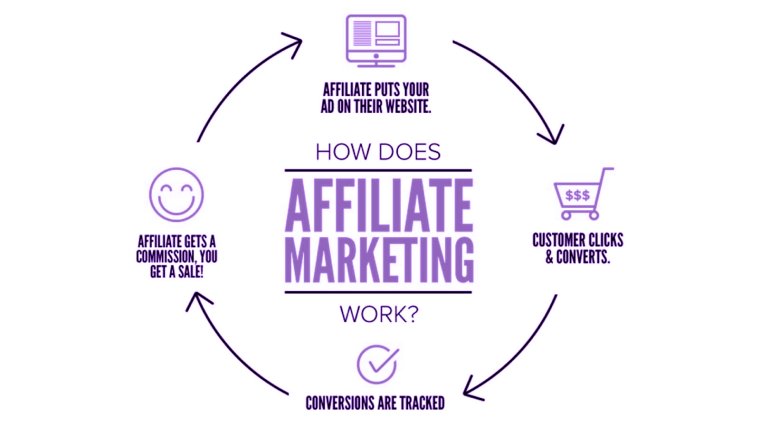
Affiliate Marketing is a simple business model. Most e-commerce apps like Amazon and Flipkart offer affiliate memberships for their platforms.
If a sale is made through the affiliate member’s link on the e-commerce website, the member receives a certain percentage as commission. It allows the app developers to earn decent money without hampering the user experience with ads or compel them to pay.
Nowadays, affiliate marketing has established its existence in several other types of businesses apart from e-commerce development. This model can be easily applied by reviewers or apps that can influence decisions.
E-commerce applications
Selling on the internet has very quickly become a thing. One can order anything and everything from books, mobiles to even food and medicine online.
Thus, this opens us a wide opportunity to develop a business model around the same. You can either choose to sell your products or allow other sellers to list their products on your platform.
If you opt for the first option, there will profit margins for the products you sell. For the latter, you charge a certain percentage of commission from the seller.
This model has already proved its mettle, making Jeff Bezos the richest man on Earth for a considerable time.
Paid Apps
Both the well-known application stores in existence, the Google Play Store and App Store by Apple, allow app developers to list their apps on their platforms either for free or by paying a certain amount of money.
If you choose to make your app a paid one, you will earn money every time someone installs the app. Please note that both the App Store and Play Store charge 15% as commissions for all the sales made through their platforms for the first 1 million dollars each year.
If the revenues are more than a million dollars, Play Store charges 30% for everything beyond the million, while Apple shall levy 30% on the whole amount.
Although an attractive prospect, it limits your audience substantially. Developers should adopt this model only after proper market research based on extensive data.
Commissioned Apps
It is again a great business model available in our realms. Businesses need customers to keep thriving. Customers need assistance from various businesses for a bunch of their daily needs.
If you can act as an intermediary between the two parties through an app, both of them wouldn’t mind paying some extra money as commissions for the convenience your app provides.
Due to this, this model has gained popularity, and around 26% of developers are building apps this way, earning the lion’s share of 56% from the total revenue.
Selling the user data
With the advent of data science and data analytics, data has become a more prized possession than diamond and gold. Data can be used in several ways by organisations to generate results.
A simple example would be schools selling their students’ data, like their phone numbers and email addresses, to coaching institutes. The coaching institutes then use the data to know about the interests of the students and persuade them to attend their classes.
People have become too conscious of sharing their data, which is not wrong. Data is sensitive information, and this business model should be avoided if possible and only be used as a last resort.
Not having a business model
It may sound absurd, but it is a wide practice done on a large scale by app developers. These types of apps are mostly developed for non-profit motives, and the intention goes beyond money.
WhatsApp can be a prime example of this. For so many years, it has been running without a revenue model. Recently, they decided to sell some of the user’s data. It received a lot of resentments, and the move has been postponed for a while.
Some top mobile app development company also use this practice with plans to monetise their apps in the future. The central idea is to make the user so used to the app that they won’t mind paying some money in the future to use it.
This method is again not for everyone. Consider this only if you have the backing of revenues from some other business or have a large sum of capital money from angel investors. Otherwise, we will recommend you choose a proper business model.
Frequently Asked Questions
Start by looking into your target audience, the app's fundamental or main value, and your long-term goals. Some models are better for particular types of apps and user activity than others.
Yes, most developers use two or more models simultaneously, such as ads with in-app buys or subscriptions with freemium entries, to capture more revenue.
Yes, there is no charge for combining a few revenue models, e.g., freemium with advertising or subscription, for better revenue prospects that fit various user segments more comfortably.
Some of the more common mistakes involve alienating your customers with ad overload, too much dependence on solely latching onto a single revenue stream, and failing to actually do research on the best pricing strategy needed in your app's market.
The freemium, affiliate, and advertising models can be classed as low-risk. By their nature, they ask nothing of the users upfront; rather, they build a user base while experimenting with monetisation options.