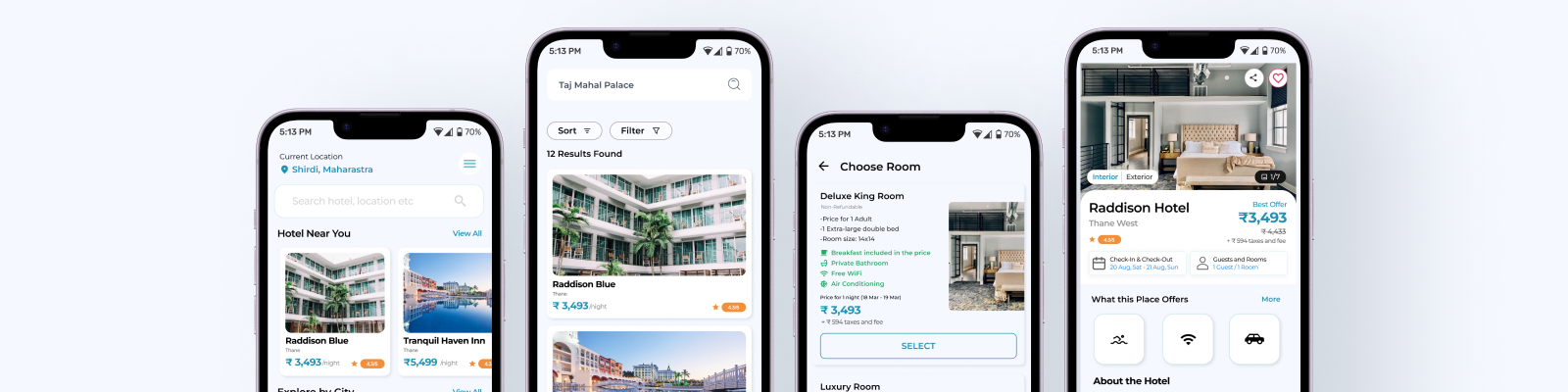
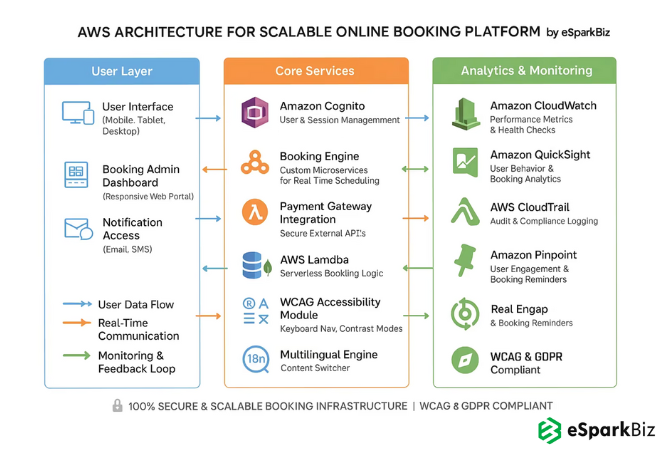
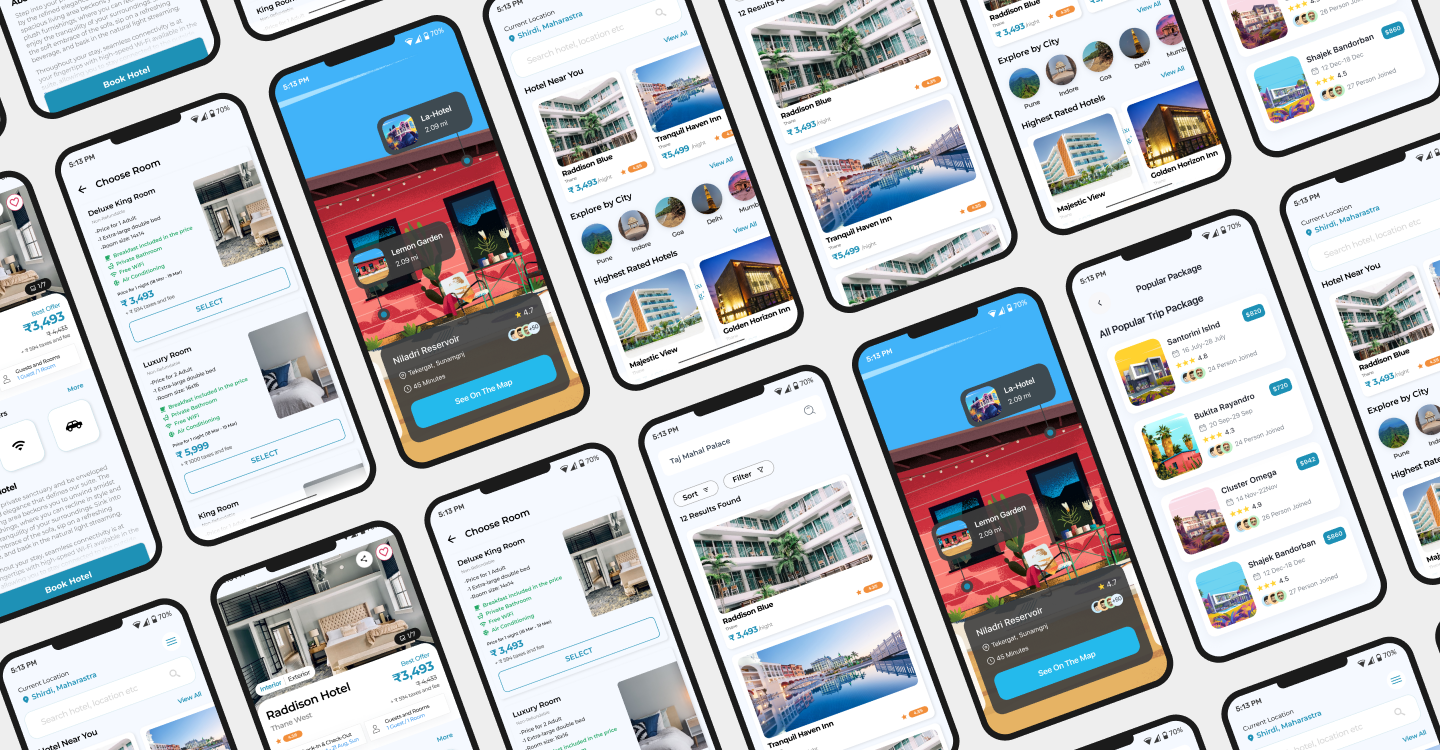
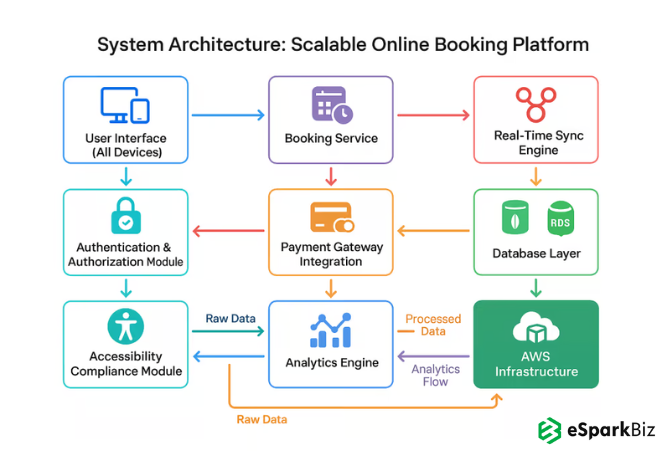
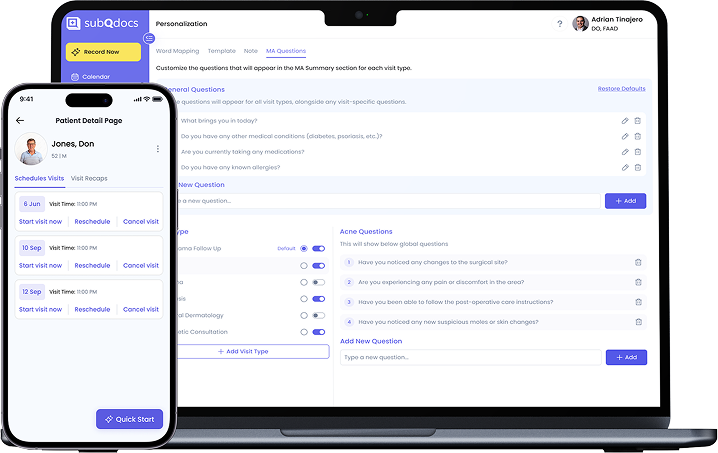
eSparkBiz found that the project hit major hurdles such as delivering seamless functionality across multiple devices, designing an easy to use and accessible interface, handling real time data updates and growth, speeding up load times and securely connecting to external systems without compromising stability.
Cross Device UI Inconsistencies
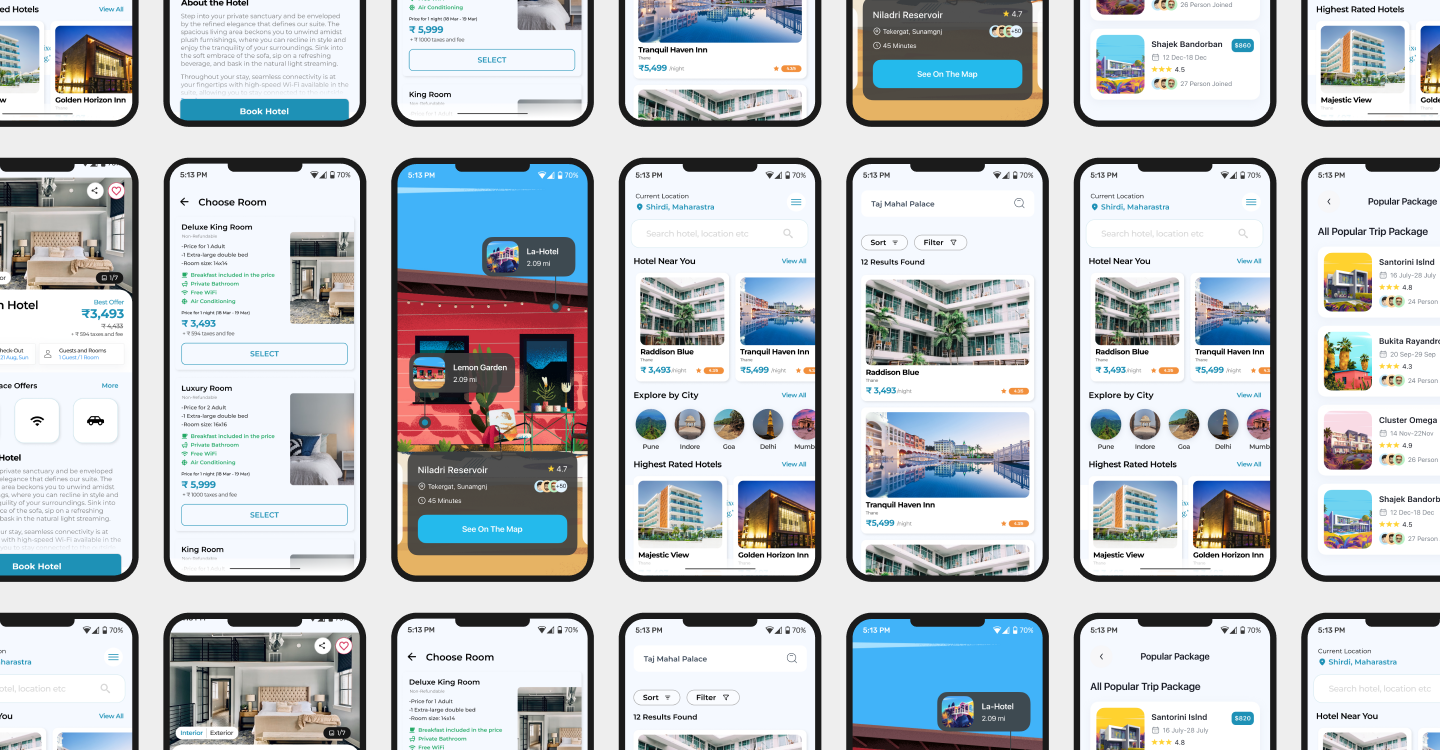
Getting the booking platform to work across all devices was tough. Differences in screen sizes, operating systems and browsers caused UI/UX glitches and inconsistent user experiences that required extensive testing and iterative fixes.
Real Time Data Accuracy
Synchronizing real time booking updates across multiple users was complex. Delays or mismatches could result in double bookings or outdated availability, required robust backend solutions to maintain accurate and instant data sync.
Scalability Under Load
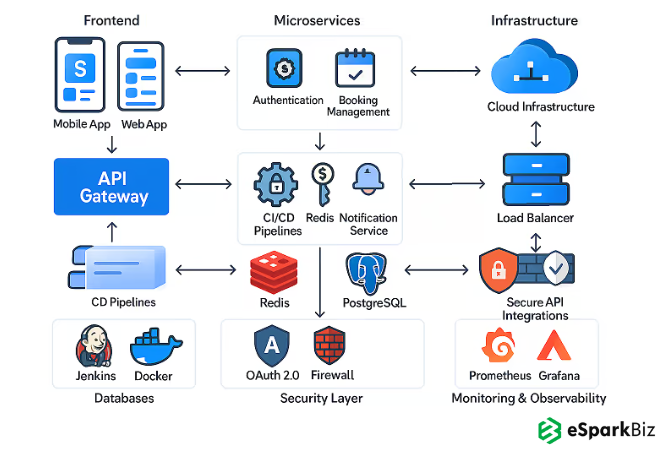
Handling traffic spikes during peak booking times threatened to overwhelm the servers. Ensuring the platform scaled dynamically without performance dips involved setting up load balancers and optimizing backend services for high concurrency.
Accessibility Compliance
Designing an intuitive platform that met accessibility standards for users with disabilities was hard. Features like screen reader support, keyboard navigation and color contrast adjustments required detailed attention to comply with regulations and enhance usability.
Secure Third Party Integrations
Integrating payment gateways, calendar APIs and other external services securely was risky. Balancing smooth interoperability with strict security protocols was key to protect user data and overall platform trust.
Performance Optimization
Getting fast load times with complex features required optimization strategies like lazy loading, asset minification and server side rendering. This was critical to prevent user drop off and maintain engagement especially on slower networks.
Complex User Flows
Users often struggled with multi-step booking processes that lacked clarity and flow, resulting in higher drop-off rates. Complex navigation between date selection, service options, and payment pages created friction and confusion, especially for new users.
Multilingual User Support
The platform needed to serve users across regions with varying languages and preferences. Offering localized content without disrupting the UI layout was challenging, particularly when dealing with right-to-left (RTL) scripts and dynamic content translations.