

- What Team as a Service actually means
- When it is the right fit
- What you can typically expect to pay
- Governance, IP Ownership, and Risk
- How to choose right provider
Your product needs specialized talent now, not after weeks of sourcing candidates, interviewing them, and building a new team. That is where Team as a Service (TaaS) can fit – giving you a provider assembled team without managing each hire individually.
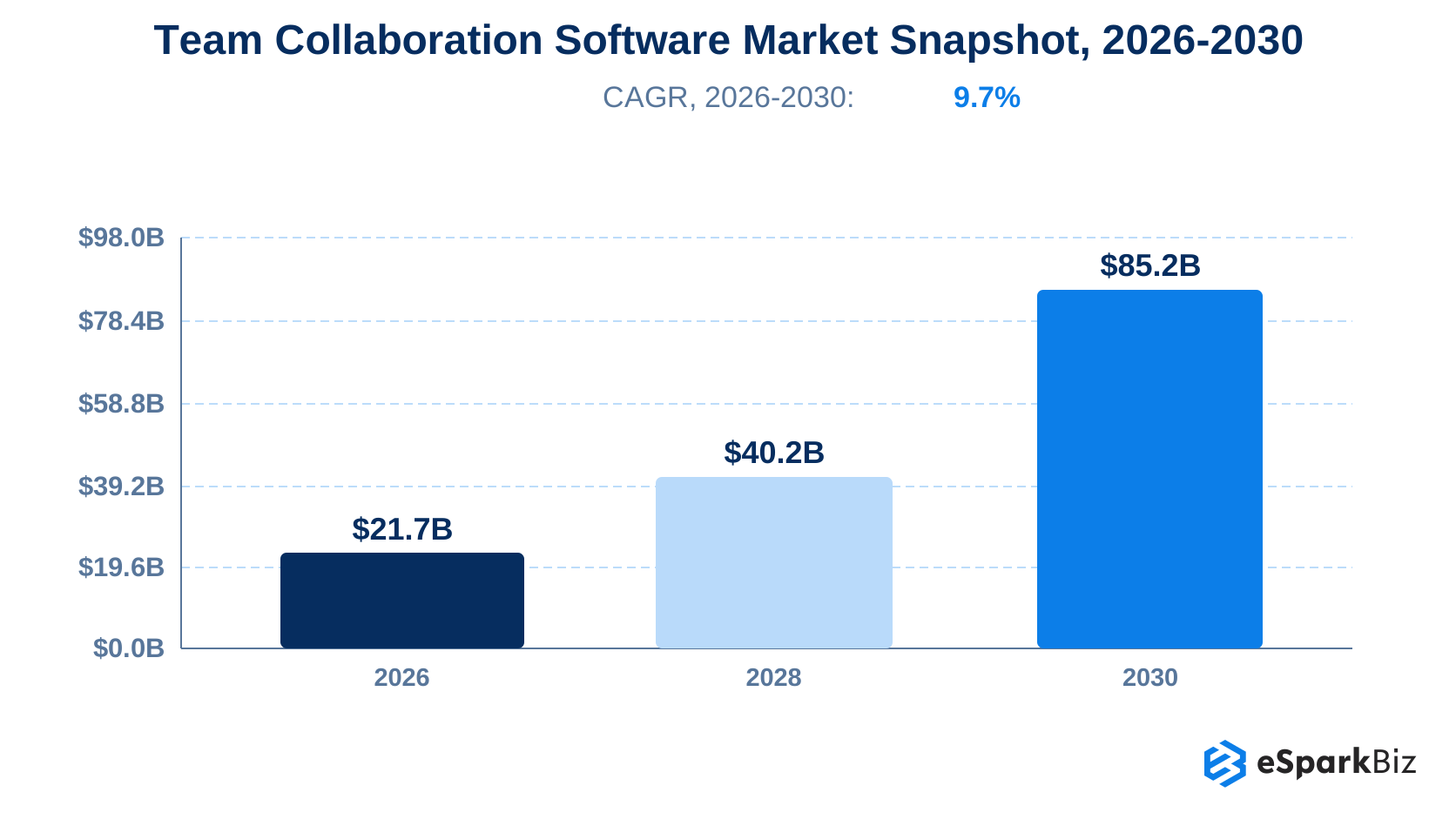
The Global Team Collaboration Software Market is projected to rise from USD 44.6 billion in 2026 to USD 85.2 billion by 2033 growing at a 9.7% CAGR. As collaboration becomes more important to distributed delivery, TaaS provides a structured way to bring an experienced team together for a defined need.
What is Team as a Service?
Team as a Service (TaaS) is an engagement model where a provider supplies a pre assembled team, such as developers, QA engineers and designers and manages it day to day. You set priorities, approve work and pay for the team rather than individual roles.
The Simple Version
The idea is very straightforward: hire the team not the seats.
The provider puts the right roles together and manages the team so you can focus on what needs to be delivered.
How it differs from Staff Augmentation and Outsourcing
The distinction comes down to how the people are engaged with your project:
- Staff Augmentation gives you individual specialists who work within your structure.
- Team as a Service gives you an already coordinated team.
- Outsourcing usually means assigning defined work or functions to a provider.
Did You Know?
90% of enterprises could face critical skill shortages of AI, potentially leaving $5.5 trillion in productivity unrealized according to IDC. This highlights why access to specialized teams can matter, when building AI capabilities quickly.
How Team as a Service Works: From Scoping to Delivery
A Team as a Service (TaaS) engagement moves from project scoping to team formation, onboarding, and sprint delivery. The provider coordinates the team while you set priorities and review outcomes.
The Typical Engagement Sequence
- Define the scope (1-3 business days): Agree on project goals, required skills, deliverables, and success criteria.
- Build the team (3-10 business days): Select suitable professionals, confirm responsibilities, and finalize the engagement plan.
- Integrate the team (2-5 business days): Provide tool access, documentation, coding standards, and security guidelines.
- Plan the first sprint (1-2 business days): Prioritize tasks, define acceptance criteria, and agree on the sprint goal.
- Start delivery: Develop, review progress, resolve blockers, and use sprint feedback to refine upcoming work.
These are indicative planning estimates, not verified eSparkBiz timelines. A straightforward engagement may reach its first sprint within 1-3 weeks, depending on team availability, project complexity, and onboarding requirements.
Who Manages the Team and Daily Tasks?
A dedicated team should have clear ownership of daily work. If you still manage every task, the responsibilities between you and the provider may not be clearly defined.
Agree on these responsibilities before delivery begins:
- Daily stand-ups: The team lead or delivery manager runs meetings and tracks blockers.
- Backlog ownership: You set business priorities, while the team lead organizes tasks and sprint execution.
- Progress reporting: The provider shares weekly updates on completed work, upcoming tasks, risks, and delays.
- Escalation path: The team lead handles routine issues and raises major blockers or scope changes to you.
This structure lets you focus on business priorities while the provider manages day to day coordination. Define these responsibilities during onboarding so everyone understands who owns each decision.
What Does Successful Integration Look Like?
The team follows your agreed workflows, uses your project management tools, communicates with internal stakeholders, and meets defined security and coding standards. Clear responsibilities, accessible documentation, and regular progress reviews help keep delivery aligned with business goals.
Reddit Community Insight
A recent Reddit discussion suggests that Team as a Service can offer better continuity when the same engineers remain involved while clear priorities and product ownership help to keep delivery focused.
When does Team as a Service make sense?
TaaS is generally worth considering when speed, specialized expertise and coordinated delivery matters more than building the entire capability internally.
It can fit projects where:
- The outcome is defined: The team has clear and defined goals, priorities and delivery expectations.
- Multiple skills are required: Several specialists need to contribute as one unit.
- Hiring would slow progress: Building the team internally would take a long time.
- You want provider managed coordination: The provider handles team management while you just need to guide your product priorities.
- Capacity needs may change: The team can be adjusted as the project develops.
Team as a Service is not always a replacement for internal hiring. The right model always depends on your level of control, project duration, available skills and delivery requirements.
When Should You Bring in a Dedicated Team Instead of Hiring One by One?
If you are building a new SaaS product, hiring frontend, backend, QA, and DevOps professionals separately can leave you responsible for coordinating their work. A dedicated development team brings these skills together under an agreed delivery process, helping align development, testing, deployment, and product priorities.
A dedicated team may be the better choice when:
- Your product needs several technical skills working together from the start.
- You expect ongoing development and changing requirements.
- You need regular testing, releases, and deployment support.
- You want a coordinated team without recruiting every role individually.
Before choosing a provider, confirm who manages daily delivery, how progress is reported and how code quality and security are maintained.
If you need multiple specialists working as one unit, review eSparkBiz’s dedicated development team services to assess the engagement model.
Example: Can a Small Fintech Build a Mobile App with TaaS?
A 25 person fintech with one engineering manager can use a TaaS unit to build its mobile app while its internal team focuses on core products, provided ownership and oversight are clearly defined.
- Team composition: One mobile developer, two full stack or backend developers, one QA engineer and one UI/UX designer, adjusted to the app’s scope.
- Governance: The engineering manager sets priorities and approves architecture. The team holds daily stand ups, weekly progress reviews, and sprint reviews every two weeks.
- Security and compliance: The fintech retains control of production access, sensitive data, security approvals and regulatory decisions.
- Handoff: Require documented code, automated tests, API documentation, deployment instructions and knowledge transfer sessions before final acceptance.
Best fit: This model works when the manager can guide priorities and review delivery without having to coordinate every task. The provider’s responsibilities, deliverables and handoff terms should be agreed upon in the contract.
The Hidden Costs and Tradeoffs of Team as a Service
The advertised Team as a Service rate is only a single part of the equation. Other costs can come from communication, changing requirements, knowledge transfer, team changes & ongoing coordination.
Hidden Costs to Consider
- Onboarding time: The team needs time to understand your product, systems, tools, and proper workflows.
- Knowledge transfer: Documentation and handovers may require additional time when responsibilities or team members get changed.
- Scope changes: New requirements can increase delivery timelines, team needs or project costs.
- Coordination effort: Regular communication, reviews, and alignment are still required involvement from your internal team.
- Management overhead: Provider managed teams still require clear priorities, feedback, and stakeholder coordination.
Key Tradeoffs to Consider
- Less direct control: A provider manages the team, giving you less control over individual team members.
- Provider dependency: Delivery can depend on the provider’s management and continuity processes.
- Team continuity: Changes in team members may affect the product context and accumulated knowledge.
- Scope flexibility: Changing requirements may affect timelines, team composition or pricing.
- External collaboration: The team must understand your product, processes & business context to work effectively.
Team as a Service: Due Diligence for IP Security and Delivery Risk
Think beyond the team and the price. A well structured Team as a Service engagement should protect your IP, data, access, and project continuity from the start.
Who Owns the Code and IP
Make ownership clear in the agreement. Confirm who owns:
- Source code and documentation
- Designs and project deliverables
- Pre existing or third party components
- IP created during the engagement
Data Security and Access Expectations
Your provider may need access to repositories, credentials, cloud systems or customer data. Clarify the below things first:
- Who gets access and at what level
- How data and credentials are protected
- How access is removed when no longer needed
- Which security or compliance requirements to apply
What Happens if a Team Member Leaves?
A team member leaving mid-project can cause delays and knowledge loss. Before signing, confirm that your service agreement covers replacement timelines, knowledge transfer, and project documentation.
At eSparkBiz, we focus on keeping projects on track through:
- Clear documentation: Keep code, tasks, and project decisions documented.
- Backup resources: Identify suitable backups to reduce dependency on one developer.
- Smooth handovers: Allow time for outgoing and incoming developers to share project knowledge.
- Team stability: Agree on minimum tenure expectations and replacement timelines.
These measures help reduce disruption and keep your project moving when team changes occur.
Team as a Service Pricing and Cost Breakdown for 2026
Team as a Service pricing majorly depends upon how the engagement is structured. Before comparing different quotes for your Project, first look at what the fee covers and what triggers payment. A lower hourly equivalent does not necessarily mean a lower total cost if scope, team structure or delivery expectations differ.
How TaaS Engagements are Typically Priced
TaaS providers typically structure fees around how the work gets measured and delivered. The billing model you choose can influence payment timing, budget predictability, and accountability.
- Milestone based: You pay when agreed project stages are completed such as a feature or release.
- Outcome based: You pay based on agreed results or goals instead of the number of hours the team worked.
- Fixed monthly fee: You pay the same agreed amount each month for the dedicated team and its services.
What affects the Price
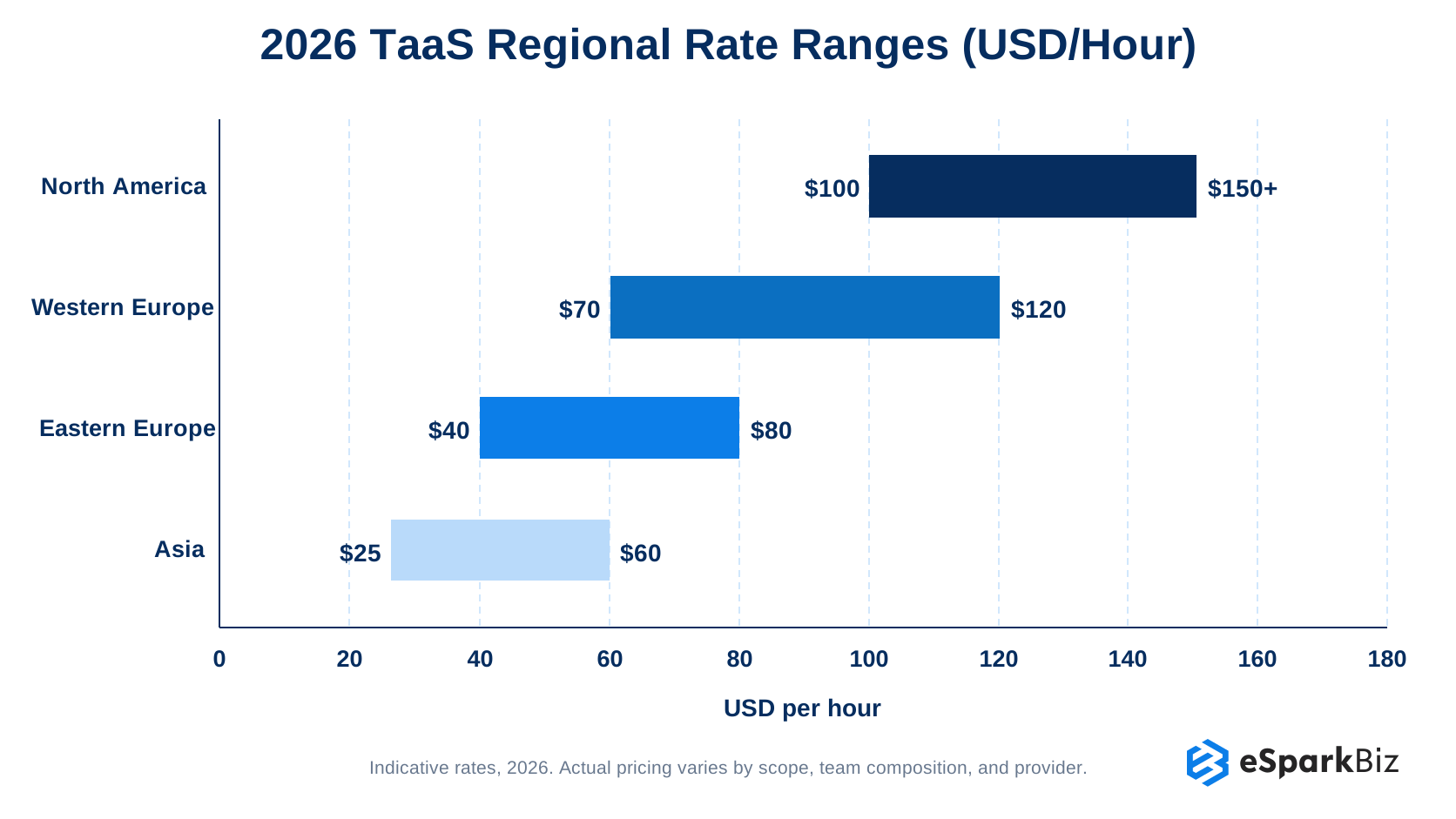
Team size, required expertise, project scope, engagement duration, technology stack, and location all can affect the final price. For 2026 indicative software development rates commonly vary by region with North America around $100/hr – $150+/hr, Western Europe around $70/hr – $120/hr, Eastern Europe around $40/hr – $80/hr & Asia around < $25/hr – $60/hr.
How Much Does a Five Person TaaS Team Cost Per Month?
For a five person team working 160 hours per person each month, the estimated cost would be:
| Region | Hourly rate | Estimated monthly cost |
| North America | $100 – $150+ | $80,000 – $120,000+ |
| Western Europe | $70 – $120 | $56,000 – $96,000 |
| Eastern Europe | $40 – $80 | $32,000 – $64,000 |
| Asia | Under $25 – $60 | Under $20,000 – $48,000 |
Estimates assume 800 total team hours per month. Actual costs vary by role, seniority, provider fees, and contract terms. Regional rates should be verified against a reliable, dated source before publication.
Research note: Regional rate estimates are based on cited software development pricing benchmarks. Actual TaaS costs vary by team composition, experience, and contract terms.
TaaS vs. Staff Augmentation vs. Outsourcing vs. In-House
The right model depends on how much your product changes, how much management time you can provide and who should coordinate delivery.
| Model | Control and Management | Onboarding Speed | Cost Structure | Best Fit For |
| TaaS | Provider coordinates the team; priorities are shared | Depends on team availability and onboarding | Agreed team or monthly fee | Products needing a coordinated team |
| Staff Augmentation | Your team manages individual specialists | Depends on skill availability | Hourly or resource based rates | Adding skills to an existing team |
| Outsourcing | Provider manages agreed delivery responsibilities | Depends on scope and contract | Project based or contract pricing | Delegating defined work |
| Freelancers | You manage each freelancer’s tasks and coordination | Often quick for specific tasks | Hourly, daily or project based fees | Short term tasks and specialized skills |
| In-house | Your organization manages its employees | Recruitment and onboarding take time | Salaries, benefits and operating costs | Long term product ownership |
For a product with changing requirements, freelancers may suit small, clearly defined tasks, while TaaS can suit ongoing development that needs several coordinated skills. A dedicated in-house team offers closer control while staff augmentation works when you can manage additional specialists yourself. Choose based on your capacity to manage delivery, not just the initial cost.
Real World Example: Specialized Teams at Scale
IBM’s 2026 partnership with OpenAI shows how organizations can bring specialized technical capabilities together through a managed delivery model.
- Specialized team: Engineers and security professionals work together.
- Managed delivery: IBM manages the service and technical coordination.
- Client integration: The team operates within client environments.
- Flexible scaling: Services can expand as requirements change.
When Team as a Service Engagement Fails
TaaS can struggle when the scope keeps changing, decision making is unclear or the provider lacks the skills needed for the work. Common failure patterns include:
- Unclear ownership: Nobody knows who approves decisions or owns delivery.
- Poor team fit: The provider assigns skills that do not match the product’s technical needs.
- Changing scope: Priorities shift faster than the team can plan and deliver.
- Weak communication: Time zone, reporting or communication gaps slow decisions.
- No delivery oversight: The team has resources but lacks clear milestones, reviews or accountability.
How to Choose the Right Team as a Service Provider Partner?
Finding the right TaaS provider starts with proper understanding of what they actually bring to the engagement. The comparison below highlights the areas that can help you to make your final decision.
| Area | What to Evaluate |
| Team expertise | Relevant technical skills and project experience |
| IP ownership | Clear ownership of code and deliverables |
| Security | Data protection and access controls |
| Team continuity | Replacement and knowledge-transfer process |
| Delivery | Clear milestones, reporting, and responsibilities |
| Communication | Alignment with your existing workflows |
| Pricing | Transparent scope and billing structure |
These several factors can help you to compare different providers effectively and pick the best one that matches your project requirements, delivery needs, and expectations.
Building the Right Development Team with eSparkBiz
A well coordinated development team helps to turn product plans into working software while keeping priorities, quality, and delivery aligned.
At eSparkBiz, we align software development teams with your project scope, technical requirements, and delivery priorities.
Our approach focuses on three key areas:
- The right skills: Matching technical expertise to your product requirements.
- Clear delivery: Establishing responsibilities, milestones, and progress reporting.
- Project continuity: Supporting documentation, knowledge sharing, and structured handovers.
Whether you are building a new product or developing an existing one, the goal is simple: bring the right people together, keep everyone aligned, and make steady progress toward your product goals.
Frequently Asked Questions
Which industries commonly use Team as a Service model for engineering & product work?
Team as a Service is used by many industries that need skilled engineering and product teams including:
- Software and SaaS
- Fintech and banking
- Healthcare
- eCommerce and retail
- Manufacturing and logistics
- Education technology
- Media and entertainment
How long does it take to onboard a Team as a Service team for a new project?
The time can vary based on the team’s availability, project scope, and skills needed. The onboarding process usually includes:
- Defining the project requirements and skills needed
- Selecting or building the right team
- Setting up tools, systems and access
- Agreeing on roles, communication and milestones
- Starting the project once the team is ready
What happens if a team member leaves during an active engagement?
The provider should have a replacement and a well established knowledge transfer plan. The continuity of the project deliverables will depend on the team member replacement and the documentation of the knowledge transfer.
Is Team as a Service suitable for short term projects or only ongoing product development?
Team as a Service will work for both short term and long term projects. This is as long as there is a need to employ multiple skills which function as a single coordinated team.
It can be suitable when:
- Specialized expertise is needed quickly
- The project has defined goals and responsibilities
- The provider can manage team coordination
- The team may need to adapt as requirements change
Can a Team as a Service team scale up or down as project requirements change?
Yes, Team as a Service teams can usually be adjusted as project needs changing. The agreement should clearly explain how team size, pricing, timelines and responsibilities will be formed and changed when people are added or removed.
How does Team as a Service affect project accountability and delivery ownership?
Team as a Service ensures a shared responsibility for both the client and provider. The priorities and outcomes that are expected are determined by the client while the provider coordinates team activities.
What technical expertise should you look for when evaluating a Team as a Service provider?
Evaluate team’s skills based on your actual project needs rather than general technology claims.
- Experience with the required technologies and frameworks
- Experience with similar projects or industries
- Right mix of senior and junior roles
- Architecture and development skills
- Testing, security and deployment experience
- Ability to work with your existing technology stack
How can companies evaluate the performance of a Team as a Service team?
Performance should be measured against clear goals agreed on at the start of the engagement. Useful measures include:
- Progress against agreed milestones
- Quality and reliability of deliverables
- Meeting delivery timelines
- Communication and reporting consistency
- Resolution of technical issues
- Achievement of agreed project outcomes
What risks should businesses consider before engaging a Team as a Service provider?
Key risks can include unclear responsibilities, security gaps, IP disputes, communication issues, team turnover and differences between expected and actual delivery.
Businesses can reduce these risks by defining:
- Contractual responsibilities and ownership
- Security and access requirements
- IP and deliverable ownership
- Replacement and continuity procedures
- Milestones and reporting expectations
How does Team as a Service work with an existing in-house engineering team?
A Team as a Service team can work with an internal team by handling specific projects, skills or areas of delivery. Clear roles, communication, technical standards and decision making responsibilities help both teams to work well together.
How do you choose the right dedicated development team?
Choose a dedicated development team by checking these five factors:
- Technical expertise: Experience with your technology stack and product type.
- Delivery management: Clear ownership of tasks, deadlines, and progress reporting.
- Communication: Regular updates, accessible team leads, and a clear escalation process.
- Security and ownership: Written terms for data protection, code ownership, and confidentiality.
- Contract flexibility: Transparent pricing, replacement terms, knowledge transfer, and exit conditions.

 August 17, 2026