Choosing between Team Extension & Dedicated Development Team in 2026 involves more than just comparing hourly rates. This guide covers the key points that you need to know:
- What each model is, in simple terms
- Real cost math and the break even point
- EU AI Act compliance implications
- A practical decision framework and the hybrid option
A development team may look affordable first but it adds extra costs through management, coordination and compliance. This means the Team Extension vs Dedicated Development Team decision involves more than team size or hourly rates in 2026.
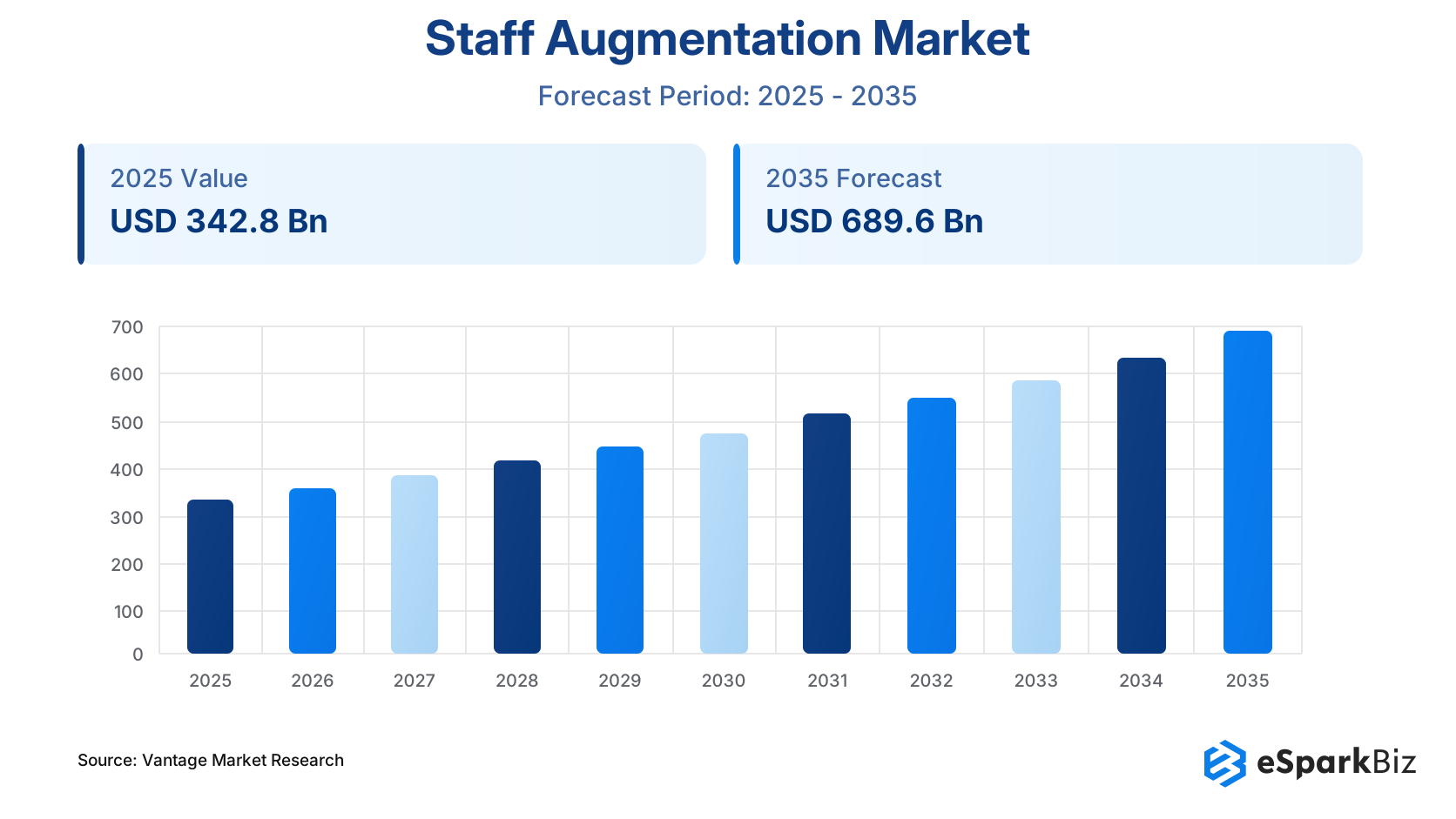
The staff augmentation market is projected to reach USD 689.6 billion by 2035 growing at a 7.2% CAGR from 2026 to 2035. This growth shows why flexible talent models are becoming more relevant nowadays. The team structure you choose may influence costs, compliance responsibilities, management effort and delivery ownership.
Before getting into the numbers let’s look at how these two team structures actually work.
Team Extension vs Dedicated Development Team: How Each Model Works
The way these two models fit into your development process is where the biggest difference appears. Team extension expands the team you already manage while a dedicated development team gives a separate group to your project with its own delivery structure.
Team Extension: Adding Specialists to Your Existing Team
Need extra developers for a new release or a specific technical skill for your existing project? Team extension helps you to add the skills or capacity your team needs without changing how your core team works.
External specialists typically:
- Join your existing development process
- Work with your internal developers
- Follow your tools and processes
- Take direction from your managers or technical leads
Your organization stays closely involved in day to day management. You set priorities, assign tasks, review progress and coordinate with the broader team.
It is mainly a capacity and skill support model that works well when you already know where exactly your team needs additional expertise or support.
Dedicated Development Team: Building a Focused Delivery Unit
A dedicated development team works more like an individual project group. The provider brings the required experts together & manages overall team structure.
You may define:
- Product goals
- Business requirements
- Technical expectations
- Milestones and priorities
The provider generally handles the team’s day to day coordination and management.
This can be a better structural fit when the project needs a stable group working together over a longer period especially when your internal managers do not want to oversee every developer directly.
How Staff Augmentation Relates to Team Extension
Staff augmentation focuses on adding external professionals to an existing process. It can support temporary capacity needs, specialist requirements or specific project phases.
Team extension commonly follows this structure but the terms are not always same.
In one line:
- Team Extension: You add people to your existing team.
- Dedicated Development Team: You engage a separate team around your product.
Understanding this structural difference makes it easier to compare both models across the cost, management, flexibility, accountability & delivery ownership.
Did You Know?
IT services account for a major share of global outsourcing contracts. Of the $92.5 billion in contracts generated by global outsourcing firms, $66.5 billion came from IT services while business process outsourcing accounted for the remaining $26 billion.
Team Extension vs Dedicated Development Team: What Sets Them Apart
Not every outsourcing decision needs a long debate. If your main concern is control, flexibility or delivery ownership. The table below helps you to quickly compare both models based on control, flexibility and delivery ownership..
| What Matters | Team Extension | Dedicated Development Team |
| Management | Your team leads the daily work | Provider generally leads daily team management |
| Cost | Pay for the external resources used | Pay for the agreed dedicated team structure |
| Ramp-Up | Quick when adding specific specialists | More setup when building a complete team |
| Flexibility | High for individual roles | High at the team level |
| Control | Direct control over external contributors | Control over goals and priorities with provider focused team management |
| Scope | Skill gaps, extra capacity, defined project phases | Ongoing product or larger development initiatives |
| Accountability | More delivery responsibility remains internal | Greater team level delivery responsibility from the provider |
| Project Length | Short to medium term | Medium to long term |
| Internal Effort | More coordination required | Less daily coordination required |
| Team Setup | Extends your existing team | Creates a separate delivery unit |
The choice becomes clearer when you understand what your organization needs most whether it is direct control over individual specialists or a separate team that can take greater responsibility for delivery.
From the Leadership Desk
“Almost without exception, the best products are developed by teams with desire to solve a problem; not a company’s need to fulfill a strategy.”
jeff weiner – Former CEO at LinkedIn
The Real Cost of Team Extension and Dedicated Development Teams in 2026
The cheapest quote is not always the cheapest engagement. When comparing Team Extension and Dedicated Development Team in 2026 consider the full cost picture including management, coordination, onboarding and internal oversight.
What You Actually Pay for Team Extension
Team extension usually starts with a simple calculation: you pay for the developers or experts whom you add to your team.
External cost = resource rate × hours or engagement period
But the invoice is only one part of the cost. Your internal team may also spend time on:
- Assigning tasks and priorities
- Reviewing work and code
- Coordinating meetings and dependencies
- Onboarding external developers
- Handling day to day questions
That creates a second cost layer:
Total Team Extension Cost = External Resource Cost + Internal Management Overhead
This model can make financial sense when you need specific skills or extra capacity and already have internal managers who can guide the work.
Where Dedicated Team Costs Come From
A dedicated development team follows a different cost structure. You engage a group of experts built around your project with the provider generally handling more of the team’s daily coordination.
Depending on the agreement the engagement may cover:
- Developers and technical specialists
- QA or other supporting roles
- Team coordination
- Project or delivery management
- Ongoing team administration
Your organization still provides product direction, business priorities, approvals and strategic oversight. However you generally spend less time managing individual developers.
Total Dedicated Team Cost = Team Engagement Cost + Internal Product Oversight
A Practical Cost Comparison
Consider a company that needs five developers for 12 months. The figures below listed are intentionally illustrative to show how the cost structure works.
| Cost Component | Team Extension | Dedicated Development Team |
| External team cost | $60,000/month | $70,000/month |
| Internal management & coordination | $10,000/month | $4,000/month |
| Product oversight | $4,000/month | $4,000/month |
| Estimated monthly total | $74,000 | $78,000 |
| Estimated 12 month total | $888,000 | $936,000 |
In this example team extension has the lower total cost because the internal management overhead does not outweigh the difference in external pricing.
But change the assumptions, for example increase the internal management effort or extend the engagement and the gap can narrow or reverse.
Editorial note: The calculations here are illustrative cost models not exact vendor quotes. Actual costs vary by location, team composition, experience, technology, contract terms and project scope.
Reddit Community Insight
A recent discussion on r/cscareerquestions highlighted that a dedicated team feels more like part of an organisation when the provider prioritises onboarding, communication, cultural fit, retention, knowledge sharing and product ownership instead of only providing developers.
When Management Costs Change the Equation
The break even point is reached when the fully loaded cost of both models becomes roughly equal.
Team Extension: External resources + management + coordination + oversight
Dedicated Team: Team engagement + internal oversight
For a short term skill gap team extension may be easier to control because you add only the resources you need. For a longer engagement the lower day to day management burden of a dedicated team can become more relevant.
The key is to compare total delivery cost not just the headline vendor rate.
The EU AI Act and What Vendor Structure Means for Compliance
AI compliance depends on more than the technology being built. It also requires clear responsibility for documentation, oversight and compliance tasks. This matters when comparing Team Extension and Dedicated Development Team models.
What Changes Under the EU AI Act
On August 2, 2026, the EU AI Act reached a major application milestone. Enforcement began for applicable rules and transparency requirements under Article 50 started to apply to certain AI systems. The Act follows a risk based approach, so obligations vary by system type and role with some high risk requirements scheduled for later dates.
For companies working with external developers, the key question remains: who is responsible for each compliance task? Define these responsibilities in the contract and agree on who handles documentation, testing, monitoring and regulatory obligations.
Why Team Structure Matters for Accountability
If an AI feature changes during development, your organization should be able to identify:
Who made the change → Why → Who reviewed it → What was tested → Where the record is stored
With Team Extension your internal managers typically have more direct control over external developers.
With a Dedicated Development Team the provider usually handles more day to day coordination.
Compliance does not depend only on the engagement model. It depends on clear ownership, documented processes & effective oversight.
Questions to Ask Any Vendor Before Signing
Ask:
- Who owns AI compliance responsibilities?
- What documentation will be maintained?
- Who approves and records AI related changes?
- Who handles compliance incidents?
- Can we access relevant records?
- How will the team respond to regulatory changes?
The goal is not to pick one model based on compliance alone. It is to choose a structure where responsibility and accountability are clearly defined.
Which Development Team Model Fits Your Project?
Every project has different needs. The right model depends on your required level of team control, additional capacity and delivery responsibility. Use the points below to compare Team Extension, a Dedicated Development Team and other possible options.
Signals That Point to Team Extension
Team extension works well in cases where you have an already skilled and capable team that just needs extra help in numbers or skill sets.
Look for these signals:
- You need a few developers rather than a complete delivery unit.
- Your internal managers can assign the work and review output.
- The project has an established workflow and technical direction.
- You expect team size to change as priorities shift.
- You want direct control over the external developers.
- The skills gap is more important than building a long term team structure.
In short you have the leadership and process – you just require more hands or specific expertise.
Before hiring a team extension provider, check these five points:
- Skill match: Can the developers fill your specific skills gap?
- Team integration: Can they work with your existing tools, processes, and team members?
- Communication: Are working hours, reporting, and meeting schedules suitable?
- Security and IP: Are confidentiality, code ownership, and data protection clearly covered?
- Contract terms: Are rates, availability, and developer replacement terms clear?
Team extension is most suitable when your team already manages the work and needs extra capacity or expertise.
Signals That Point to a Dedicated Team
A dedicated team is more logical in cases when there is a need for a consistent team that works for a relatively long period.
Consider this model when:
- The project requires several complementary roles.
- You want the provider to handle more day to day coordination.
- The product needs continuous development rather than a short term boost.
- Your internal managers have limited bandwidth for developer management.
- You need a team that can remain focused on one product or workstream.
- The scope is large enough to justify a dedicated delivery structure.
Here the need is not simply like more people. It is a team that can operate as a focused delivery unit.
Before hiring a dedicated team provider, check these five points:
- Relevant experience: Have they built products similar to yours?
- Technical skills: Do their developers have the skills your project requires?
- Trial sprint: Can you run a short paid sprint to assess code quality and teamwork?
- Security and IP: Are confidentiality, code ownership, and data protection clearly covered?
- Contract terms: Are pricing, delivery responsibilities, communication, and developer replacement terms clear?
These checks help you assess whether a provider can support your product beyond simply supplying developers.
When Neither Model Is the Right Answer
Sometimes the choice is not between these two models.
A project may be better suited to:
- Fixed price development when the scope and deliverables are clearly defined.
- Project based outsourcing when you want the provider to own delivery from start to finish.
- In-house hiring when the capability is strategically important for the long term.
- A hybrid model when different parts of the project require different engagement structures.
The best decision starts with the work itself. If you need extra capacity, a team extension may fit. If you need a stable delivery unit, a dedicated team may fit. If you need the provider to own a defined outcome, another model may be more appropriate.
When Should You Hire a Dedicated Team Instead of Extending Your Own?
Choose a dedicated development team when you need several engineers to work together on a product. Team extension is better when your existing team manages development but needs extra skills.
How Quickly Can You Hire a Dedicated Team?
For a team of 4-6 engineers, confirm availability, onboarding time and whether they can start within 30 days. Agree on US working hour overlap, communication schedules and developer replacement terms before signing.
How Much Does a Dedicated Team Cost Compared With Team Extension?
Costs depend on developer experience, location, and included services. Compare monthly quotes for two senior engineers with the same skills and working hours.
| Cost factor | Team extension | Dedicated team |
| Developer costs | Individual developer rates | Agreed team rates |
| Management | Usually handled in-house | Depends on the contract |
| Additional costs | Onboarding and internal management | Coordination and included services |
Neither model is always cheaper. Compare the total cost, responsibilities, and contract terms before deciding.
How Industry Requirements Shape the Right Team Model
Not all projects come with the same amount of risk. Team Extension vs Dedicated Development Team becomes a different decision when the project deals with health records or finance related data.
Healthcare Needs Tighter Control and Data Governance
For healthcare products evaluate the engagement around data protection and accountability. Ask:
- Who can access sensitive data?
- Who manages development changes?
- Who maintains documentation?
- Who handles security or compliance issues?
Team Extension may suit organizations that want close internal control while a Dedicated Team can fit longer running products that need a stable development group.
Fintech Requires Clear Security and Accountability
In fintech, security & operational controls are often as important as development speed. The engagement should clearly define who is responsible for:
- Data handling
- Security practices
- System integrations
- Testing
- Incident escalation
- Documentation
The right structure depends on the amount of control that you want to keep within your team on a daily basis.
Regulated Industries Need Stronger Vendor Oversight
In sectors such as insurance, government, healthcare technology and others engagements are accessed through 5 practical factors such as:
- Compliance requirements
- data sensitivity
- security controls
- management capacity
- vendor accountability
The outsourcing model should support these all requirements instead of creating another layer of doubt.
How a Hybrid Team Can Bring Both Models Together
You do not always have to choose only one model. A hybrid approach can combine Team Extension and a Dedicated Development Team that gives you a stable core team while allowing additional experts or capacity also when needed.
A Typical Hybrid Structure
The easiest approach to work with hybrid models is to assign a clear role to each model.
| Team Structure | Main Role | Works Best When |
| Dedicated Development Team | Handles ongoing product development | You need a long term team focused on your product |
| Team Extension | Adds extra skills & developers | You need specific expertise & additional support |
| Internal Team | Business and product direction | Priorities, requirements, decisions and overall oversight |
For example a dedicated team might take care of the main product roadmap while team extension adds an expertise for a new technology, integration, testing requirement or temporary higher workload.
This gives the organization continuity without giving up flexibility.
Key Market Signal:
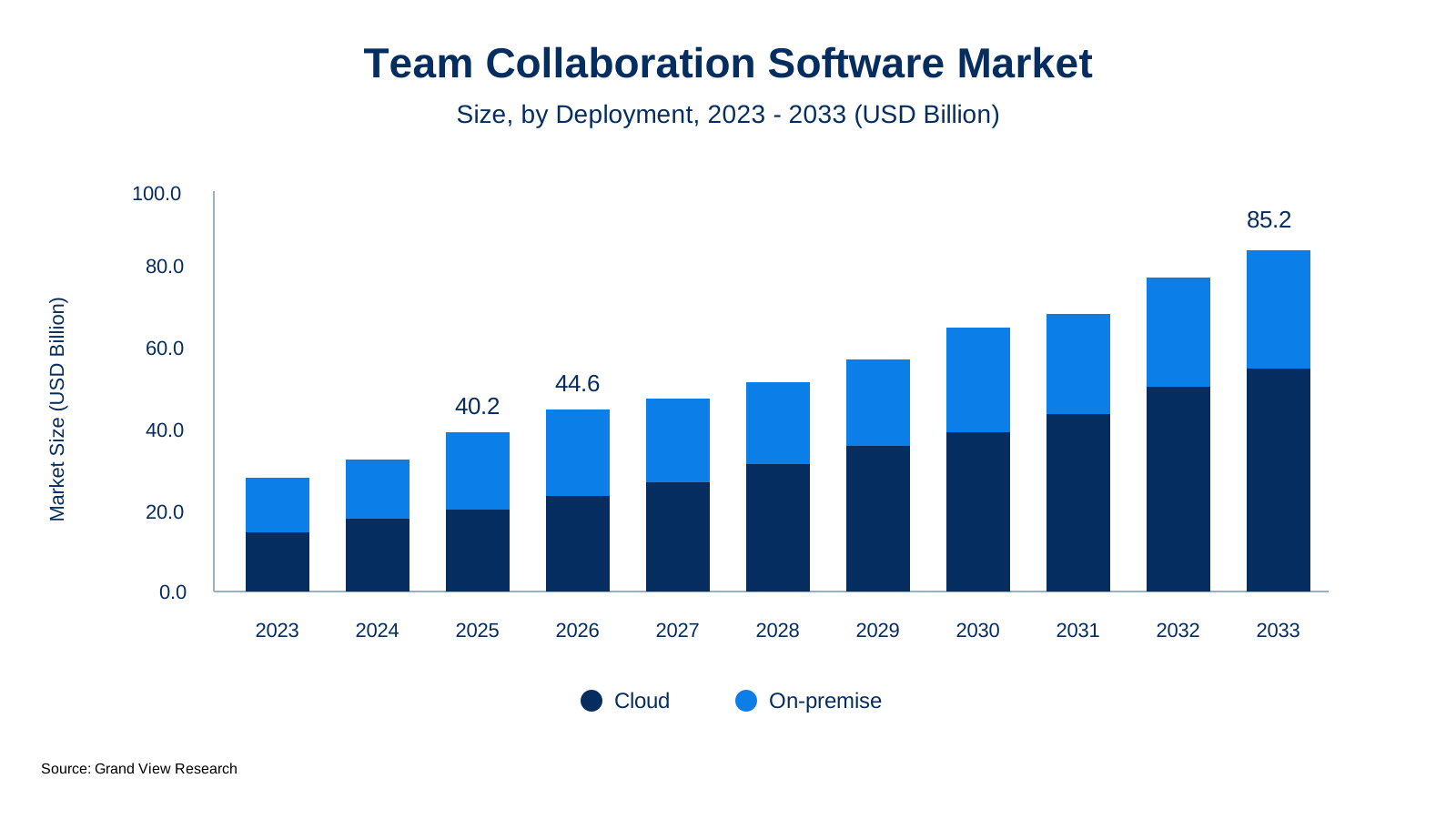
Team collaboration software market is projected to reach USD 85.2 billion by 2033 that indicates continued investment in distributed team co-ordination.
What Makes a Hybrid Model Work
A hybrid setup works when responsibilities are clear from the starting. Before development begin, define:
- Who manages each team
- Who assigns and approves work
- Who makes decisions of delivery
- How teams communicate
- Which costs belong to each engagement
- How progress and performance are measured
Both teams should also follow compatible technical standards, workflows and product priorities. The goal is to make them function as parts of one delivery structure not as separate groups working around each other.
A Look at the Real World: Flexible QA at Microsoft
Microsoft worked with Wipro and Topcoder to add on-demand QA capacity to its 7 day development cycle. The model enabled 24 hour testing cycles each week with testing capacity that could scale up or down as needed.
What this shows: External specialist capacity can support an internal product team when testing demand changes without requiring a permanent increase in employees.
What Can Make It Fall Apart
The biggest challenge is unclear ownership. If two teams are responsible for the same task or neither team knows who owns it, coordination can quickly become expensive.
Watch for:
- Overlapping responsibilities
- Conflicting priorities
- Duplicate management
- Communication gaps
- Different technical practices
- Unclear escalation paths
A hybrid model does not automatically work more efficiently. It works well when each model solves a specific need and everyone understands their area of responsibilities.
For all companies comparing Team Extension vs Dedicated Development Team the hybrid option can be useful when the project needs both long term delivery stability & the flexibility to add skills as requirements change.
How eSparkBiz Can Support Your Project
eSparkBiz offers team extension and dedicated development team models for businesses that need additional engineering capacity or a team focused on ongoing product development.
- 400+ vetted engineers across different technical skills.
- 48-72 hour team ramp up time, subject to skill requirements and availability.
Choose team extension if your existing team will manage the work. Consider a dedicated team if you need a consistent group working on your product. The right fit depends on your project scope, required skills and management needs.
Frequently Asked Questions
What is the difference between Team Extension & a Dedicated Development Team?
Team Extension adds external developers to your existing team and management structure while Dedicated Development Team works as a separate delivery unit focused on your product.
Which model is more cost effective?
There is no fixed answer. The actual cost depends heavily on more than just the vendor rate.
Consider:
- Team size
- Project duration
- Management effort
- Coordination overhead
- Required skills
- Level of internal oversight
Which model is faster to start?
Team Extension can often start faster when you need a few specific skills or additional developers. A Dedicated Development Team may require some more time to assemble the right combination of roles.
Which model gives more control?
If your internal team wants to manage daily work directly, Team Extension usually gives more control.
Your managers can typically handle priorities, task assignment, reviews & co-ordination.
Is a Dedicated Development Team better for long term projects?
It can be a good fit when the project needs a stable group working together over an extended period.
The model is particularly relevant when you want consistent team structure without managing every developer's daily activities yourself.
Can Team Extension and a Dedicated Development Team work together?
Yes. A hybrid setup can divide responsibilities according to your project needs:
- Dedicated team: Core product development
- Team Extension: Specialist skills or additional capacity
- Internal team: Product direction & business decisions
Is Team Extension the same as staff augmentation?
They are closely related but they are not always used to describe exactly the same engagement.
Staff augmentation generally means adding external professionals to an existing workforce while Team Extension commonly describes integrating those professionals into an existing development team.
Which model is better for startups?
The answer depends on the startup's needs.
A startup with a small internal team and a specific skill gap may consider Team Extension. One building a product that needs a stable development group may consider a Dedicated Development Team.
Which model is better for enterprise projects?
Enterprise projects often need to consider more than team size.
|
Factor |
What to consider |
|
Governance |
Who owns decisions and approvals? |
|
Security |
How will access and data be managed? |
|
Compliance |
What vendor responsibilities apply? |
|
Delivery |
Who owns day to day execution? |
|
Cost |
What is the fully loaded cost? |
Is eSparkBiz a good partner for team extension and how does it work with US engineering teams?
eSparkBiz helps US companies extend their engineering teams with developers who work within existing tools, workflows and technical processes. NDAs can protect confidential information while IP ownership and code assignment should be clearly defined in the project agreement. Teams can coordinate through agreed working hours, with 4-6 hours of time zone overlap subject to confirmation for the specific engagement.
How should you compare companies for dedicated development teams or team extension?
Compare vendors on six points before making a decision:
- Relevant experience: Check their work with SaaS products and similar technologies.
- Team quality: Review developer skills, communication and technical experience.
- Trial sprint: Start with a short paid sprint to assess code quality and delivery.
- Replacement terms: Confirm how quickly a developer can be replaced and whether extra fees apply.
- Security and IP: Check NDA terms, code ownership, access controls and data protection practices.
- Contract and communication: Review pricing, delivery responsibilities, reporting and working hour overlap.
Compare each vendor against the same criteria then choose the one that best fits your product needs, budget and timeline.
Should we hire in-house engineers or use a dedicated team for a 12-month product build?
In-house hiring offers direct control but requires time for recruitment, onboarding, salaries and benefits. A dedicated team can provide the skills needed to start sooner under one agreement. Compare total 12 month costs, hiring timelines, team management, delivery responsibility and long term staffing needs before deciding.
Is eSparkBiz a good partner for dedicated development teams working with US companies?
eSparkBiz provides dedicated development teams that coordinate with US clients on project priorities and agreed working hours. Before signing, confirm contract terms, NDA protection, IP ownership, time zone overlap and the process for replacing team members.


 August 17, 2026