
 Last update date:



Quick Summary :-
AI is fundamentally reshaping how enterprises operate, innovate, and compete. This report compiles 100+ statistics and trends spanning enterprise adoption, workforce transformation, software development, investment, ROI, and industry-specific adoption, along with the key challenges defining artificial intelligence's trajectory in 2026.The AI landscape is shifting fast, from experimentation to necessity. What began as pilot projects is now embedded in daily operations, decision-making, and long-term planning across enterprises worldwide.
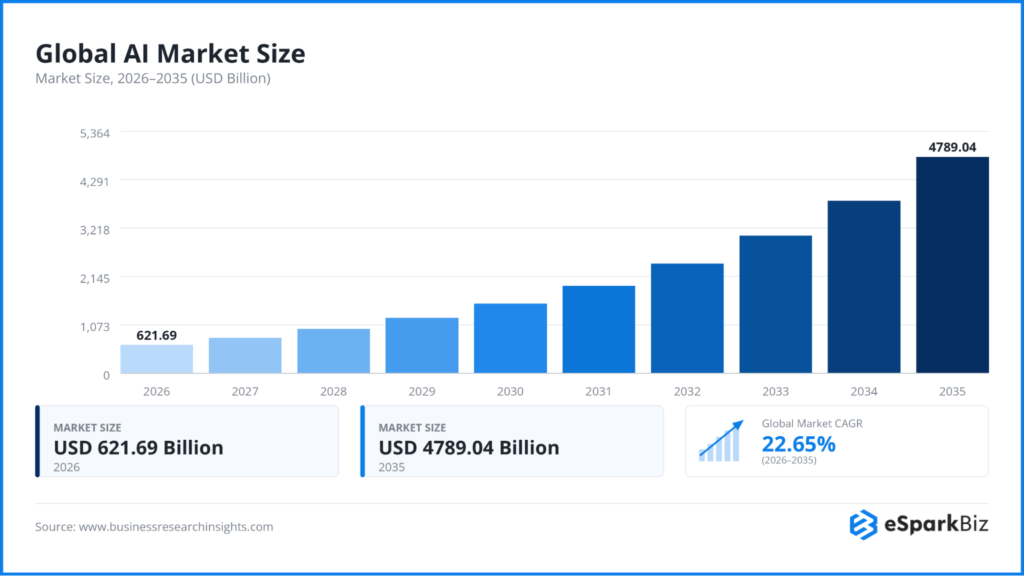
Numbers tell the story: the global AI market, valued at USD 621.69 billion in 2026, is set to hit USD 4.79 trillion by 2035, a CAGR of 22.65%. That pace of growth signals how urgently leaders need to plan ahead.
With adoption deepening, AI is no longer optional. It’s becoming the backbone of how businesses innovate, streamline operations, and stay ahead of competitors in an increasingly AI-driven market.
Global Artificial Intelligence Key Statistics
Artificial intelligence continues to expand across businesses, economies, and the global workforce. These statistics highlight the current state of AI adoption, investment, economic impact, and employment worldwide.
1. According to Microsoft’s latest AI Diffusion Report, 17.8% of the world’s working-age population was using generative AI tools in the first quarter of 2026.
2. 67% of organizations plan to increase technology spending, prioritizing investments in data and AI.
3. 66% of people across 21 countries used an AI application, highlighting the rapid global adoption of artificial intelligence for both personal and professional use.
4. More than 50% of respondents in 20 of 21 countries report using AI tools regularly, demonstrating that artificial intelligence has become mainstream across consumer and workplace environments worldwide.
5. AI adoption could contribute more than USD 15 trillion to the global economy by 2030, making artificial intelligence one of the most significant drivers of future economic growth and productivity.
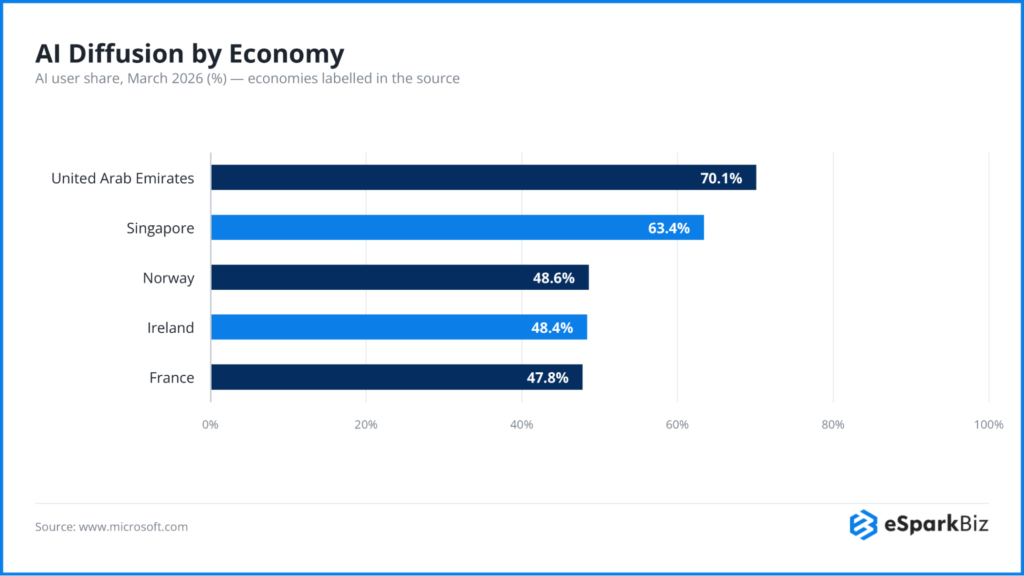
6. According to the Microsoft AI Economy Institute, generative AI adoption increased across all listed countries between H2 2025 and Q1 2026, reflecting continued global momentum in enterprise AI adoption. The United Arab Emirates recorded the highest adoption rate at 70.1%, followed by Singapore at 63.4%, while European countries such as Norway, Ireland, and France also maintained strong adoption levels.
7. The widespread adoption of AI across enterprises is evident, with 88% of Organizations now using AI in at least one business function.
8. AI firms attracted USD 258.7 billion in global venture capital investment, accounting for 61% of all venture capital funding worldwide, reflecting strong investor confidence in artificial intelligence.
9. 30% of workers have zero AI task coverage because their job tasks appear too infrequently in AI usage data to meet the minimum coverage threshold.
10. Computer and Mathematics occupations currently have 33% observed AI task coverage, despite AI theoretically being capable of performing up to 94% of their tasks.
Healthcare AI Statistics & Insights
Healthcare organizations are rapidly adopting AI to improve diagnostics, patient care, medical research, and operational efficiency across clinical workflows.
11. 91% AI Adoption in healthcare highlights the sector’s rapid embrace of artificial intelligence to improve patient care and operational efficiency.
12. 81% of physicians use AI in clinical practice, more than doubling from 38%, reflecting the rapid adoption of artificial intelligence to support clinical workflows, documentation, diagnosis, and patient care.
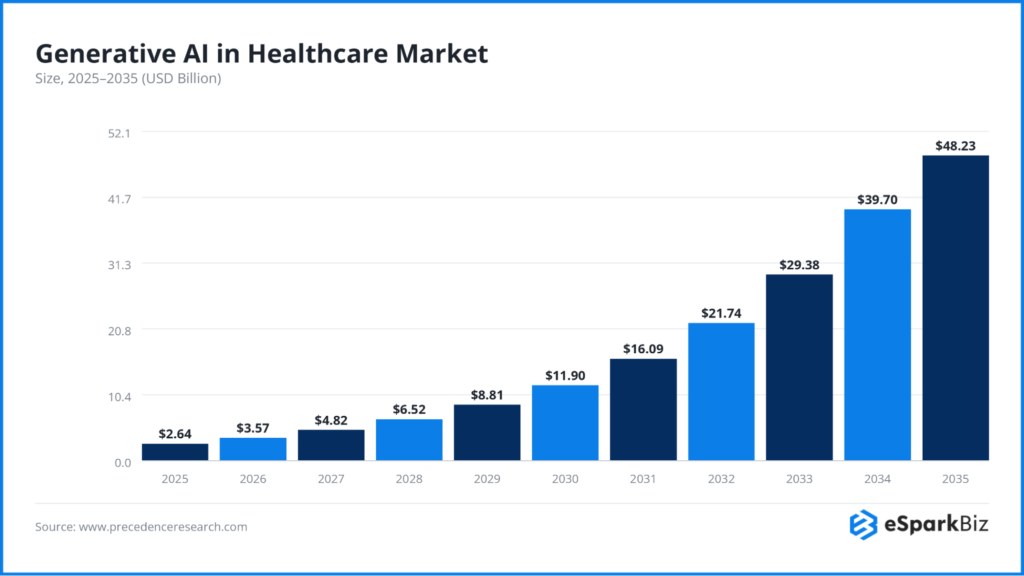
13. The growing adoption of generative AI in healthcare is also reflected in continued market expansion. The global generative AI healthcare market is projected to grow from USD 3.57 billion in 2026 to USD 48.23 billion by 2035, highlighting sustained investment in AI-powered healthcare technologies.
14. Despite the widespread adoption of AI across healthcare organizations, 72% of Patients still struggle to access care and navigate complex healthcare systems.
15. 68% of healthcare providers rely on computer-assisted diagnostics, demonstrating the growing adoption of AI-powered diagnostic technologies to improve clinical decision-making, diagnostic accuracy, and patient outcomes.
16. Clinicians report that AI has increased their capacity to see patients, with 50% saying it enables them to treat an average of eight additional patients per week.
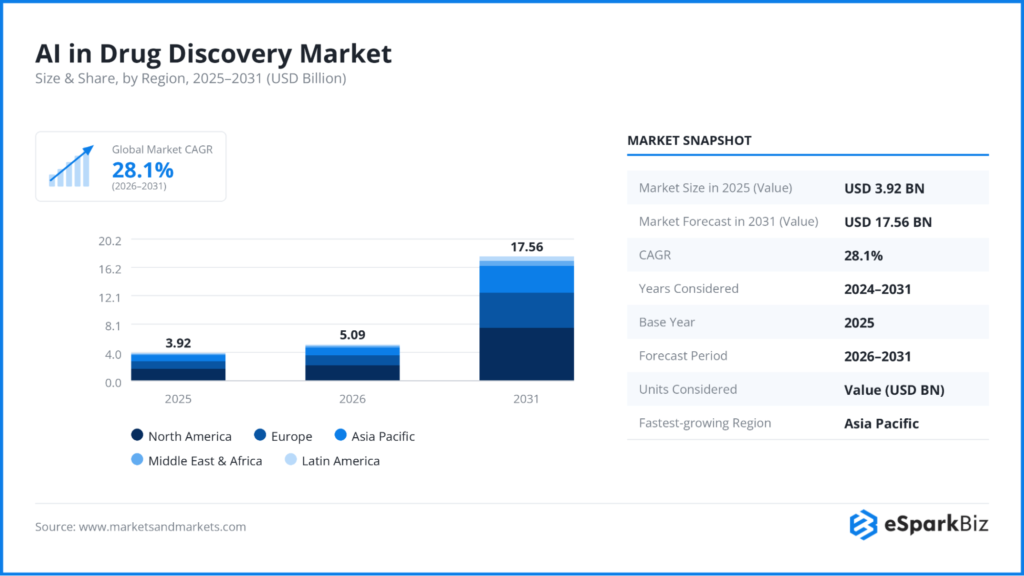
17. The global AI drug discovery market is projected to grow from USD 5.09 billion in 2026 to USD 17.56 billion by 2031, registering a CAGR of 28.1% as pharmaceutical companies increasingly adopt AI to accelerate drug discovery, identify therapeutic targets, and reduce pre-clinical development timelines.
18. AI has improved patient safety, with 39% of clinicians reporting it identified or helped prevent potential medical errors at least three times during the past three months.
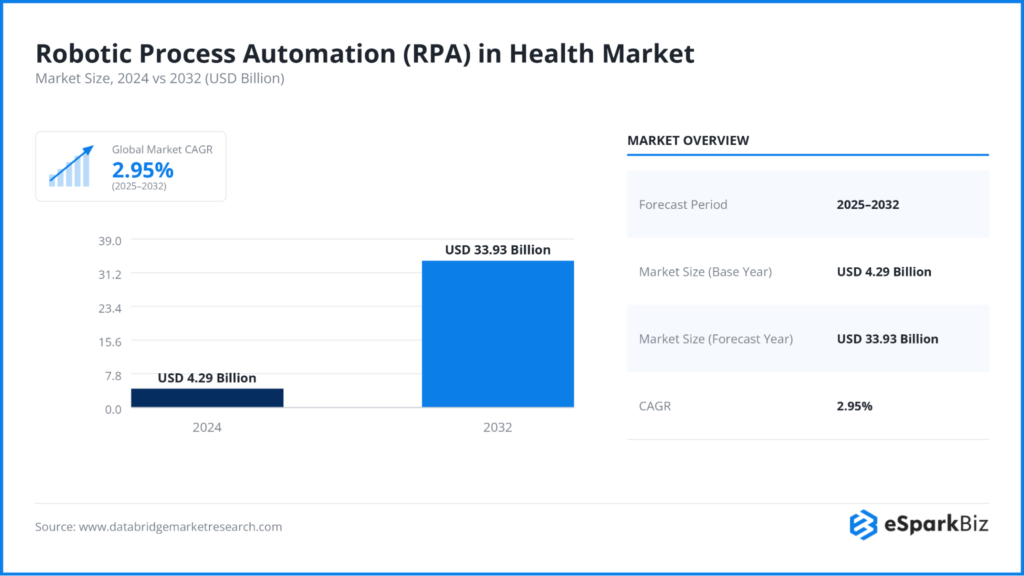
19. The global healthcare robotic process automation (RPA) market is projected to grow from USD 4.29 billion in 2024 to USD 33.93 billion by 2032, reflecting the increasing adoption of intelligent automation to streamline administrative processes and improve operational efficiency across healthcare organizations.
Machine Learning Statistics in Business
Machine learning continues to transform business operations through intelligent automation, predictive analytics, and scalable cloud services, driving enterprise innovation worldwide.
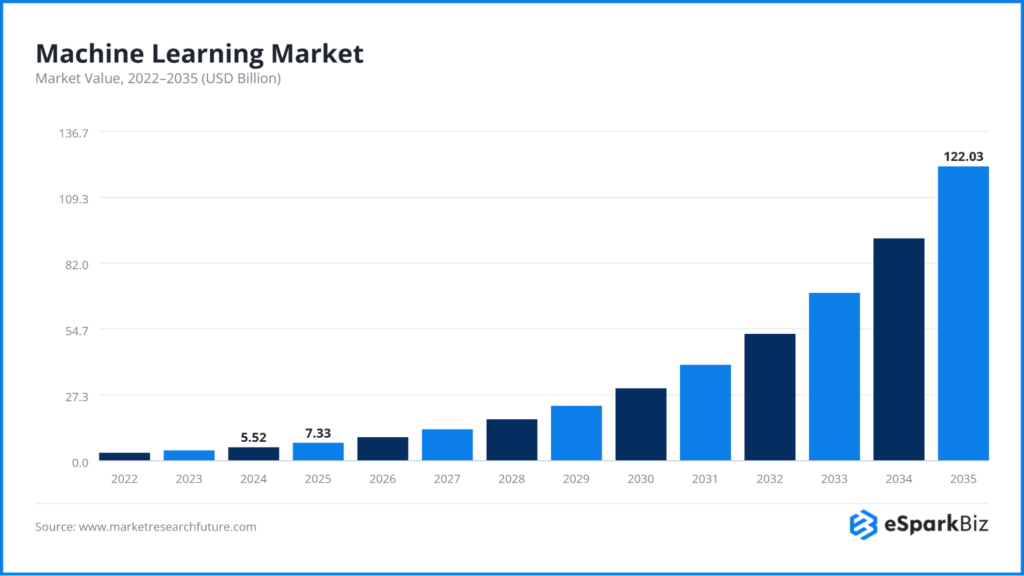
20. The global machine learning market is projected to grow from USD 5.52 billion in 2024 to USD 122.03 billion by 2035, driven by increasing enterprise adoption of machine learning for predictive analytics, business automation, and data-driven decision-making.
21. Around 70% of firms actively use AI technologies, with machine learning forming a core component of enterprise AI applications across business functions.
22. The United States leads the global machine learning market, holding a value of over $21 billion.
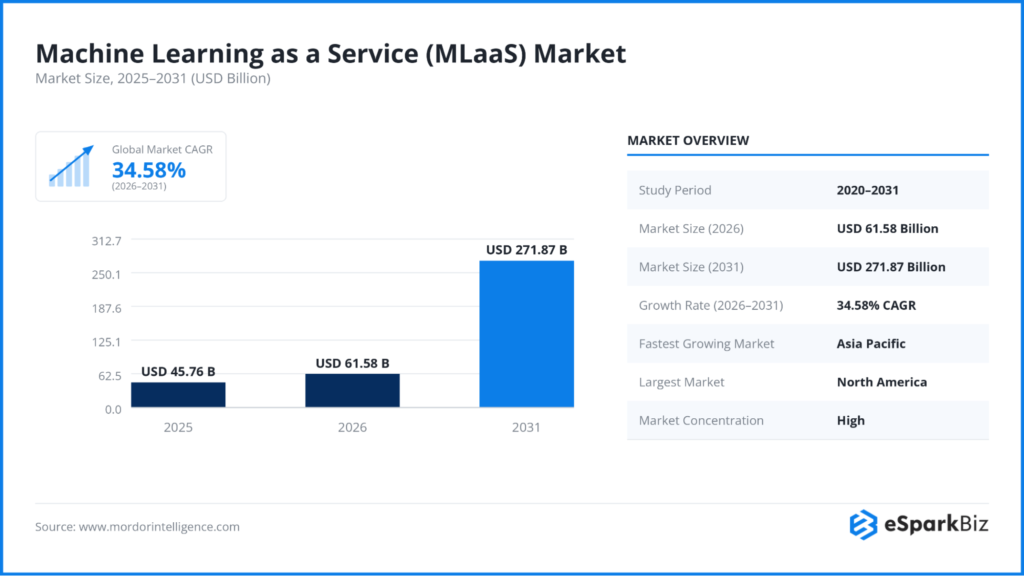
23. The global Machine Learning as a Service (MLaaS) market is projected to grow from USD 61.58 billion in 2026 to USD 271.87 billion by 2031, expanding at a CAGR of 34.58% as organizations increasingly adopt cloud-based machine learning platforms for model development, deployment, and predictive analytics.
The Age of AI in Marketing Statistics
AI is reshaping modern marketing by enabling personalized customer experiences, automating campaign execution, improving content creation, and helping teams optimize performance with greater speed and efficiency.
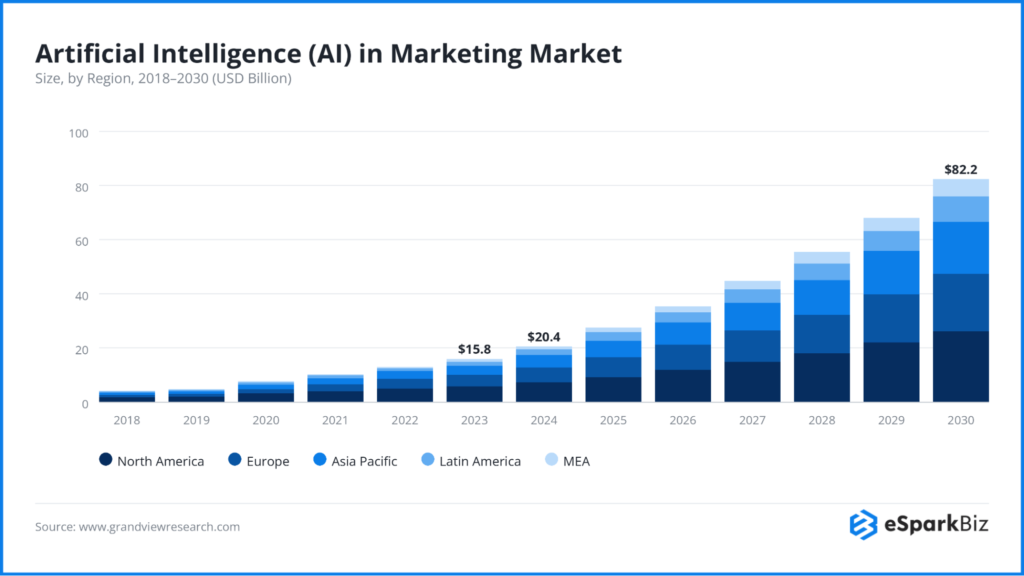
24. The global artificial intelligence in marketing market is projected to grow from USD 35.0 billion in 2026 to USD 82.2 billion by 2030, expanding at a CAGR of 25.0% between 2025 and 2030.
25. 91% of marketers report actively using AI in their work, up from 63% the previous year, highlighting the rapid adoption of AI across marketing teams.
26. 47% of marketers are leveraging AI automation to improve marketing process efficiency, while another 47% use AI to create content that reflects their brand values.
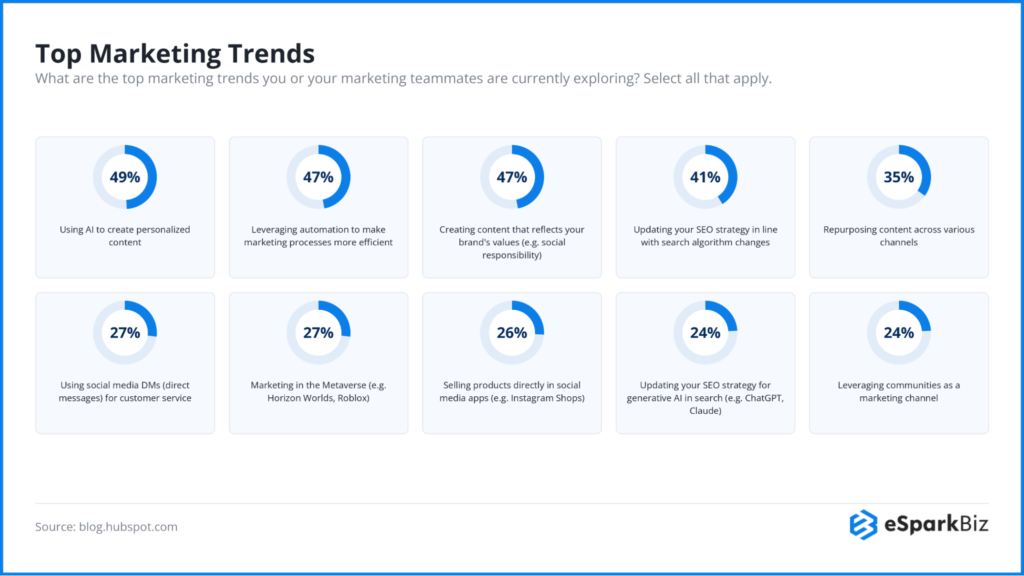
27. 50% of marketers say AI helps them bring work to market faster, while 45% report lower operating costs through AI-powered marketing workflows.
28. 65% of marketing teams have designated AI roles, and nearly one-third have integrated AI strategy, policies, and governance into existing marketing responsibilities.
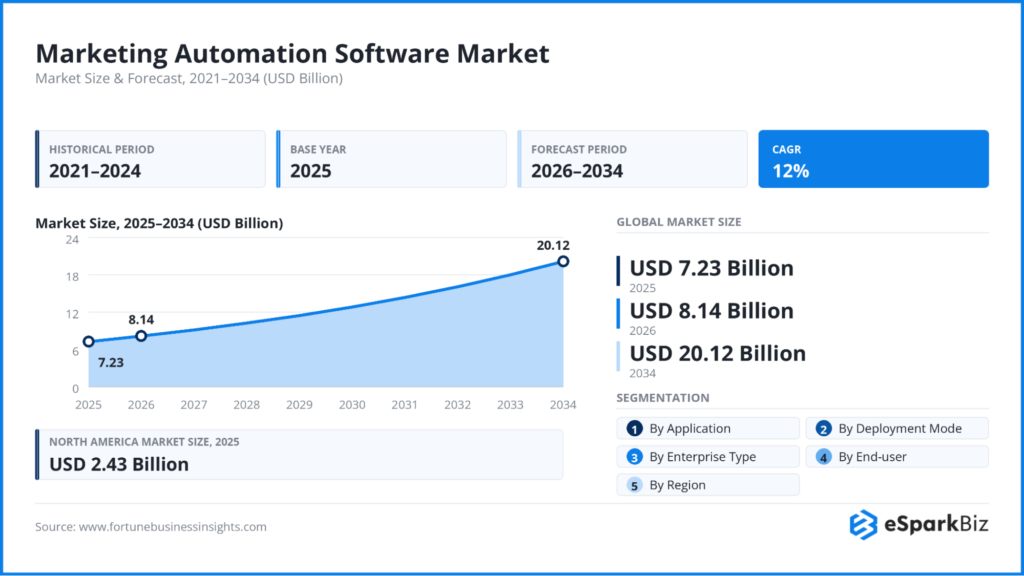
29. The global marketing automation software market is projected to grow from USD 8.14 billion in 2026 to USD 20.12 billion by 2034, exhibiting a CAGR of 12.0% during the forecast period.
Voice AI Statistics: Smart Speakers & Assistants
AI-powered voice assistants are becoming increasingly common in homes and businesses. These statistics showcase smart speaker adoption, market expansion, and Voice AI growth worldwide.
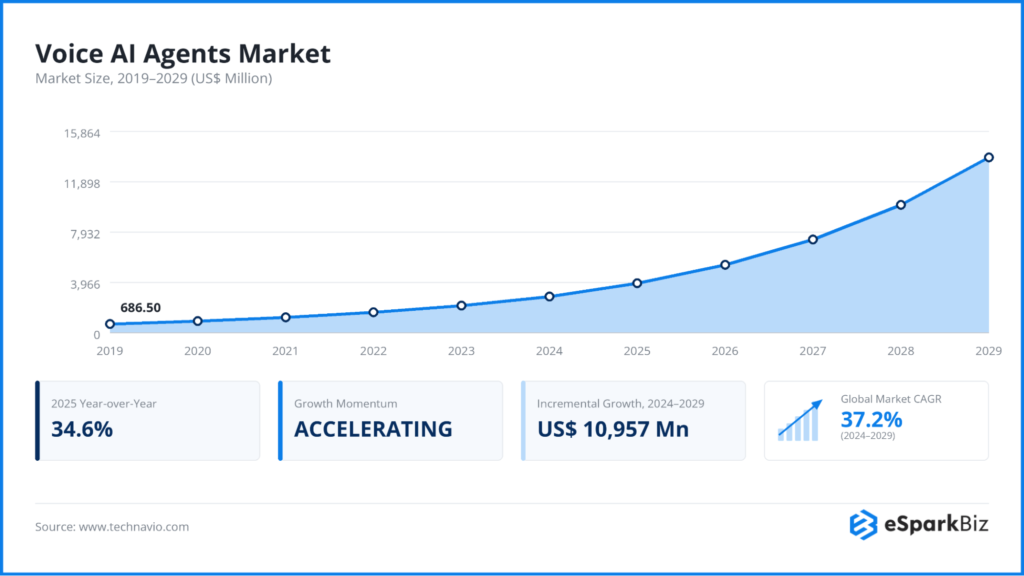
30. The global Voice AI agents market is projected to expand by USD 10.96 billion between 2025 and 2029, growing at a CAGR of 37.2% as organizations increasingly adopt AI-powered voice agents to automate customer interactions and enhance conversational experiences.
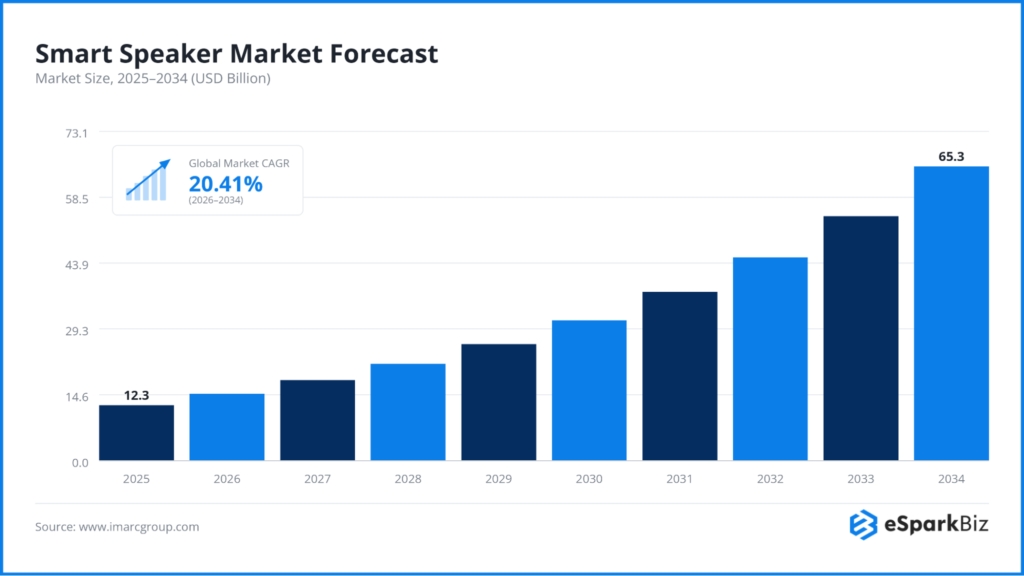
31. The global smart speaker market is projected to grow from USD 12.3 billion in 2025 to USD 65.3 billion by 2034, exhibiting a CAGR of 20.41% between 2026 and 2034 as AI-powered voice assistants become increasingly integrated into connected homes and consumer devices.
32. 35% of U.S. adults own a smart speaker that uses AI, making it the most widely adopted AI-powered smart home device.
The Age of Machines: AI Statistics and Trends
Artificial intelligence is transforming organizations through smarter infrastructure, stronger security, and evolving workforce practices. These statistics highlight the latest AI trends and developments.
33. A significant gap exists between AI adoption and workforce confidence. AI usage among employees increased by 13%, with 45% of employees now regularly using AI at work.
34. Employee confidence in using AI has declined by 18% despite increasing adoption, underscoring the growing need for AI training, governance, and organizational support.
35. 81% of respondents believe deploying AI will improve their cybersecurity posture, highlighting growing confidence in AI’s ability to strengthen industrial security.
36. 79% of organizations are already engaging with physical AI, while 27% have moved beyond experimentation and are deploying or scaling AI solutions.
37. 81% of respondents believe deploying AI will improve their cybersecurity posture, highlighting growing confidence in AI’s ability to strengthen industrial security.
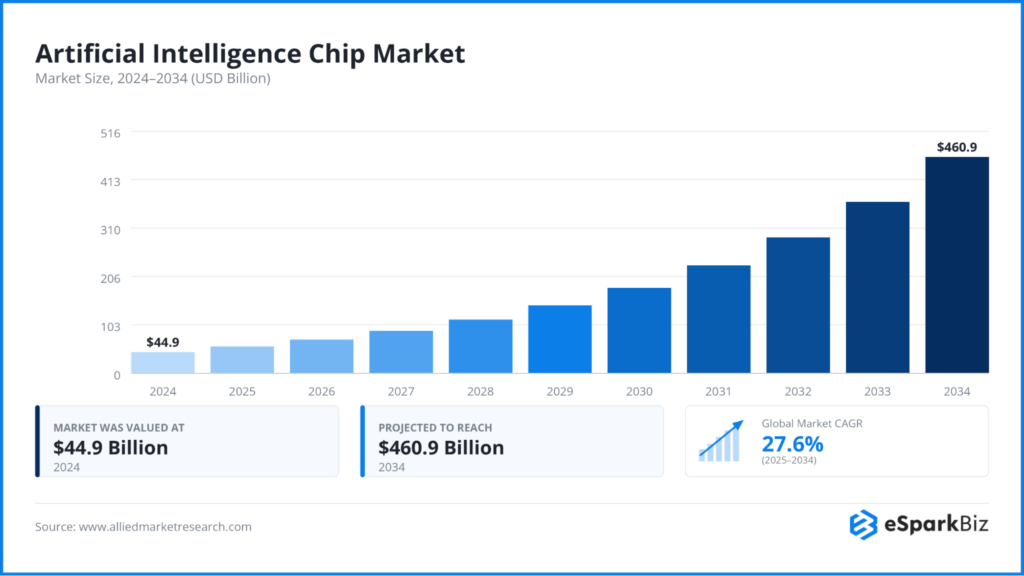
38. The global artificial intelligence chip market was valued at USD 44.9 billion in 2024 and is projected to reach USD 460.9 billion by 2034, growing at a CAGR of 27.6% between 2025 and 2034 as demand for AI computing infrastructure continues to accelerate across industries.
39. 14% of respondents say that their leaders consistently champion AI adoption and experimentation with clear strategies and action, highlighting the critical role of leadership in driving successful AI transformation.
40. Clear ethical and compliance guidelines are considered an important factor for enterprise-wide AI adoption by 24% of leaders, suggesting that governance remains an overlooked aspect of maximizing AI’s business value.
41. 83% of industrial organizations believe deploying AI will strengthen their cybersecurity posture, reflecting growing confidence in AI-driven security capabilities.
💡 Expert Insight:
“AI won’t replace humans. But humans who use AI will replace those who don’t.”
Sam Altman, CEO, OpenAI
AI in Employment: Statistics & Workforce Insights
Workplaces worldwide are rapidly adapting to artificial intelligence. These statistics reveal how AI is influencing employment, workforce participation, workplace adoption, and future job trends.
42. Artificial intelligence is expected to create 170 million new jobs while displacing 92 million existing jobs globally by 2030, resulting in a net gain of 78 million jobs.
43. AI has become a common workplace tool across organizations, with 38% of employees reporting that their organization has integrated AI technology to improve productivity, efficiency, or quality.
44. 41% of workers in India report using AI tools daily at work, positioning India among the global leaders in workplace AI adoption and highlighting AI’s growing role in everyday professional activities.
45. Around 54% of Europeans use AI technologies for work or personal tasks, highlighting the growing role of artificial intelligence in everyday activities
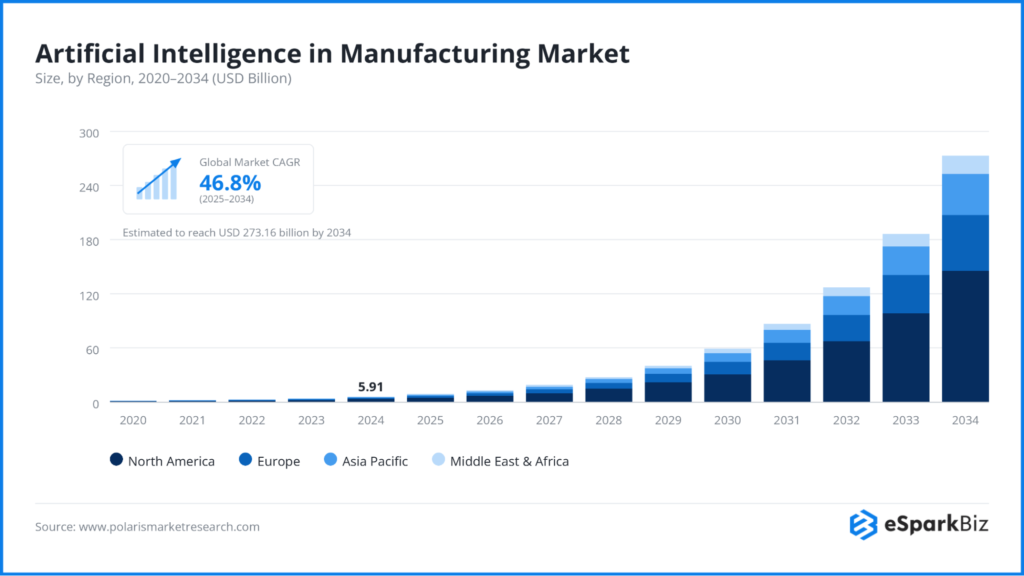
46. Continued adoption of AI across manufacturing is reflected in the rapid expansion of the global AI in manufacturing market, which is projected to grow from USD 8.61 billion in 2025 to USD 273.16 billion by 2034, registering a 46.8% CAGR as manufacturers increasingly invest in intelligent automation, predictive analytics, and AI-powered production technologies.
47. Approximately 50% to 55% of jobs in the United States are expected to be reshaped by AI within the next two to three years, indicating AI’s significant impact on the future of work across industries.
48. Nearly 20% of EU Enterprises have deployed AI technologies, according to the European Commission’s 2026 State of the Digital Decade Report.
49. 93% of Gen Z and 95% of Millennials in India use AI in their day-to-day work, highlighting how younger professionals are driving workplace AI adoption and integrating artificial intelligence into everyday business activities.
50. For every 10% point increase in AI task coverage, projected employment growth through 2034 decreases by 0.6%.
51. Despite growing investments in artificial intelligence, 79% of organizations report facing challenges in AI adoption, demonstrating that successful implementation remains a greater obstacle than access to AI technologies.
52. Organizational resistance remains a significant barrier to AI adoption, with 54% of C-suite executives admitting that adopting AI is tearing their company apart, still 59% of companies are investing $1 million in technologies.
AI Landscape 2026: Insights Beyond the Numbers
Artificial intelligence continues to evolve beyond experimentation into enterprise-scale deployment. These statistics highlight adoption trends, AI maturity, productivity, and emerging industry developments.
53. 61% of industrial organizations are using AI in live industrial operations, demonstrating that AI adoption has expanded beyond pilot projects into real-world industrial environments.
54. 40% of professionals report that their organizations now use generative AI, nearly doubling from 22% a year earlier, reflecting rapid enterprise adoption across professional services.
55. 76% of organizations report that generative AI is helping teams increase the speed and volume of content creation, demonstrating measurable productivity gains from enterprise AI adoption.
56. While AI adoption continues to expand across the industrial sector, only 20% of Organizations report scaled, mature AI deployments, highlighting the gap between implementation and enterprise-wide AI maturity.
57. 88% of enterprises remain constrained by accumulated enterprise “debts,” limiting their ability to scale AI initiatives and slowing enterprise-wide AI transformation.
58. Only 12% of enterprises have successfully achieved enterprise-wide AI integration, highlighting the growing divide between AI leaders and organizations still facing foundational implementation challenges.
The AI Advantage: Business Stats for a Successful 2026
Organizations are increasingly turning AI investments into measurable business outcomes. These statistics highlight revenue growth, ROI, cost savings, and enterprise value creation.
59. 88% of enterprises report that AI has had an impact on increasing annual revenue, demonstrating AI’s growing role as a driver of business growth rather than simply a cost-saving technology.
60. About one-third (30%) of CEOs report that their organizations have realised tangible results from AI adoption over the last 12 months through additional revenues, demonstrating that AI investments are increasingly producing measurable business results.
61. Organizations report an average return of $3.70 for every $1 invested in generative AI, while top-performing organizations achieve returns of up to $10.30 per dollar invested, demonstrating the significant business value and financial returns AI can deliver when implemented effectively.
62. AI initiatives have delivered measurable cost reductions for 87% of enterprises, reflecting AI’s ability to improve operational efficiency through automation and process optimization.
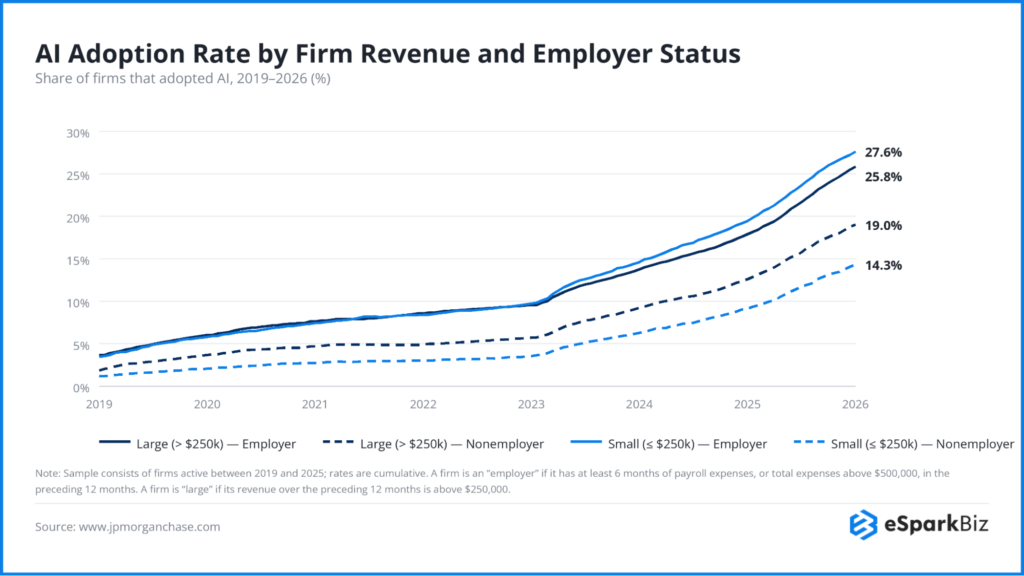
63. Among employer firms, AI adoption increased steadily across both revenue groups. Small employer firms reached a cumulative AI adoption rate of 27.6%, while large employer firms reached 25.8%, with adoption accelerating significantly in recent years.
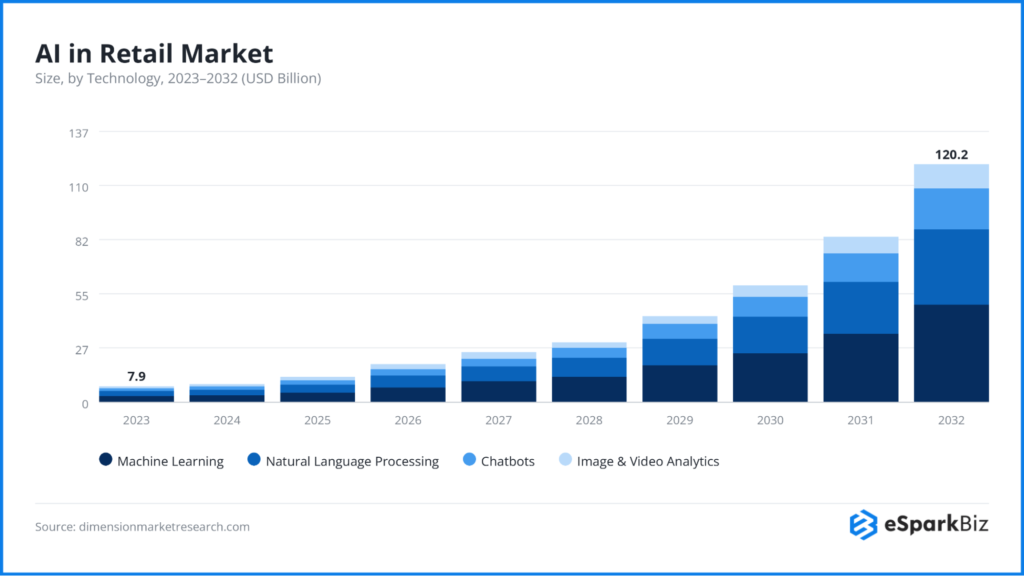
64. The global AI retail market is projected to grow from USD 7.9 billion in 2025 to USD 120.2 billion by 2032, expanding at a CAGR of 35.3%.
AI Agent Statistics for B2B & Enterprise
Businesses are embracing AI agents to streamline operations and enhance workforce productivity. These statistics reveal adoption trends, enterprise use cases, and market momentum.
65. 54% of sellers report already using AI agents in their sales processes, demonstrating that AI agents are rapidly moving from experimentation to real-world business applications.
66. By 2028, 38% of organizations expect AI agents to work as members of human teams, highlighting the growing role of agentic AI in supporting collaboration between employees and intelligent systems.
67. AI agent adoption in customer service increased from 39% to 66%, making customer service one of the fastest-growing areas for AI agent deployment.
68. 82% of organizations are expanding their use of AI agents, reflecting growing confidence in agentic AI as a strategic tool for improving productivity and driving innovation.
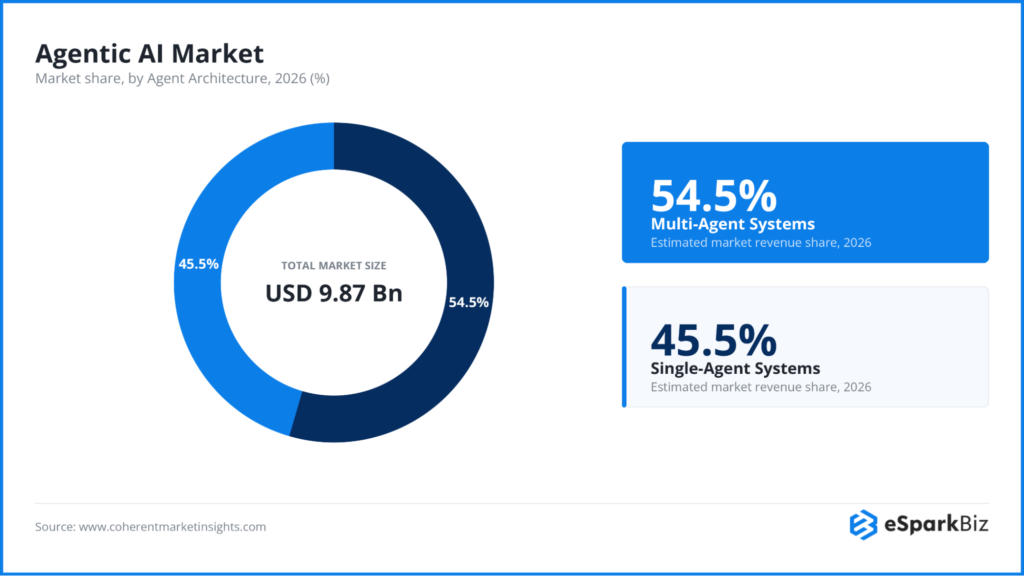
69. The global Agentic AI market is estimated at USD 9.87 billion in 2026 and is projected to grow to USD 114.89 billion by 2033, expanding at a 42.0% CAGR, highlighting the accelerating adoption of AI agents across enterprise applications.
70. 75% of employees are comfortable working alongside AI agents, indicating that workforce acceptance is helping accelerate enterprise adoption of agentic AI.
Artificial Intelligence in Agriculture
Artificial intelligence is transforming modern agriculture by helping farmers improve productivity, optimize resource utilization, and make more informed decisions through data-driven insights.
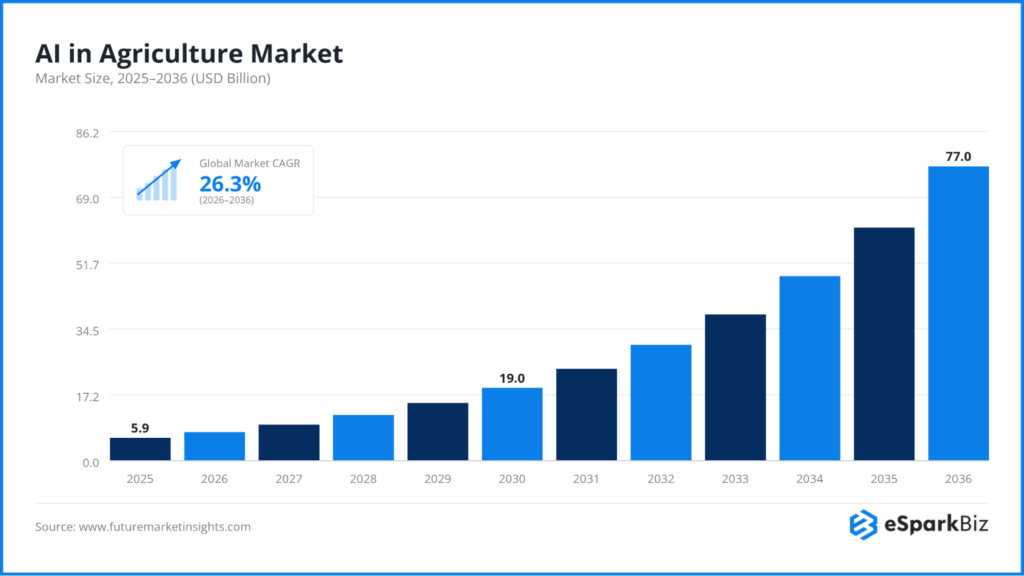
71. The global AI in agriculture market is projected to grow from USD 7.5 billion in 2026 to USD 77.0 billion by 2036, expanding at a 26.3% CAGR, reflecting growing investment in AI-powered precision farming, autonomous equipment, and intelligent agricultural technologies
72. An AI-based pilot for local monsoon onset forecasting reached 3.88 crore farmers across 13 Indian states, with 31–52% of surveyed farmers changing their sowing and land preparation decisions based on AI-generated forecasts. This demonstrates measurable adoption of AI-assisted decision-making in agriculture
73. AI-powered Kisan e-Mitra has answered more than 9.3 million farmer queries, handling over 8,000 queries daily across 11 regional languages, demonstrating the growing adoption of AI-powered digital assistance in agriculture.
74. Smart greenhouse management is projected to be the fastest-growing application in the AI in agriculture market, expanding at a CAGR of 22.47% between 2026 and 2031 as growers increasingly automate climate control, irrigation, and nutrient management.
AI in Education Statistics
AI is transforming education through personalized learning, intelligent tutoring, and administrative automation. These statistics highlight adoption trends, market growth, and AI’s impact across educational institutions.
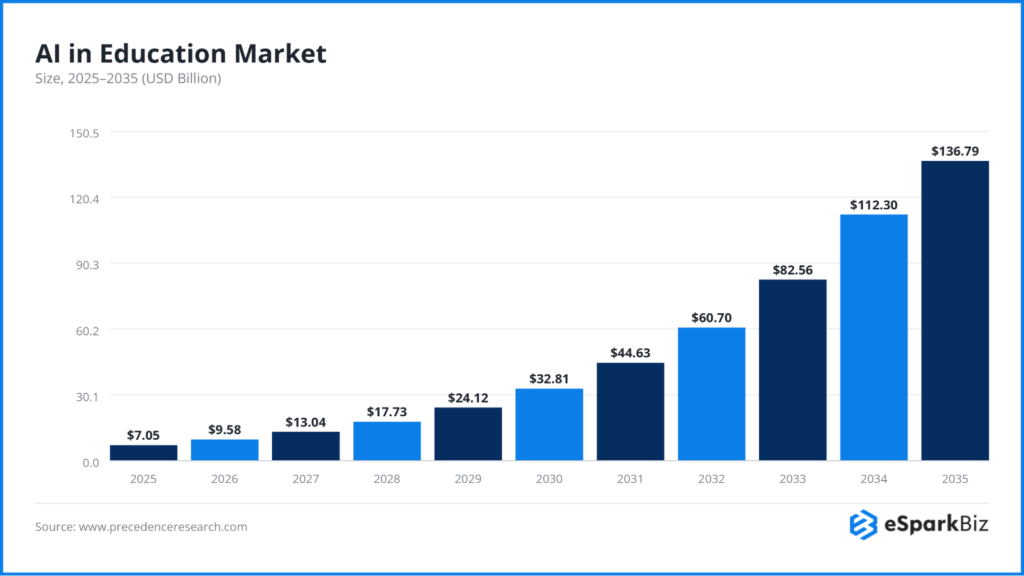
75. The global AI in education market is projected to grow from USD 7.05 billion in 2025 to USD 136.79 billion by 2035, expanding at a CAGR of 34.52%.
76. AI use in schools has increased over the past year, according to 78% of education leaders, 76% of educators, and 65% of students.
77. AI is helping educators improve instructional planning, with 57% of lower secondary teachers agreeing it helps write or improve lesson plans.
78. Concerns about academic integrity remain high, with 72% of lower secondary teachers believing AI enables students to pass off others’ work as their own.
79. Formal AI training remains limited, with 77% of students and 53% of educators saying they have not received formal AI training.
AI in Software Development
Software development has become one of the most significant areas of AI adoption. From code generation and testing to debugging and documentation, AI-powered development tools are increasingly integrated into everyday engineering workflows.
80. 97% of software development organizations are using or evaluating generative AI, demonstrating that AI adoption has become nearly universal across modern software development teams.
81. AI has become a core development tool, with 90% of software development professionals reporting they use AI in their workflows.
82. GenAI delivers its greatest efficiency gains in software development, with over 70% of developers reporting it cuts the time required for boilerplate coding and documentation tasks.
83. Only 21.1% of organizations use AI extensively across most software development projects, suggesting that while AI adoption is widespread, enterprise-wide implementation remains in its early stages.
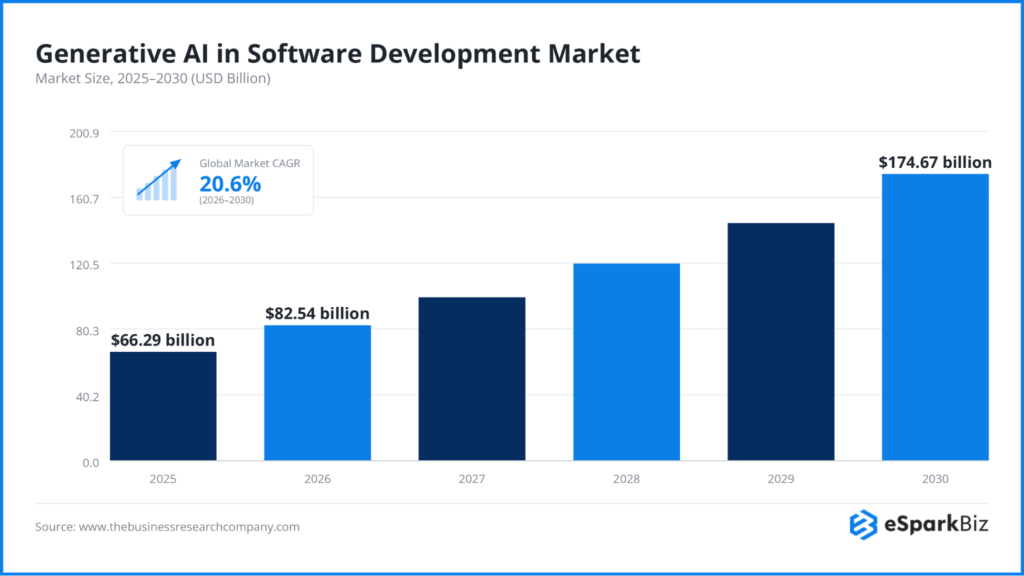
84. The rapid adoption of generative AI in software development is also driving substantial market growth. According to The Business Research Company, the global generative AI software development market is projected to grow from USD 82.54 billion in 2026 to USD 174.67 billion by 2030, at a 20.6% CAGR, reflecting sustained enterprise investment in AI-powered software development solutions.
AI Investment and Market Growth Statistics
The rapid growth of AI adoption is being supported by unprecedented levels of investment from businesses, investors, and governments worldwide. As organizations continue to scale AI initiatives, funding is increasingly directed toward infrastructure, cloud computing, research, and enterprise AI solutions.
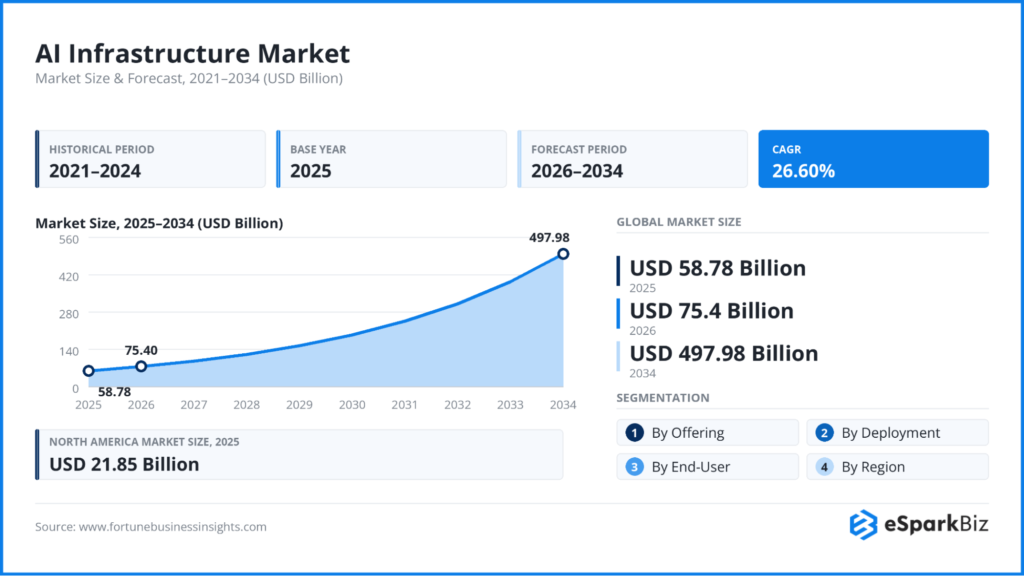
85. The global AI infrastructure market was valued at USD 58.78 billion in 2025 and is projected to reach USD 497.98 billion by 2034, with a CAGR of 26.60%.
86. Four major U.S. companies are expected to invest approximately $650 billion in AI infrastructure during 2026, reinforcing the United States’ position as the global leader in AI innovation and large-scale technology investment.
87. Industry analysts project that AI hyperscalers’ capital spending could exceed $527 billion in 2026, up from $465 billion, reflecting continued confidence in AI infrastructure, cloud computing, and enterprise adoption.
88. Global AI spending is projected to reach $2.52 trillion in 2026, reflecting the continued expansion of AI investment across industries and reinforcing artificial intelligence as a long-term economic growth driver.
89. More than 92% of organizations plan to increase AI investments over the next three years, demonstrating that businesses view artificial intelligence as a long-term strategic priority rather than a short-term technology trend.
AI Scaling and Enterprise Adoption Statistics
Recent research suggests that although businesses are increasingly investing in AI technologies, relatively few have reached a level where AI is fully integrated across the enterprise.
90. 21% of organizations are redesigning end-to-end business processes with AI at the core, indicating that enterprise-wide AI transformation remains in its early stages.
91. Only 15% of organizations have reached a sustained AI run-state, indicating that relatively few have successfully scaled AI beyond pilot projects into stable enterprise operations.
92. 78% of enterprises now run AI inference in-house, indicating that AI has moved beyond experimentation into production-scale enterprise operations.
93. AI front-runners represent just 8% of organizations, demonstrating that successfully scaling AI across business functions remains a significant challenge for most enterprises.
94. Around 37% of organizations are still using AI at a surface level with little or no change to existing processes, suggesting that many companies have yet to move beyond basic AI implementation.
95. Only 13% of organizations are driving adoption of AI programs across the organization, highlighting that organization-wide AI orchestration remains at an early stage.
Security, Governance, and Data Challenges Statistics
Despite rapid growth in AI adoption, many organizations continue to face obstacles when moving AI initiatives from experimentation to enterprise-wide deployment. While businesses are investing heavily in AI technologies, governance, security, and data management challenges remain significant barriers to scaling AI effectively.
96. In organizations that have adopted AI, 27% of employees say that their workplace has changed in disruptive ways to a large or very large extent in the past year.
97. Security and compliance concerns remain major barriers to enterprise AI adoption, with 59% of technology leaders identifying them as key challenges to scaling AI agents.
98. Nearly 80% of enterprises report that data access challenges are limiting the effectiveness of AI initiatives, highlighting the importance of strong data foundations for successful AI adoption.
99. 65% of organizations struggle to efficiently access high-quality data, highlighting data governance as a major challenge to scaling AI initiatives.
100. 23% of organizations still lack a dedicated AI governance committee, while only 12% describe their AI governance committees as mature and proactive.
Enterprise AI Readiness Statistics
As organizations continue to expand AI adoption, achieving successful implementation requires more than deploying advanced AI technologies. Workforce readiness, AI literacy, data preparedness, and organizational confidence all play an essential role in ensuring that AI initiatives deliver long-term business value.
101. Only 1% of business leaders consider their organizations mature in AI deployment, indicating that most companies are still in the early stages of integrating AI into core business workflows.
102. AI data readiness remains a major barrier to enterprise adoption, with only 7% of enterprises reporting that their organization’s data is completely ready for AI adoption, while many continue to face foundational data challenges.
The report attributes low AI data readiness to several common enterprise challenges, including:
- Siloed data and difficulties integrating data sources (56%)
- Lack of a clear data strategy (44%)
- Data quality and bias issues (41%)
- Regulatory constraints on data use (34%)
103. Only 39% of organizations have a shared customer data platform capable of supporting large-scale agentic AI deployment, highlighting that data readiness remains a major barrier to enterprise AI adoption.
104. 52% of organizations orchestrate multiple AI models, highlighting the increasing complexity of enterprise AI environments and the growing need for robust AI governance, infrastructure, and security.
105. Security concerns continue to challenge AI readiness, with 66% (Two-Thirds) of respondents expressing concern that AI systems could be hacked or breached, highlighting the need for stronger cybersecurity and governance as autonomous AI adoption expands.
106. In 2026, organizations will abandon 60% of AI projects that are unsupported by AI-ready data, highlighting the critical role of data readiness in successful AI adoption.
Frequently Asked Questions
What is artificial intelligence (AI)?
Artificial intelligence is technology that lets computers handle tasks that normally need human intelligence, things like learning, reasoning, understanding language, recognizing images, and making decisions.
How does artificial intelligence work?
AI works by analyzing data, spotting patterns, and running algorithms to make predictions or decisions. Most modern AI systems rely on machine learning models that get better at their job through training on large datasets.
What are the main types of artificial intelligence?
AI is commonly divided into three categories:
|
AI Type |
Description |
|
Narrow AI |
Designed for specific tasks like chatbots or recommendation systems. |
|
General AI |
A theoretical AI capable of performing any intellectual task a human can. |
|
Super AI |
A hypothetical AI that surpasses human intelligence across all domains. |
What is the difference between AI and machine learning?
AI is the broader field of building intelligent systems, while machine learning is a subset of it, one that lets systems learn from data instead of being explicitly programmed for every task.
What are the most common applications of artificial intelligence?
AI is widely used across industries, including:
- Virtual assistants and chatbots
- Recommendation systems
- Fraud detection
- Healthcare diagnostics
- Autonomous vehicles
- Predictive analytics
- Content generation
Is artificial intelligence replacing human jobs?
AI is automating repetitive tasks, but it's also creating new roles in AI development, data science, cybersecurity, and human-AI collaboration. The net effect varies a lot by industry and job function.
What are the benefits of artificial intelligence?
Artificial intelligence improves efficiency, automates repetitive work, sharpens decision-making, cuts down on errors, and helps organizations process large volumes of data far faster than traditional methods allow.
What are the risks and limitations of artificial intelligence?
AI can produce biased results, generate inaccurate information, raise privacy concerns, and require significant computing resources. Human oversight remains essential for high-stakes decisions.
Which industries use artificial intelligence the most?
AI adoption is growing across many sectors, with the highest usage in:
|
Industry |
Common AI Applications |
|
Healthcare |
Medical imaging, diagnosis, drug discovery |
|
Finance |
Fraud detection, risk assessment |
|
Manufacturing |
Predictive maintenance, quality inspection |
|
Education |
Personalized learning, automated assessment |
How can beginners start learning artificial intelligence?
Beginners should first learn Python, basic mathematics, and machine learning concepts before exploring deep learning and generative AI. Building small projects and using popular AI frameworks helps reinforce practical skills.