
 Last update date:



Quick Summary :-
Node.js continues to influence modern web development by helping teams build fast, high-throughput applications that can scale with demand while using one language across the stack. This report covers the latest Node.js statistics for 2026, including growth, adoption, developer trends, business usage, market share, and the future of the ecosystem.Node.js remains one of the leading JavaScript runtime environments for building scalable web applications, APIs, and real-time solutions. According to the Node.js Foundation User Survey, Node.js has more than 3.5 million users worldwide and continues to gain traction across web, IoT, and enterprise applications.
As Node.js adoption grows, businesses increasingly work with experienced Node.js development companies to build secure, scalable, and high-performance applications. Organizations developing custom backend solutions, real-time platforms, and enterprise software often partner with established providers such as eSparkBiz to deliver modern Node.js projects.
What is Node Js?
Node.js is an open-source, cross-platform JavaScript runtime environment that enables developers to build scalable, high-performance web applications, APIs, and real-time applications efficiently. Its flexibility and performance make it suitable for a wide range of
Node js use cases, including e-commerce platforms, streaming services, chat applications, IoT solutions, and enterprise software.
🌟 Why Developers Choose Node.js
- Runs JavaScript on both the client and server.
- Handles concurrent requests with non-blocking I/O.
- Powered by Google’s V8 engine for fast execution.
- Supports scalable APIs and microservices.
- Offers a rich npm ecosystem with reusable packages.
- Works across multiple platforms, including Windows, macOS, and Linux.
Top Node.js Statistics You Should Know in 2026
These up-to-date Node.js statistics showcase the platform’s market share, popularity, developer adoption, cloud usage, AI ecosystem, security, and performance, helping you understand its role in modern software development.
Node.js Statistics at a Glance
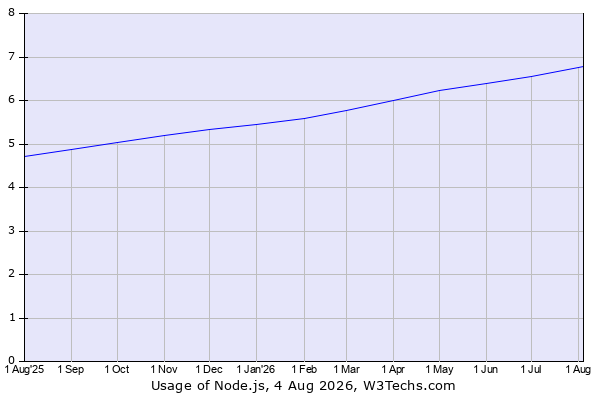
1. According to W3Techs, 6.8% of websites with known web server technology use Node.js, highlighting its widespread adoption for modern backend development
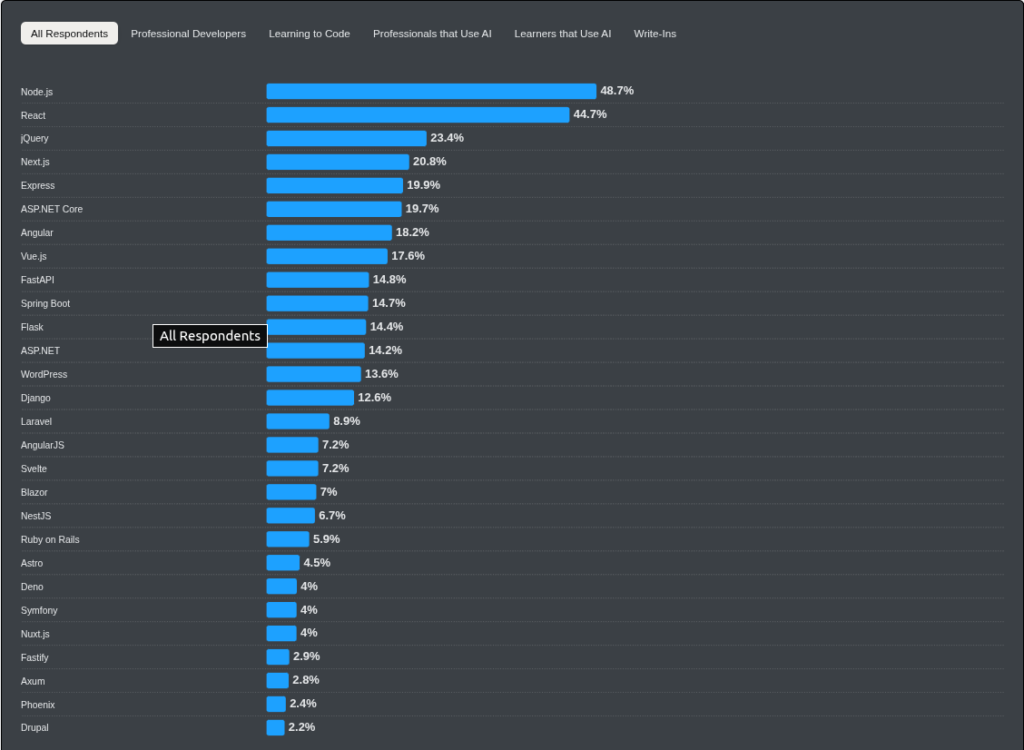
 2. According to the Stack Overflow Developer Survey, 48.7% of developers use Node.js, making it one of the most widely adopted technologies for backend development.
3. npm hosts more than 3.1 million packages making it one of the world’s largest software package ecosystems for Node.js developers
Node.js Growth Statistics
4. The official Node.js GitHub repository has 118.7k stars, demonstrating strong developer trust and its popularity as a leading open-source JavaScript runtime.
5. The official Node.js GitHub repository has 36.3k forks, highlighting active community collaboration and continuous contributions from developers worldwide.
6. The official Node.js GitHub repository has 3k watchers, reflecting sustained interest from developers who actively follow project updates and releases.
7. According to NodeSource, Node.js v22 recorded nearly 120 million monthly downloads, highlighting the rapid adoption of its latest LTS release among developers and organizations seeking modern, secure, and high-performance applications.
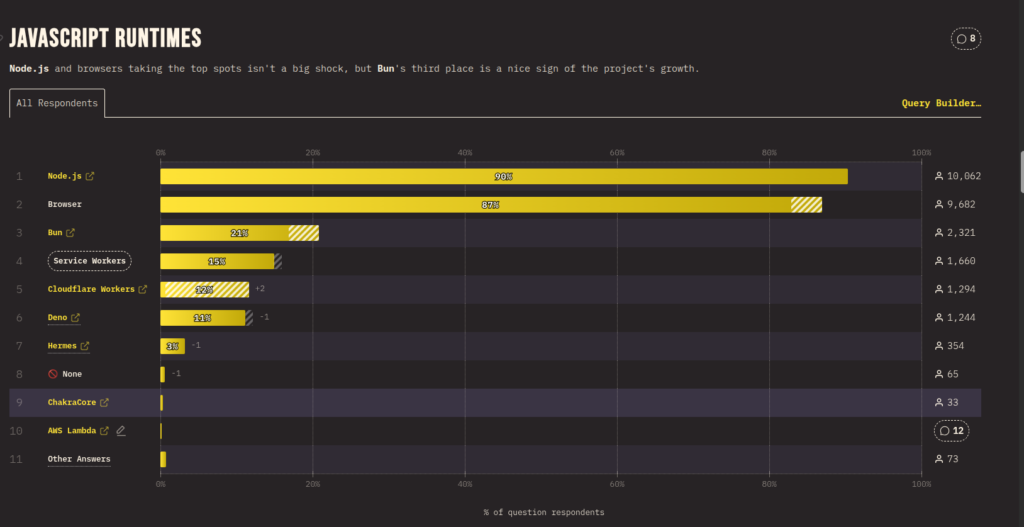
8. According to the State of JavaScript Survey, 90% of developers continue to use Node.js as their preferred JavaScript runtime, highlighting its strong ecosystem and continued leadership in backend development.
Node.js Runtime & Performance Statistics
9. NodeSource’s N|Solid Runtime surpassed 2 million downloads in 2026, with the company reporting that downloads are on track to nearly double the previous year’s total.
10. A 2026 academic study found that the Shar runtime analysis framework achieved 95.5% recall with zero false positives when evaluating 493 Node.js vulnerabilities, while incurring only 1.85× runtime overhead compared with vanilla Node.js.
11. OpenBenchmarking.org has collected 2,338 public benchmark results for the Node.js V8 Web Tooling Benchmark, with data updated through 15 July 2026, making it one of the largest publicly available Node.js runtime performance benchmark datasets.
12. Cloudflare found Node.js running on Vercel performed up to 3.5× slower than Cloudflare Workers in CPU-intensive benchmarks before identifying and resolving the underlying V8 compilation issue.
13. More than 94% of the 100,000 npm modules tested pass all tests on GraalVM’s Node.js runtime, demonstrating strong compatibility for running existing Node.js applications on the JVM.
Node.js Cloud & Infrastructure Statistics
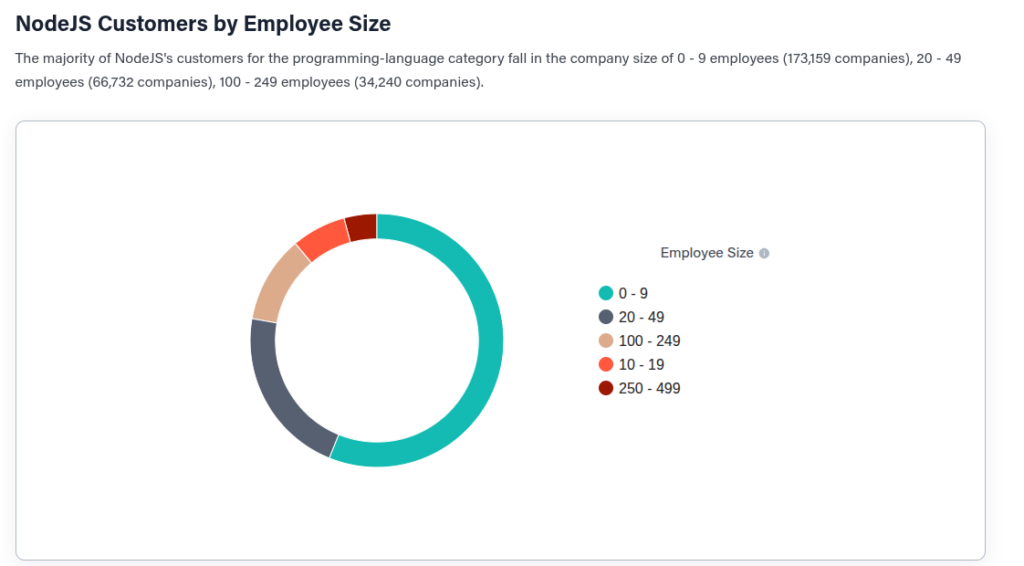
14. Kubernetes is used in production by 82% of container users, making it the leading platform for deploying cloud-native Node.js microservices and modern applications.
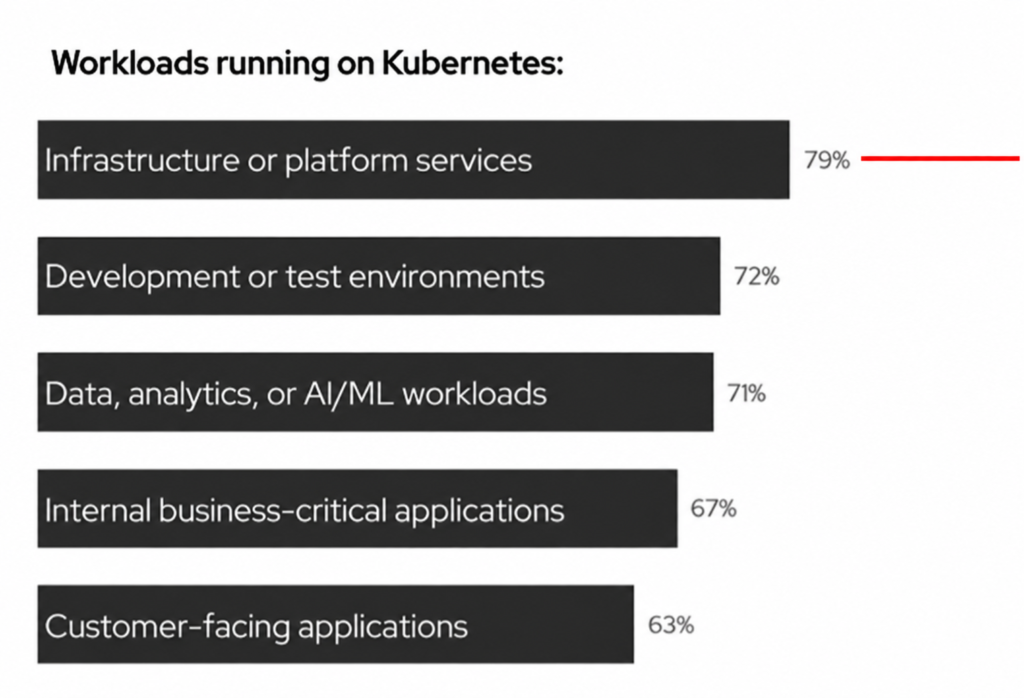
15. Kubernetes now runs infrastructure or platform services for 79% of organizations, highlighting its critical role in deploying cloud-native Node.js applications and microservices.
 16. The official Node.js Docker image has surpassed 1 billion downloads on Docker Hub, making it one of the most widely used official runtime images for cloud-native application deployment.
17. Vercel deploys Node.js serverless functions across 20 compute-capable global regions, enabling low-latency cloud deployment for APIs, web applications, and backend services..
Node.js Popularity statistics
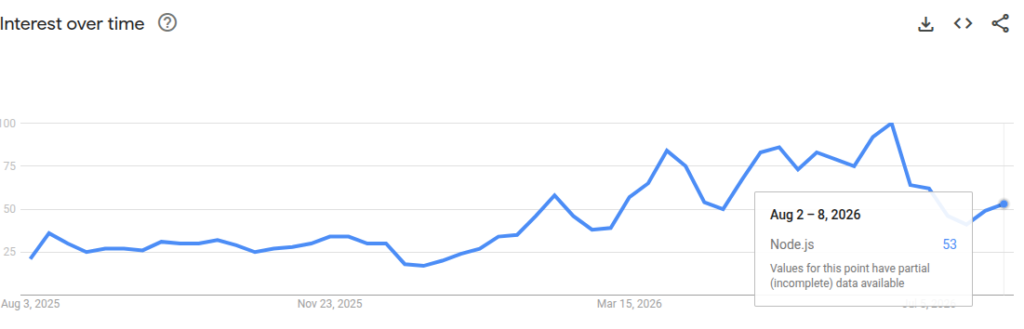
18. Google Trends shows Node.js maintaining consistent global search interest over the past year, with peak popularity reaching an index score of 100 and remaining above 50 in recent weeks.
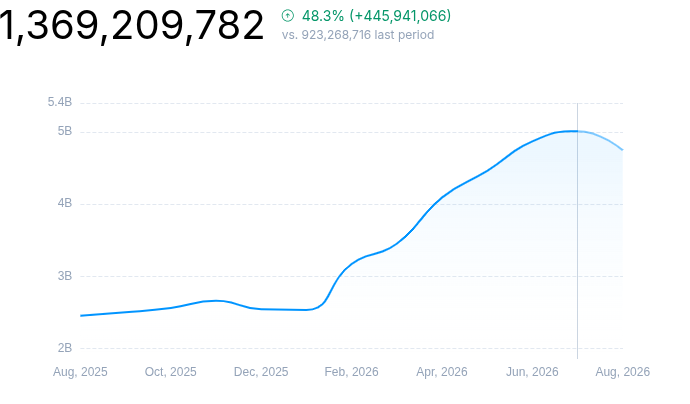
19. The Node.js ecosystem recorded more than 1.36 billion package downloads, increasing by 48.3% compared with the previous period, highlighting its continued popularity among developers.
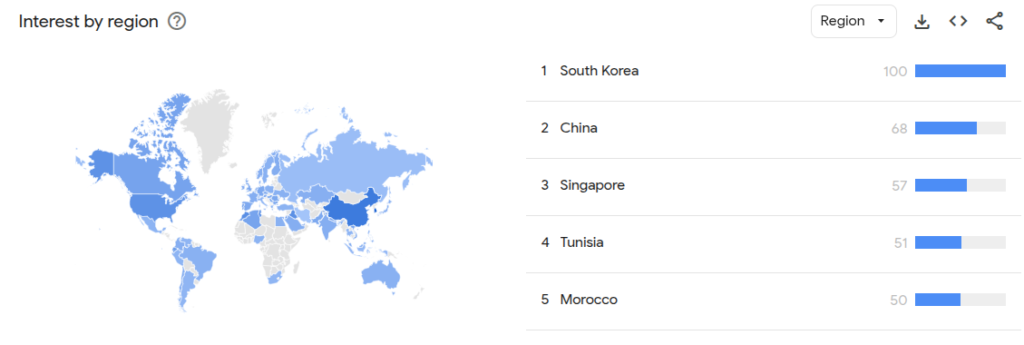
20. Google Trends identifies South Korea as the leading region for Node.js search interest with an index score of 100, followed by China (68), Singapore (57), Tunisia (51), and Morocco (50).
Node.js Salary Statistics
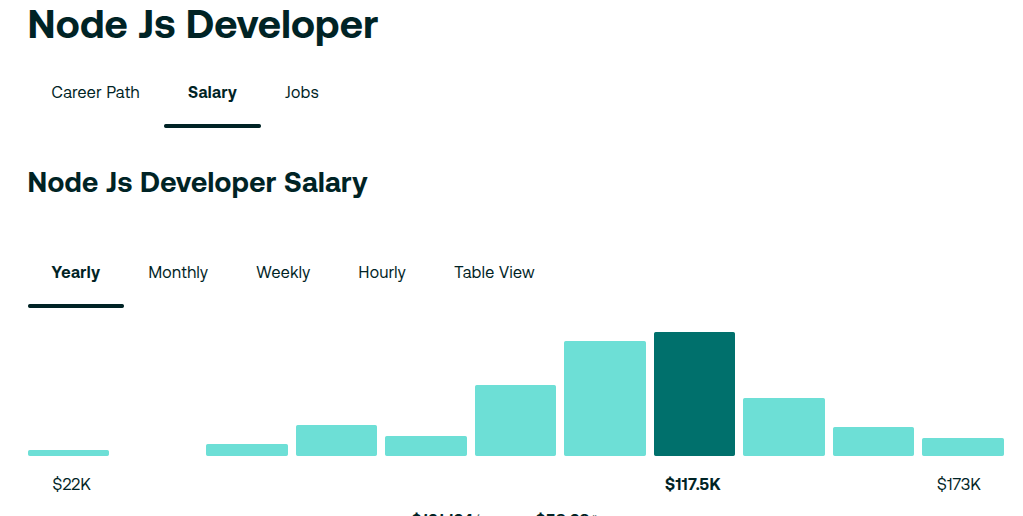
21. According to ZipRecruiter, the average annual salary for a Node.js developer is approximately $117.5K, reflecting the strong demand for Node.js professionals.
22. Node.js developer salaries start at approximately $22K per year, depending on experience, location, and employer.
23. Experienced Node.js developers can earn up to $173K annually, making it one of the highest-paying backend development skills.
24. Node.js developers in India earn an average salary of ₹5.25 lakh per year, with the typical range between ₹3.22 lakh and ₹7.50 lakh annually.
25. Indeed Smart Sourcing lists more than 231,151 Node.js developers ready to work, highlighting a large global talent pool for backend, API, and full-stack development.
Node.js Version and API Usage Statistics
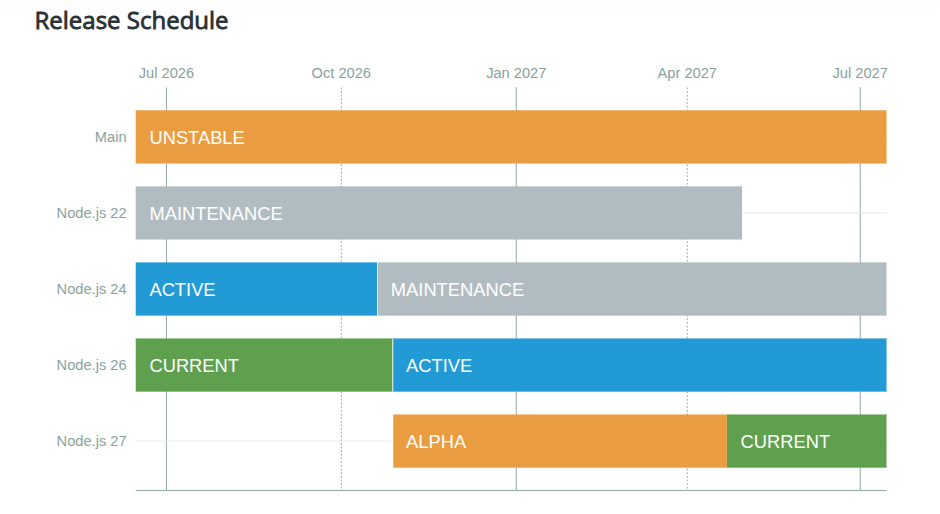
26. According to the official Node.js release schedule, Node.js 26 was released in April 2026 and enters Long-Term Support (LTS) in October 2026, making it the recommended version for production applications.
27. Node.js 26 enters the maintenance phase in October 2027 and reaches End of Life (EOL) in April 2029, completing its official support lifecycle.
28. Node js 27 is the first release under the project’s new annual release model, with its Alpha release beginning in October 2026 and the Current Release scheduled for April 2027.
29. According to Cloudflare Radar, Node.js accounts for 8.3% of automated API requests, highlighting its continued use for building API clients and backend services.
30. Node.js ranks as the 4th most-used technology for automated API requests, demonstrating its strong presence in modern API ecosystems
31. Postman’s State of the API Report reveals that 57% of organizations are somewhat API-first and 25% are fully API-first, bringing total API-first adoption to 82% worldwide.
Node.js Market Position,share and Business Statistics
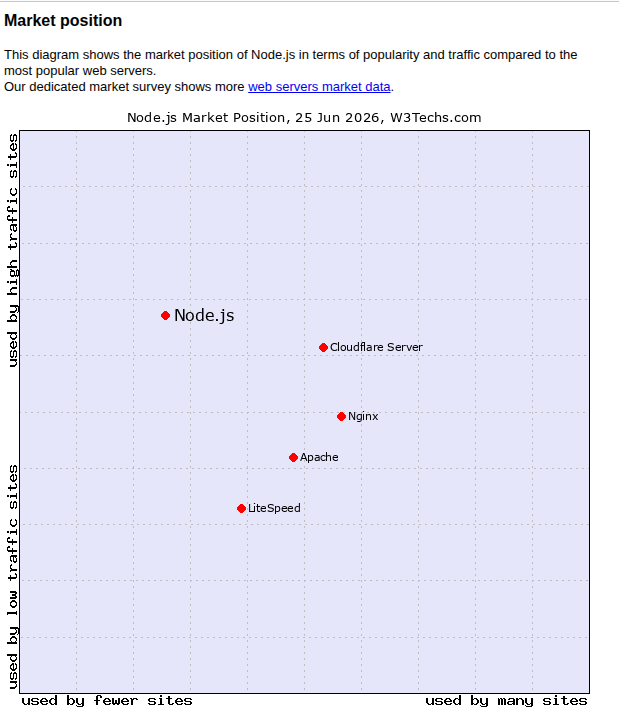
32. W3Techs’ market position analysis shows that Node js maintains a strong presence among high-traffic websites, highlighting its continued adoption for scalable applications, APIs, microservices, and real-time web platforms.
33. Organizations with 20–49 employees account for 66,732 Node.js users, highlighting its strong adoption among growing businesses.
34. Companies with 100–249 employees include 34,240 Node.js users, demonstrating its continued adoption for enterprise-grade applications, APIs, and cloud-native solutions.
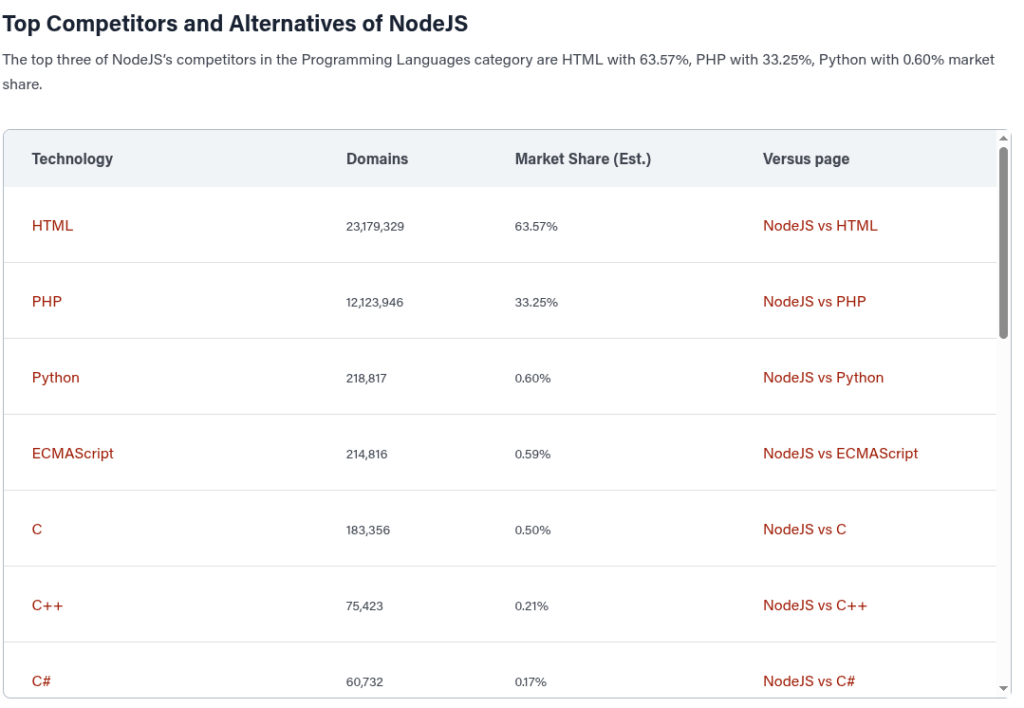
35. Node.js outpaces several niche technologies in web adoption, with comparison data showing Dart (1,485 domains), Apache Impala (912), Microsoft Visual FoxPro (672), IBM Assembler (181), SAS/SCL (67), Apache HAWQ (56), and Google Go Language (45).
Future of Node.js
36. According to the official Node js Release Schedule, Node.js continues to follow a predictable long-term release roadmap with Node.js 26 entering Long-Term Support (LTS) in October 2026 and Node.js 27 becoming the first annual release in April 2027, ensuring regular updates, long-term stability, and reliable upgrade cycles.
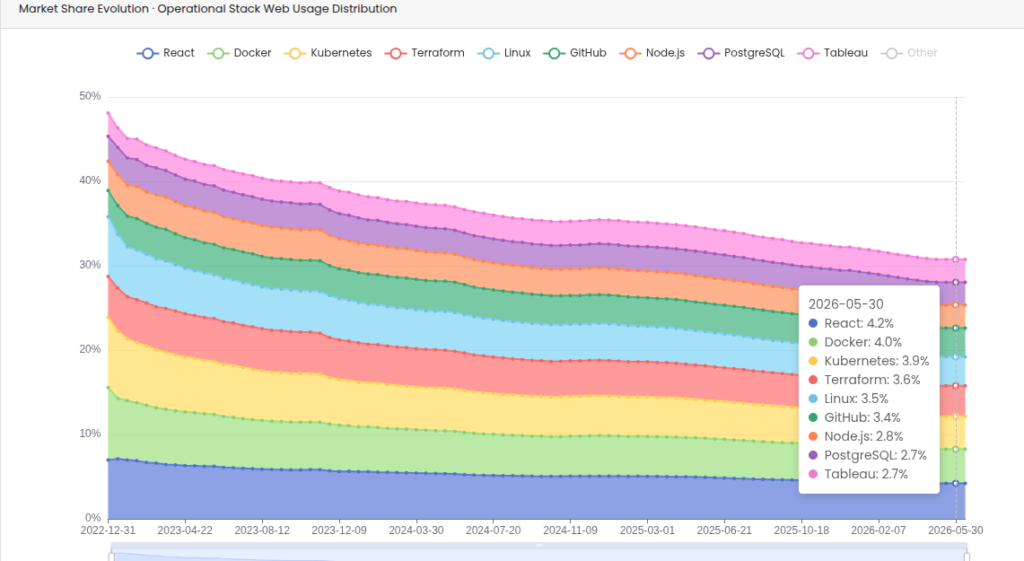
37. As of July 2026, Node.js accounts for 2.8% of developer technology interest, ranking alongside widely used technologies such as PostgreSQL (2.7%) and GitHub (3.4%) in the global developer ecosystem.
Node.js Developer Statistics
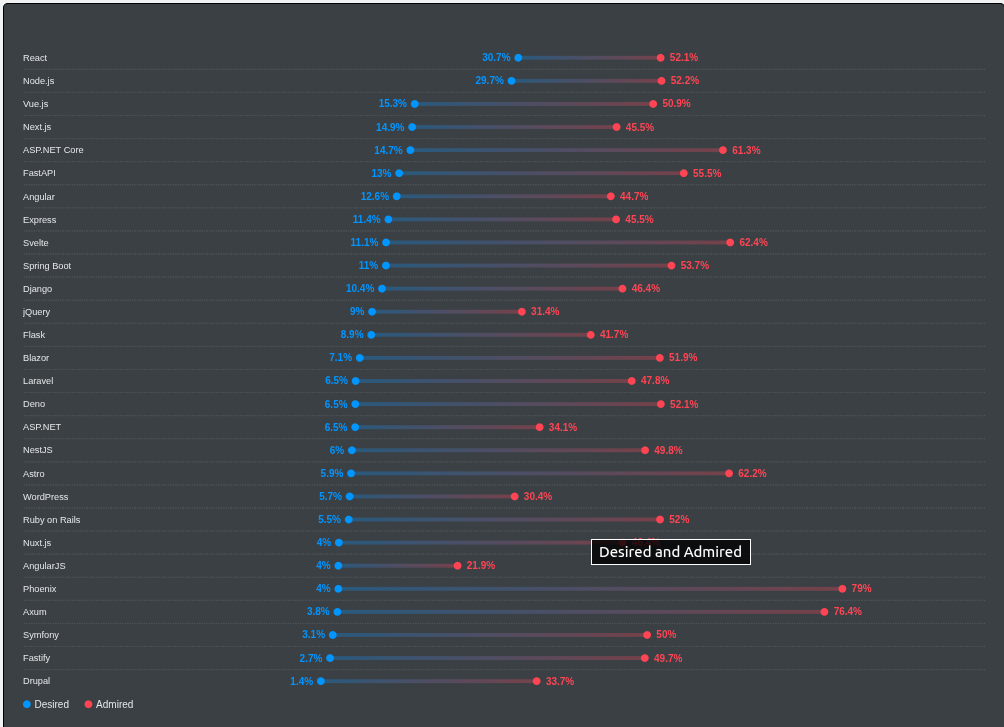
38. 52.2% of developers who currently use Node.js want to continue using it for future projects, demonstrating strong long-term confidence in Node.js as a preferred technology for modern backend and server-side application development.
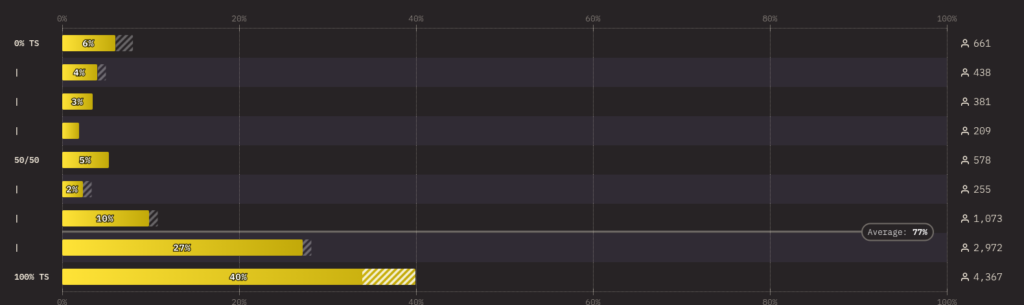
 39. Developers now write an average of 77% of their JavaScript code in TypeScript, reflecting the growing preference for typed development in modern Node.js applications.
Node.js AI Development Statistics
40. The Vercel AI SDK supports 20+ AI model providers, allowing Node.js developers to build AI-powered applications through a single unified API.
41. More than 7,537 projects directly depend on the official Anthropic TypeScript SDK, highlighting its growing adoption across the Node.js AI development ecosystem.
42. The official Anthropic Node.js SDK has published over 195 package versions, reflecting continuous development, regular updates, and ongoing feature enhancements.
43. 57.3% of organizations already have AI agents in production, highlighting the growing demand for scalable development frameworks such as Node.js and TypeScript to support enterprise AI applications.
Node Js Framework Statistics
44. Fastify surpasses 10 million monthly downloads, reflecting its growing adoption as a high-performance Node.js framework for building fast, scalable web applications, APIs, and microservices.
45. The official Express.js npm package depends on 28 core packages, reflecting its modular architecture and reliable ecosystem for building scalable Node.js web applications.
46. The official Express.js package records more than 128 million weekly downloads on npm highlighting its continued popularity as one of the most widely used web frameworks in the Node.js ecosystem.
Node.js Express.js Statistics
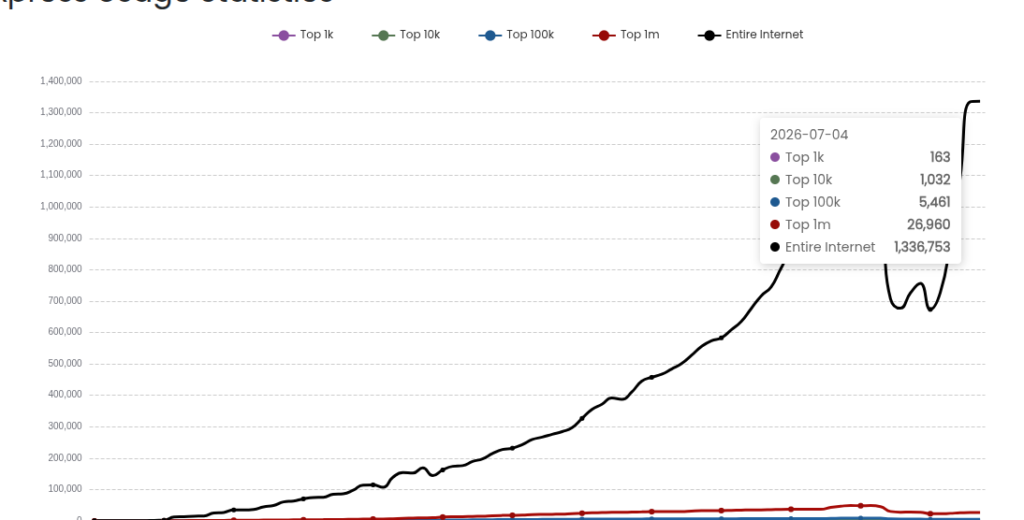
47. BuiltWith detected Express.js on more than 1.33 million websites across the Internet, including 26,960 of the world’s top one million websites, highlighting its widespread adoption within the Node.js ecosystem.
48. The Express.js GitHub repository has earned more than 69,300 stars reflecting its strong popularity and continued trust among Node.js developers worldwide.
49. Express.js has been forked more than 24,400 times on GitHub, demonstrating its active open-source community and widespread developer contributions.
Node.js Database & ORM Statistics
50. Prisma ORM became the most downloaded ORM for Node.js and TypeScript, recording 55.3 million npm downloads in the 30 days ending July 5, 2026.
51. The official MongoDB Node.js driver recorded approximately 11.3 million weekly npm downloads in May 2026, making it one of the most widely used database drivers in the Node.js ecosystem.
52. MongoDB Atlas serves over 250,000 new developers monthly and processes more than 3 trillion database queries daily, demonstrating its large-scale adoption for cloud-native Node.js applications worldwide.Node.js Community Statistics
53. The 2026 Node.js Collaboration Summit brought together more than 50 contributors from around the world, highlighting the strength of the Node.js open-source community and its continued collaboration on the project’s future.
54. The 2026 Node.js Collaboration Summit featured 12 technical sessions covering the release roadmap, security, observability, AI-assisted development, Streams API, and project governance, reflecting the ecosystem’s ongoing innovation.
55. The official Node.js GitHub organization has more than 16.3K followers reflecting the project’s large and active global open-source community.
Frequently Asked Questions
What are Node.js statistics?
Node.js statistics cover market share, developer adoption, enterprise usage, performance, ecosystem growth, and industry trends. They help businesses and developers assess Node.js for modern software projects.
Why should businesses review Node.js statistics before adoption?
Businesses can use Node.js statistics to evaluate:
- Market adoption
- Developer availability
- Enterprise usage
- Performance trends
- Ecosystem growth
These insights can support technology investments and long-term development planning.
What are the latest Node.js adoption trends?
Current Node.js adoption is being shaped by AI integration, cloud deployment, APIs, and microservices across modern development environments.
|
Trend |
Impact |
|
AI integration |
Faster development |
|
API-first architecture |
Better scalability |
|
Cloud deployment |
Higher adoption |
|
Microservices |
Improved flexibility |
How is AI influencing Node.js development trends?
AI is increasing demand for Node.js by helping developers build AI agents, automation tools, APIs, and backend services that integrate with modern AI platforms.
Why is Node.js widely used for backend development?
Node.js remains popular because it offers:
- Non-blocking architecture
- High scalability
- JavaScript everywhere
- Extensive package ecosystem
- Fast API development
These advantages make modern backend development simpler and more scalable.
Which technology trends are shaping the future of Node.js?
Several emerging technologies are influencing Node.js development and opening up new possibilities for modern applications.
|
Technology Trend |
Benefit |
|
AI development |
Intelligent applications |
|
Edge computing |
Lower latency |
|
Serverless |
Cost efficiency |
|
APIs |
Better integrations |
How do Node.js statistics help developers?
Node.js statistics help developers compare adoption, ecosystem growth, community activity, performance trends, and enterprise demand. This makes it easier to select technologies that align with current industry needs.
Which industries use Node.js the most?
Node.js is widely used across:
- E-commerce
- Financial services
- Healthcare
- SaaS platforms
- Media streaming
- AI applications
Its scalability makes it suitable for a wide range of enterprise and startup projects.
What do Node.js usage trends indicate for the future?
Node.js usage trends point toward continued growth in cloud-native development, AI-powered applications, microservices, serverless computing, and enterprise APIs, supporting its position as a leading backend runtime.
What should businesses evaluate before choosing Node.js?
Businesses should assess adoption, performance, security, and community strength to determine whether Node.js fits their long-term development needs.
|
Evaluation Area |
Purpose |
|
Adoption |
Market confidence |
|
Performance |
Scalability |
|
Security |
Risk reduction |
|
Community |
Long-term support |