


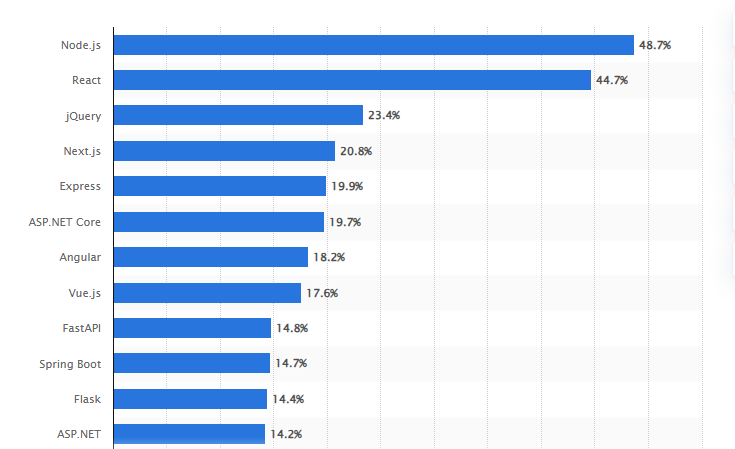
React is the most utilized framework for building modern dynamic webpages, it’s the go-to choice because it’s fast, flexible, and easy to use. As AI powered web development continues to reshape the industry, React continues to lead the way in developing contemporary applications. According to a Statista survey, 44.7% of developers worldwide use React.
React Developers must keep up with the latest changes in how we will use software technology to develop interactive and responsive digital interfaces as new technologies evolve.This is going to provide users with an improved digital experience from now and beyond until 2026.
React Trends Teams Are Using to Build Better Applications
A great React application is made great by the way it is implemented. These trends will allow developers to improve efficiency, scale properly, and provide a great experience for their users.
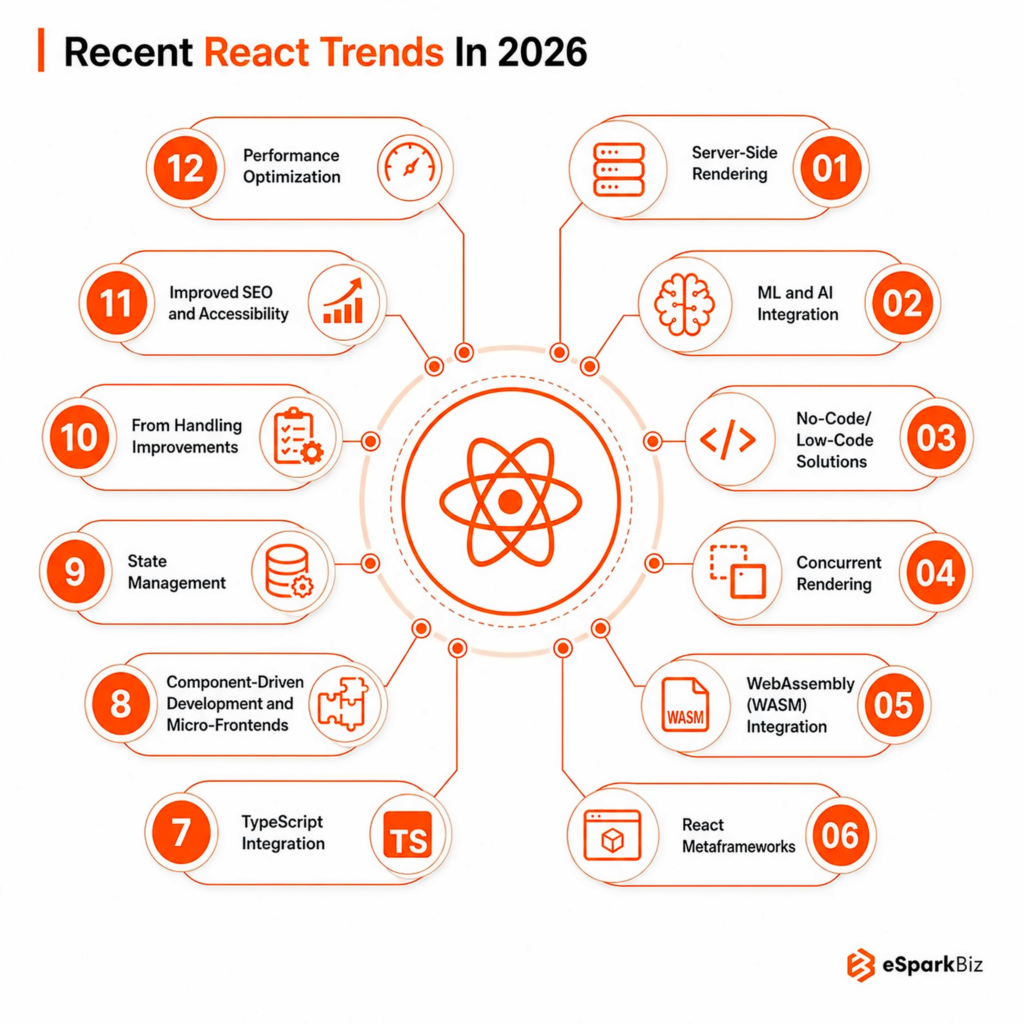
Server-Side Rendering
The demand for SEO-friendly and quick web applications is on the rise. That is where this React major trend proves to be beneficial. The React server components allow to render components on the server side.
As a result, it can significantly lower client-side workload and improve SEO of the React website. Moreover, the server components are ideal for content-heavy React app that can benefit from pre-rendered pages.
- Benefit: Increased page loading speed and improved SEO
- Ideal for: SaaS platforms, blogs, and eCommerce sites
ML and AI Integration
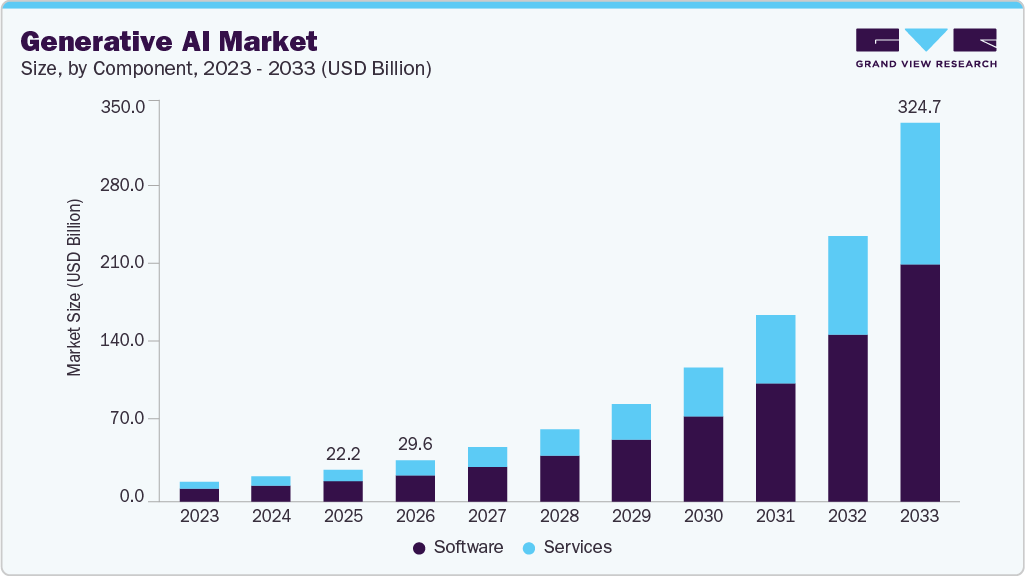
The AI market size is projected to reach USD 324.68 billion by 2033, growing at a CAGR of 40.8% from 2026 to 2033. The emergence of the technology has significantly impacted various industries, including web development.
Today, Every Reputed ReactJS Development Company want their web developers to leverage AI tools for writing complex user interfaces for web applications. In addition, the capabilities of AI and ML like personalized recommendations, chatbots, and predictive analytics are transforming React web apps. The best part is that the flexible React components architecture facilitates seamless integration with AI APIs, delivering exceptional user experiences.
- Benefit: Allows for adaptive and smart user interactions
- Ideal for: Customer support, predictive analytics, and personalized content delivery
No-Code/ Low-Code Solutions
In the present competitive landscape, rapid application development workflows have become more essential than ever before. Therefore, the dependence on no-code low-code development platforms is on the rise. These platforms are rapidly integrating with React, ensuring better code quality and improve web accessibility to non-technical users.
Tools like Builder.io and Retool eliminate the need for extensive coding and enable web developers to make use of the powerful new features of React. As a result, it can speed up the overall app development process while cutting down the costs. So, you can gain an edge in the market and get a chance to boost your profits.
- Benefit: Allows faster React development services for simple applications
- Ideal for: Small businesses with limited resources, MVPs, and prototyping
Concurrent Rendering
Concurrent rendering is undoubtedly one of the biggest Future trends shaping the ReactJS capabilities. The concurrent mode feature allows React developers to make apps more responsive by breaking down complex tasks into easily manageable ones. Moreover, it allows React to efficiently work on multiple tasks at the same time and enhances user experiences.
Also, this advantage of leveraging ReactJS paves the way for effective management of complex interactions and animations. As one of the Crucial ReactJS Best Practices, it doesn’t block the main thread. So, delivering optimized performances for highly interactive applications becomes simple.
- Benefit: Faster loading time and improved performance
- Ideal For: Apps with responsive UI, animations, and real-time updates
WebAssembly (WASM) Integration
JavaScript is being pushed to new extreme limits by the demand for high-performance web applications. React now has the ability to leverage very fast low-level code by combining it with Web Assembly (Wasm) so that developers can offload processing CPU intensive tasks (e.g., video processing, complex math, real-time gaming) from the UI main thread to the React component, thus allowing for UI updates. Consequently, near-native performance is achieved when building React applications promoting an interactive user interface. This technology enables developers to build much more complex web-based applications that have traditionally lived only as desktop applications.
- Benefit: Near-native performance for execution-heavy tasks
- Ideal for: Image/video editors, fintech dashboards, and browser-based gaming
React Meta frameworks
Have you heard about the metaframeworks of React? If not, you are missing out on a lot of opportunities. The emergence of React metaframeworks like Astro and Remix offers React developers more flexibility and choice in how they choose for applications and web development.
It opens up new opportunities and takes the existing React developers skill a notch higher. Moreover, the web app development frameworks can perfectly align with the requirements and opinions of the React developers.
- Benefit: Increased flexibility and customization opportunities
- Ideal for: Custom applications
TypeScript Integration
Reliability and maintainability of code have become critical components of the current software development lifecycle. As TypeScript has moved from being an optional technology to a fundamental building block of the React ecosystem, the introduction of static types allows developers to discover problems during the development phase of the project, rather than at runtime.
The combination of TypeScript and React has improved the developer experience by providing full autocompletion, easy-to-read documentation in code, and more consistent behaviour across components. As the complexity of React applications continues to grow, this combination will help ensure that there is a stable foundation upon which to build and refactor an application as it grows in size.
- Benefit: Improved quality of code, less runtime errors, and improved maintainability.
- Ideal For: Long-term projects, collaborative teams, and complex data-driven applications.
Component-Driven Development and Micro-Frontends
Companies are using bigger and more complicated enterprise applications. Managing an enterprise application’s code base grows quickly, creating the need for developers to move away from monolithic applications towards component-driven development (CDD) and micro-frontends.
By separating applications into smaller independent micro-apps, CDD and micro-frontends allow developers to decompose larger enterprise-level applications. The component model of React enables developers to build highly modular user interfaces (UIs) with reusable components across other applications which create a consistent look and feel throughout all platforms. This increases the speed of deployment and provides a consistent user experience across platforms.
- Benefits: Improved scalability, speed of team deployment, and code reuse infections.
- Best: Enterprise solutions and large distributed development teams
Form Handling Improvements
Handling forms is all about how well you can handle data when it gets submitted. The form-handling capabilities of React have witnessed an upgrade with streamlined API requests and built-in validation.
This new feature of React makes it easier to handle errors, manage forms, and validate inputs of users. As a result, it can help significantly lower the reliance on different third-party libraries.
- Benefit: Improves data fetching, handling, and facilitates easier form validation
- Ideal for: Apps involving extensive user input forms
Improved SEO and Accessibility
Creating web applications that can be easily found and function properly for all users is an essential goal for brands today. The React ecosystem is evolving rapidly to provide new ways to create faster search engine optimized (SEO) and accessible (A11y) web applications. Developments in semantic HTML support, ARIA attributes, and other similar enhancements allow developers to create applications that can be navigated visually by people who use a screen reader or other assistive technology.
React now allows developers to integrate accessibility features into the same application as the new rendering technologies. When search engines crawl users’ content, they will quickly find it because it is also accessible. This combined focus on accessibility and SEO ensures all users have a smooth experience, thus improving search engine rankings of all sites.
- Benefit: Government websites, eCommerce Sites, Public Sites
- Ideal For: Public Websites, Governmental Portals, eCommerce.
Libraries You Should Know When Building with #React #reactjs #javascript #frontend #webdev #dormosheio #beginners #frontenddev https://t.co/VwiiFzLvv2
— React Trends (@ReactJSTrends) October 21, 2024
State Management
The state management feature of React isn’t a new topic. However, as newer solutions approach the already existing ones differently, state management libraries continue to be a trend that demands attention.
React 19 has shortly introduced new React hooks, including useOptimistic and useActionState. The core aim is to improve UI feedback and simplify complex state management. Moreover, they also focus on the delivery of an optimized and responsive User Interface leveraging the ReactJS UI frameworks.
- Benefit: Improved performance and cleaner State management
- Ideal for: Apps that require frequent updates and have complex states
Performance Optimization

53 percent of online consumers are likely to abandon a website if it doesn’t load within three seconds. Therefore, there is a greater focus on leveraging the effective ReactJS performance optimization techniques. Features like lazy loading and code splitting in React can help improve overall site performance optimally.
Code splitting ensures that only the essential code loads initially. Further, the lazy loading feature improves speed by delaying non-essential codes. As a result, you can expect the pages to load faster and deliver exceptional performance to the users. Hire ReactJS Developers to seamlessly implement the best approaches for optimizing the performance of your web or app development solutions.
- Benefit: Enhances page loading speed and improves site performance
- Ideal for: Large-scale platforms and high-traffic applications
Also Read: Why React JS Is A Picture Perfect Choice For Enterprise App Development?
Real-World Applications of Modern React Trends
Adopting React trends is not enough alone. Businesses must apply them strategically to improve performance, scalability, and user experience while building modern, efficient, and competitive applications.
Top Companies Using React Trends
Leading companies like Netflix and Twitch are making use of the concurrent mode rendering components feature of React to create smooth interactions. Airbnb and Nike leverage the React server components to boost performance and SEO. Also, several SaaS companies are integrating AI with React for the delivery of personalized experiences.
Use Cases of React Trends in SaaS, eCommerce, and More
The performance-focused features of React like component-based architecture and server-side rendering (SSR) make it ideal for building complex applications. Delve into its prominent use cases!
SaaS and Enterprise Applications: The reusability nature of React components enables developers responsible for the development of SaaS platforms to provide real-time and smooth functionality. So, managing data-heavy operations, user dashboards, and CRM systems becomes easy. For instance, Salesforce and Trello leverage React to improve user interactivity and streamline data handling.
eCommerce: The ability of React to manage heavy data fetching, integrate SEO, and optimize loading speed makes it suitable for high-traffic eCommerce web development. Shopify makes use of React to deliver a responsive and fast shopping experience.
Frequently Asked Questions
What is the top trend in React JS for 2026?
Among others, some of the most recent trends include the integration of AI, server components, UI Components, reusable components, state management, React hooks, and concurrency mode rendering..
Is React in demand in 2026?
In 2026, the demand for React will still remain very high owing to its flexibility, active community of developers, and numerous users who develop interactive and scalable web applications using React.
Can React JS be used for AI-powered applications?
Yes, React JS development tools can easily integrate with AI tools. Such an integration is common in chatbots and recommendation engines.
How does server-side rendering benefit SEO in React applications?
With server-side rendering, search engines can index pages prior to their complete loading, which will help in making the content visible and increase its chances of ranking well.
Why are low-code/no-code solutions popular with React JS?
Low code and no code minimize manual coding efforts, quicken React application development, provide rapid prototyping capabilities, save costs, and allow the creation of scalable web applications quickly.
How can I leverage these trends for my business?
Adopting such trends will result in more engaging user experience, better SEO, and performance. These trends will be excellent for SaaS, eCommerce, competitive platforms, and other React projects.
Which are the top ReactJS development companies?
Leading Reactjs development companies like eSparkBiz, Icreon and MAS Global use ReactJS to build scalable, fast, and highly interactive user interfaces across global digital platforms efficiently.


 August 20, 2026
