
 Last update date:




Startups struggle to hire skilled developers due to limited budgets, competition from established companies and constant demand for specialized technical expertise. Finding vetted web developers who can align with growth driven goals while being cost efficient becomes a major challenge for early stage businesses.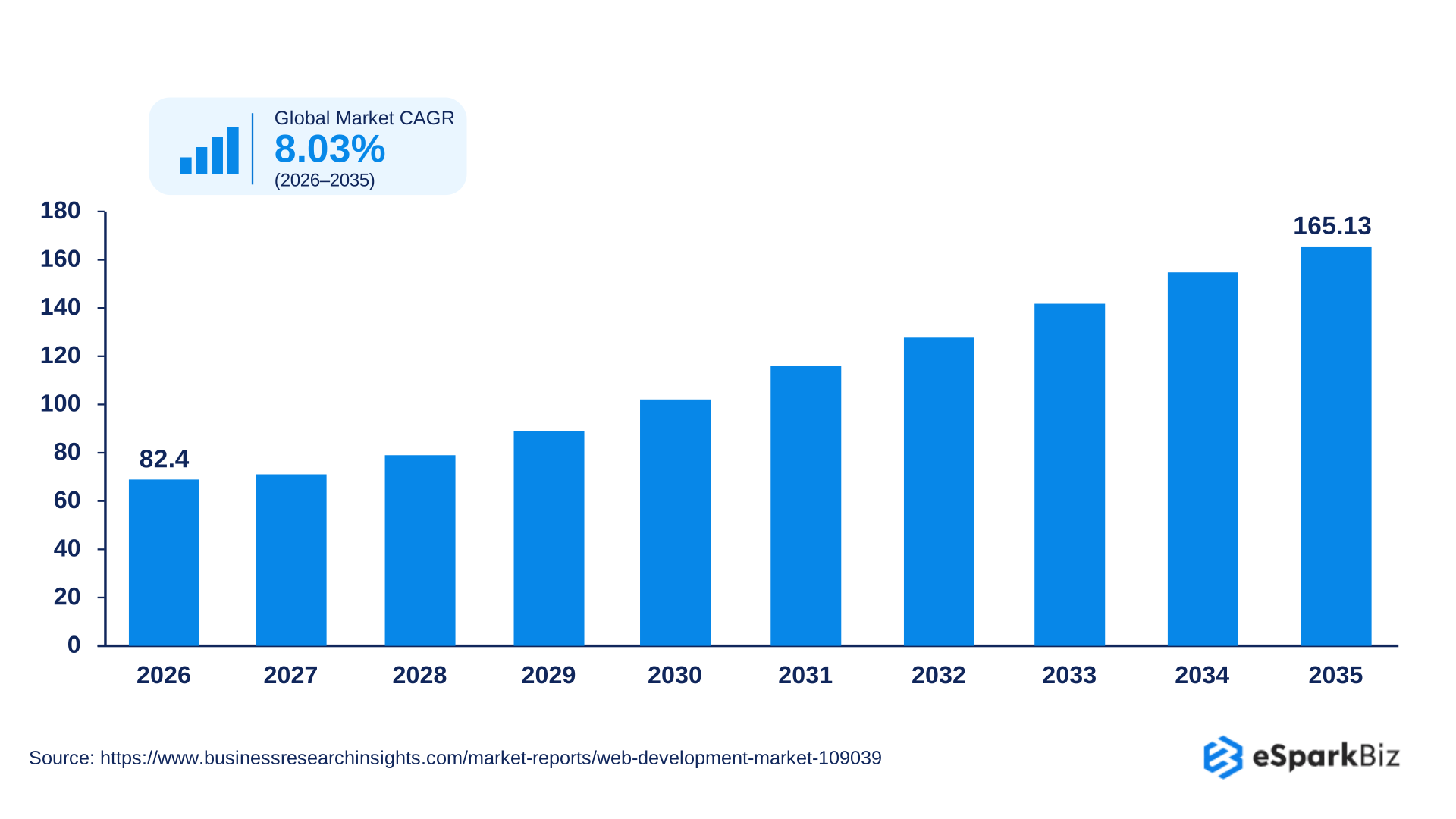 According to Business Research Insights, the global web development market size is expected to reach USD 165.13 billion by 2035, growing at a CAGR of 8.03%.
How We Choose the Best Web Development Companies for Startups
We evaluated 70+ web development companies and hiring platforms based on their technical expertise, startup project experience, client reviews, pricing transparency, scalability, and ongoing support.
We selected the top 10 providers by assessing their development capabilities, startup suitability, delivery reliability, and ability to support long-term product growth.
-
Technical Expertise (25%): Evaluates proficiency in frontend, backend, cloud, database technologies and modern frameworks required to build scalable web applications.
-
Startup Experience (20%): Considers experience working with early-stage and funded startups, including MVP development, SaaS products and product scaling.
-
Client Reviews and Reputation (15%): Examines verified client ratings, testimonials and feedback on platforms such as Clutch.
-
Pricing and Engagement Flexibility (15%): Reviews pricing transparency, hourly or monthly models, project costs and flexibility to match startup budgets.
-
Scalability and Developer Availability (15%): Assesses the ability to provide additional developers, expand technical capabilities and support changing product requirements.
-
Communication and Support (10%): Evaluates project management, progress updates, response times, collaboration and post-launch maintenance.
These criteria help identify providers that align with different startup stages, technical requirements and growth plans.
Disclosure: eSparkBiz published this blog and appears in the list. Every provider was assessed against the same criteria for startup hiring: client reviews, technical skills, engagement models, cost alignment and scalability. Details may change.
Why Startups Need the Right Web Development Partner?
Choosing the right web development partner helps startups balance growth, reduce risks and achieve long term sustainability in competitive markets.
- 90% of startups fail from execution gaps tied to poor technical foundations and weak developer teams.
- Scalability means platforms can handle user growth without system slowdowns.
- Faster MVP launch accelerates investor interest and market entry.
- Budget control prevents overspending and optimizes resource allocation.
- Product market fit is validated through agile, adaptable development cycles.
Comparison of Top Startup Developer Hiring Options
Startups choose between dedicated development companies or talent platforms based on project scope, required skills and team structure. This table shows developer availability, hiring style and ideal use cases.
| Provider | Founded | Best For | Core Skills | Stage Fit | Location |
| eSparkBiz | 2010 | Structured teams for AI, SaaS or cloud projects | Web apps, SaaS, AI, cloud, staff augmentation | Funded startups scaling a web app or SaaS | Delaware, USA & India |
| Closeloop Technologies | 2011 | End-to-end product engineering from MVP to scale | Web and mobile, SaaS, cloud, CRM, product engineering | Pre-seed to growth, full-cycle MVP builds | California, USA |
| X-Team | 2006 | Dedicated remote developers for long-term product work | Full-stack, JavaScript frameworks, mobile, DevOps | Funded startups with a steady roadmap | Texas, USA |
| SDLC Corp | 2015 | Blockchain, AI, gaming or enterprise grade builds | Blockchain, AI/ML, gaming, cloud, enterprise software | Pre-seed to growth, emerging tech products | San Francisco, USA |
| Andela | 2014 | Vetted remote engineers with mentorship and full-stack skills | Full-stack, cloud, product architecture, team scaling | Funded startups adding engineers | New York, USA |
| Toptal | 2010 | Senior talent for critical, complex projects | Senior freelance developers, designers, technical experts | Any stage, complex projects | California. USA |
| Wellfound | 2010 | Startup-ready talent with salary transparency | Startup-focused hiring, salary benchmarks | Funded startups hiring full-time staff | New York, USA |
| Upwork | 2015 | Flexible, short-term developers matched to budget | Freelance web development, contract and milestone work | Pre-seed, small and defined tasks | San Francisco, USA |
| Arc.dev | 2019 | Pre-vetted remote developers for ongoing work | Pre-vetted remote developers, screened talent | Seed to growth, core product work | San Francisco, USA |
| Flexiple | 2016 | Specialized freelancers for niche or part-time needs | Hand picked freelancers, niche and part-time skills | Pre-seed, short-term or niche needs | Bengaluru, India |
Hiring Models at a Glance:
- Dedicated team or fixed-scope agency: Monthly per developer or project-based billing. eSparkBiz starts at < $25/hr . Suits ongoing builds or well-defined MVPs.
- Talent network (Toptal, Arc.dev, Flexiple): Hourly or monthly billing. Flexiple: $30 – $100/hr; Arc.dev: $81 – $100/hr; Toptal: estimated $60 – $150+/hr. Suits senior or specialist roles.
- Marketplace (Upwork): Hourly or milestone billing. Web developers typically charge $15-$50/hr, plus a client fee. Suits short, defined tasks.
Top Rated Web Development Companies for Startups
Top web development companies help startups scale efficiently with secure coding, agile methods, cost effective delivery and domain expertise to accelerate MVP launches and strengthen product market fit.
1. eSparkBiz
Startups that need a dependable build partner often turn to eSparkBiz, a web development company with 15+ years of experience and ISO certifications. Its 400+ developers build web apps, SaaS platforms, AI solutions and cloud products, helping founders move from rough idea to launch.
Specialization:
Why It’s Great for Startups:
- Listed among Gartner’s top custom software development providers.
- Featured in Clutch 1000 Global IT Service Partners 2024.
- D-U-N-S verified, with 5 stars on HubSpot and Gartner Peer Insights.
- Ranked in MENAFN’s Top 10 Web Development Companies in India.
- Certified and rated: ISO and CMMI Level 3 certified, witha 4.9/5 Clutch rating.
Things to Check Before Hiring:
- Share your MVP scope, timeline and budget range upfront so the team size and engagement model can be matched properly.
- Book a short discovery call to confirm the right fit for your stack, whether that is AI, SaaS or cloud.
2. Closeloop Technologies
For founders who want one team to carry a product from first sketch to scale, Closeloop Technologies is a solid pick. This full-cycle company builds custom web and mobile products, SaaS platforms and cloud solutions for startups, SMBs and enterprises worldwide.
Specialization:
- Web and mobile development
- SaaS platforms and cloud solutions
- CRM systems and enterprise software
- End-to-end product engineering
Why It’s Great for Startups:
- Flexible engagement models aligned with startup budgets and growth stages.
- Strong product engineering expertise for MVP and scalable SaaS platforms.
- Strategic consulting support to accelerate digital transformation initiatives.
Things to Check Before Hiring:
- Ask how they split an MVP into phases, so you can launch a lean first version and add features later.
- Confirm who owns the code and documentation at handover, especially if you plan to build an in-house team down the line.
3. X-Team
Long-term collaboration matters when a product roadmap keeps shifting, and that is where X-Team fits in. This remote-first company places dedicated software engineers who blend into existing workflows, making it a good match for early stage startups building JavaScript heavy products.
Specialization:
- Full-stack development
- JavaScript frameworks
- Mobile app development
- DevOps
- Scalable product engineering for fast-growing tech companies
Why It’s Great for Startups:
- Dedicated developers committed to long-term collaboration.
- Strong culture-driven approach ensuring high engagement and productivity.
- Flexible scaling to match evolving startup product roadmaps.
Things to Check Before Hiring:
- Plan your communication rhythm early, such as daily check-ins and sprint reviews, since the team works remotely across time zones.
- Make sure your product roadmap is stable enough for a long-term commitment before you bring dedicated engineers on board.
4. SDLC Corp
Emerging technology can set a young product apart, and SDLC Corp builds around that idea. This global IT services company offers custom software development and consulting across blockchain, AI/ML, gaming and cloud, with cost-conscious models that suit startups and enterprises alike.
Specialization:
- Blockchain development
- AI/ML solutions
- Gaming development
- Enterprise software and cloud computing
- Digital transformation services
Why It’s Great for Startups:
- Expertise in emerging technologies for innovative product builds.
- Cost-effective development models for early-stage companies.
- End-to-end support from MVP development to enterprise-scale deployment.
Things to Check Before Hiring:
- Ask for case studies in your exact niche, since their range is wide and you want proof in your specific domain.
- Clarify the pricing model (fixed, hourly or monthly) before the contract so there are no budget surprises mid-project.
5. Andela
Building a remote team without a long hiring cycle is exactly what Andela makes possible. It connects startups with vetted engineers from around the globe and backs them with dependable support and adaptable engagement models, so delivery stays on track as the product grows.
Specialization:
- Full-stack web development
- Cloud solutions
- Product architecture
- Technical mentoring
- Team scaling for growing startups
Why It’s Great for Startups:
- Vetted global engineers for building scalable, adaptable teams.
- Faster project delivery through proven remote work practices.
- Staffing matched to your specific technology goals.
Things to Check Before Hiring:
- Define the skills and seniority you need before matching starts.
- Check notice periods and scaling terms, so you can grow or shrink the team as funding changes.
Trusted Talent Platforms for Startup Web Developers
Platforms that have pre-vetted web developers give startups peace of mind when hiring. They provide proven abilities, process transparency and consistent quality work without recruiting timelines.
1. Toptal
When a startup cannot afford a hiring misstep, Toptal offers a safer route. This global talent platform connects founders with the top 3% of vetted freelance developers, designers and technical experts for high-impact projects.
Specialization:
- Senior freelance developers
- Designers and technical experts
- Complex project support
Key Benefit:
Rigorously screened senior developers who contribute quickly to mission-critical work with minimal onboarding.
Things to Check Before Hiring:
Budget for premium rates and confirm trial terms, so you can swap a developer if the fit is off.
2. Wellfound (AngelList Talent)
Budget conscious founders often start at Wellfound, where hiring stays direct and transparent. The platform connects startups with web developers and shares clear salary benchmarks, giving early stage companies reliable, founder facing talent tied closely to growth.
Specialization:
- Startup-focused talent
- Salary benchmark insights
- Direct founder hiring
Key Benefit:
Transparent salary insights that help budget conscious startups plan hiring with confidence.
Things to Check Before Hiring:
Prepare a clear role description plus a compensation and equity range, since candidates compare startups closely.
3. UpWork
Founders who like to hire talent project by project tend to land on UpWork. This worldwide freelance marketplace lets startups hire developers at every expertise level through a contract based model that keeps scope and budget clear from the start.
Specialization:
- Freelance web developers
- Contract based hiring
- Milestone tracking
Key Benefit:
Project specific hiring with clear pricing and milestone expectations on completed tasks.
Things to Check Before Hiring:
Write a detailed project brief and screen portfolios carefully, because quality varies widely across freelancers.
4. Arc.dev
Young companies that want fewer hiring surprises can lean on Arc.dev. It provides vetted web developers who pass technical screening and background checks, giving startups a curated pool and dependable talent to build their core product.
Specialization:
- Pre-vetted remote developers
- Technical screening
- Background checks
Key Benefit:
Vetted developers with proven technical skills and dependability, lowering early hiring risk.
Things to Check Before Hiring:
Since the pool is curated, share your tech stack, timezone and budget needs early so matching moves faster.
5. Flexiple
Not every startup needs a full-time hire, and Flexiple is built for that reality. This flexible developer marketplace connects early companies with hand picked freelancers who have proven skills, offering a budget conscious way to get talent when it is needed.
Specialization:
- Hand picked freelancers
- Short term projects
- Niche skill needs
Key Benefits:
Affordable, vetted freelancers for short term or specialized projects.
Things to Check Before Hiring:
Confirm availability and handover terms upfront, since freelancers may not stay on beyond the project.
Also Read: Who are the Leading Web Developer Providers in the USA?
Which Web Development Companies Are Best for Different Industries?
The following table highlights web development companies suited to different business needs, their relevant project experience, and the types of solutions they deliver.
| Industry | Best-fit companies | Why they fit (proof) | Typical projects |
| Healthcare | eSparkBiz, SDLC Corp | eSparkBiz rebuilt a medical-media platform and maintains HIPAA-compliant practices and SOC 2 controls. SDLC Corp holds SOC 2 and ISO 27001 certifications. | Patient portals, clinic CRM, AI imaging, appointment systems |
| Fintech, banking and insurance | eSparkBiz, Closeloop | eSparkBiz serves financial services clients and is SOC 2 certified. Closeloop built cloud infrastructure and an MVP for Credit Sesame, a credit platform. | Payment apps, credit platforms, banking dashboards, insurance workflows |
| EdTech | eSparkBiz, X-Team | eSparkBiz built an ASL learning app with courses and subscriptions. X-Team provided a frontend engineer to Ziplet for 18 months. | Learning apps, LMS platforms, interactive courses, assessment tools |
| Real estate and PropTech | Closeloop, X-Team | Closeloop builds real estate platforms. X-Team supported Made Renovation with web, mobile and material-tracking applications. | Property portals, renovation trackers, tenant apps, CRM integrations |
| Logistics and supply chain | eSparkBiz, SDLC Corp | eSparkBiz lists logistics as a core domain. SDLC Corp serves logistics clients and holds SOC 2 certification. | Fleet tracking, warehouse systems, ERP integrations, delivery dashboards |
| Food and beverage | eSparkBiz | eSparkBiz modernized Restolution’s restaurant management system and self-service kiosk, improving interfaces and workflows. | POS systems, kiosks, delivery apps, inventory tools |
| AgriTech | Toptal | Toptal freelancers built Python and React tools for agricultural AI agents. | Crop-protection AI, IoT dashboards, farm ERP, traceability platforms |
| Sports and fitness | eSparkBiz, Toptal | eSparkBiz builds secure web and mobile products. Toptal provides specialist talent for health, wellness and fitness platforms. | Fitness apps, wearables, coaching platforms, sports media sites |
Key Factors to Consider When Hiring Web Developers for Startups
Choosing the right web developers is about proven expertise, reliable feedback and flexible hiring models. Startups need to match talent to growth stage, budget and long term product goals.
Key Considerations:
- Credible History: Ratings and client reviews from independent platforms
- End to End Skills: Teams covering frontend, backend and DevOps.
- Flexible Hiring Models: Dedicated teams or freelancers that match project size and complexity.
- Cost Alignment: Hiring options that match available budget without compromising product quality.
- Scalability: Ability to scale the team as the startup grows.
Steps to Hire:
- Write a one-page scope with must-have features.
- Pick a hiring model: dedicated team, talent network or marketplace.
- Shortlist three options from the list above.
- Run a paid trial task, then check references from other startups.
Common Hiring Mistakes:
- Choosing on price alone.
- Skipping a paid trial task.
- Starting without a written scope.
- Picking a model that does not match your stage.
Conclusion
Choosing a web development partner is a big call for any startup. Match the hiring model to your stage, budget, and roadmap. Write a clear scope, run a paid trial, and check references. Pick a team that communicates well, protects your code, and grows with you. Start small, build fast, and keep learning from users.
FAQs
Q1. Which language is most commonly used for web development?
JavaScript is the most widely used language because it is flexible and works universally in all browsers while having a strong foundation with many developers. It is used for both frontend framework like React and backend platforms like Node.js
Q2. What type of web development do startups need most?
Startups need full-stack development in order to get to MVP faster and maintain lower costs.
- Frontend Development: User interface design and interactive components to make the UX seamless.
- Backend Development: Handling server side logic, database management and API integrations.
- DevOps Automation / Cloud Development: Managing deployment, scalability and leveraging automation in infrastructure.
- Mobile/ PWA Development: To ensure the app works on different devices and platforms.
Q3. Who are the best web development companies?
For startups looking for reputable partners, companies like eSparkBiz, Toptal, and Andela provide validated teams with technical skills, flexibility to solve the needs of business and startups engagement model in mind to help get product-market fit faster.
Q4. How should startups evaluate web developers before hiring?
Non-technical founders can ask an advisor to run the interview or set a paid one-week task scored on working code, and review shipped products over certificates.
Q5. How is web developer pricing structured for startups?
Dedicated teams bill monthly per developer, talent networks hourly or monthly, Upwork hourly or by milestone, and Wellfound hires are salaried. Compare all-in monthly cost, including platform fees.
Q6. How can a startup protect its code and IP?
Sign an IP assignment clause that moves all code to your company on payment, plus an NDA. Keep repositories, cloud accounts and domains in your name from day one.
Q7. How fast can a dedicated team start, and what if a developer leaves?
eSparkBiz teams ramp up in 48 – 72 hr. If a developer leaves, a written replacement window and handover period protect delivery, and documentation should sit in your own repository.
Q8. What should startups ask an agency before signing?
Ask how the project splits into milestones and what happens if one slips. Confirm who fixes bugs after launch, at what cost, and the response time for change requests.
Q9. How do you move from a freelancer to a dedicated team?
Get full access to code, hosting and accounts, then request a short code audit. Plan a one to two week overlap so the freelancer can hand over.
Q10. How can a startup verify industry experience?
Ask for a shipped product in your field, plus compliance proof: a BAA for healthcare, SOC 2 or PCI DSS evidence for payments, and how test data is handled.