

An effective demo makes the client believe that the chosen vendor is the best choice right at the beginning of the cooperation. However, the real order is placed not based on demos, but after thorough analysis of the candidate firm.
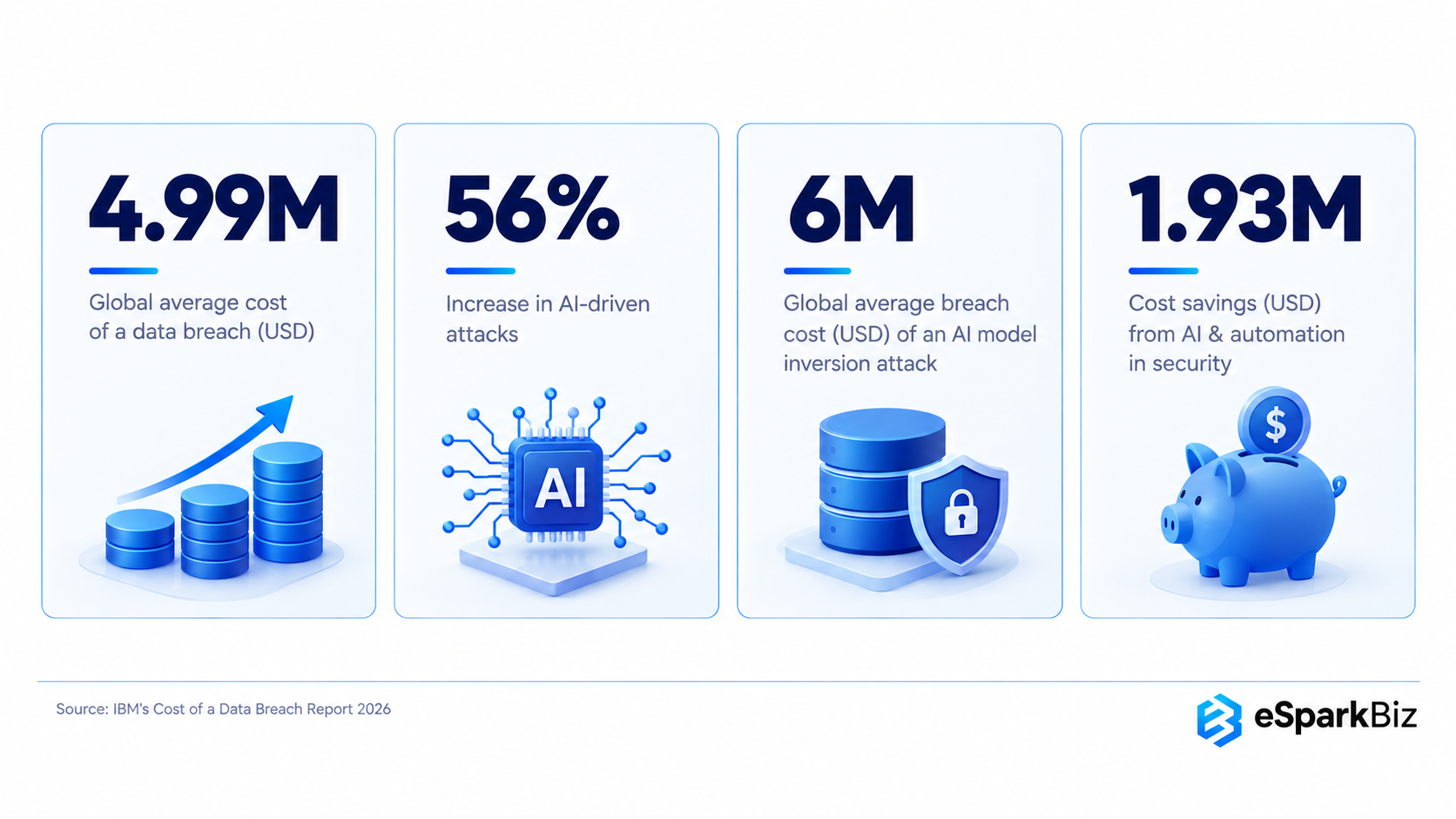
The average cost of a data breach increased by 12% to USD 4.99 million in IBM’s 2026 report. The report also found that AI-enabled malicious breaches increased by 56% compared with the previous year. In order to prevent such scenarios, this article provides examples of the types of due diligence that should be performed with the Checklist for AI Software Development vendors and the criteria used to assess those vendors.
Before Checking Technical Skills, Find Out What the Vendor has actually Delivered
Start by discussing the details of the deliverables and who they were given to. Look into what happened after the deliverables were provided.
- Relevant AI experience: Look into similar projects or cases in terms of complexity or industry.
- Client references: Assess delivery, communication and post implementation support.
- Public reputation: Analyze independent feedback and how the company responds to criticism.
- Business credentials: Confirm certifications, legal registration and geographical presence.
- Past project failures: Ask what went wrong and what process changes were made.
- Production proof: Ask to see live deployments, with usage, uptime and retraining history, not staged demos.
- Financial stability: Check client concentration, funding or profitability and team retention, so the vendor can support you for the full contract term.
Vendor Trust Matters
According to Gartner, only 19% of organizations believe their vendors adequately manage the risks associated with Hallucinatory AI, highlighting the importance for careful evaluation.
How to Vet an AI Development Company for Models, MLOps and Production Readiness
Technical fit means the team can explain the outcomes and risks of the AI it builds, and what happens after launch.
- ML, NLP, Computer Vision or reinforcement learning expertise relevant to the proposed use case
- Production models delivered and maintained by the team
- SHAP/LIME or similar tools to interpret model decisions
- MLOps and practices to track and improve model performance and version control
- Process to evaluate and take steps to mitigate algorithmic bias
Enterprise AI Security in Practice
AI vendor evaluation can also consider how AI systems make autonomous decisions. This Cloud Security Alliance video explains layered controls, monitoring and security for AI agents.
AI Vendor Due Diligence Checklist: Security, Privacy and Compliance
There are significant security and data compliance risks associated with AI. Gaps in security and data compliance quickly shift an AI investment into a significant business liability.
| Control | What to verify | Proof to request |
| SOC 2 Type II | Independent audit of security, availability, and confidentiality | Current report, audit period, and listed exceptions |
| ISO/IEC 27001 | Information security management system | Certificate and confirmation that its scope covers the team working on your project |
| GDPR and CCPA | Data handling, retention, and subject-request processes | Data processing agreement (DPA) and subprocessor list |
| EU AI Act | Risk class of your use case and resulting obligations | Written risk assessment for your use case |
| NIST AI RMF and ISO/IEC 42001 | AI risk governance and management system | Framework mapping or certificate, where relevant |
| OWASP guidance | Secure coding and application security | Penetration-test summary and secure development policy |
| Encryption | Data in transit and at rest, including key management | Architecture document |
| PHI handling | Where protected health information is stored, who can access it, and whether it leaves your environment | Data-flow diagram and access policy |
| Training on your data | Whether your data is used to train shared models | Written contract clause and model provider terms |
| Audit logs | Whether prompts, outputs, and access are logged, including retention periods | Sample log and retention policy |
AI Before Data
“There’s no question we are in an AI and data revolution, which means that we’re in a customer revolution and a business revolution. But it’s not as simple as taking all of your data and training a model with it.”
Clara Shih, Former CEO, Salesforce AI
How a Software Engineering Vendor Checklist Tests AI Integration Fit
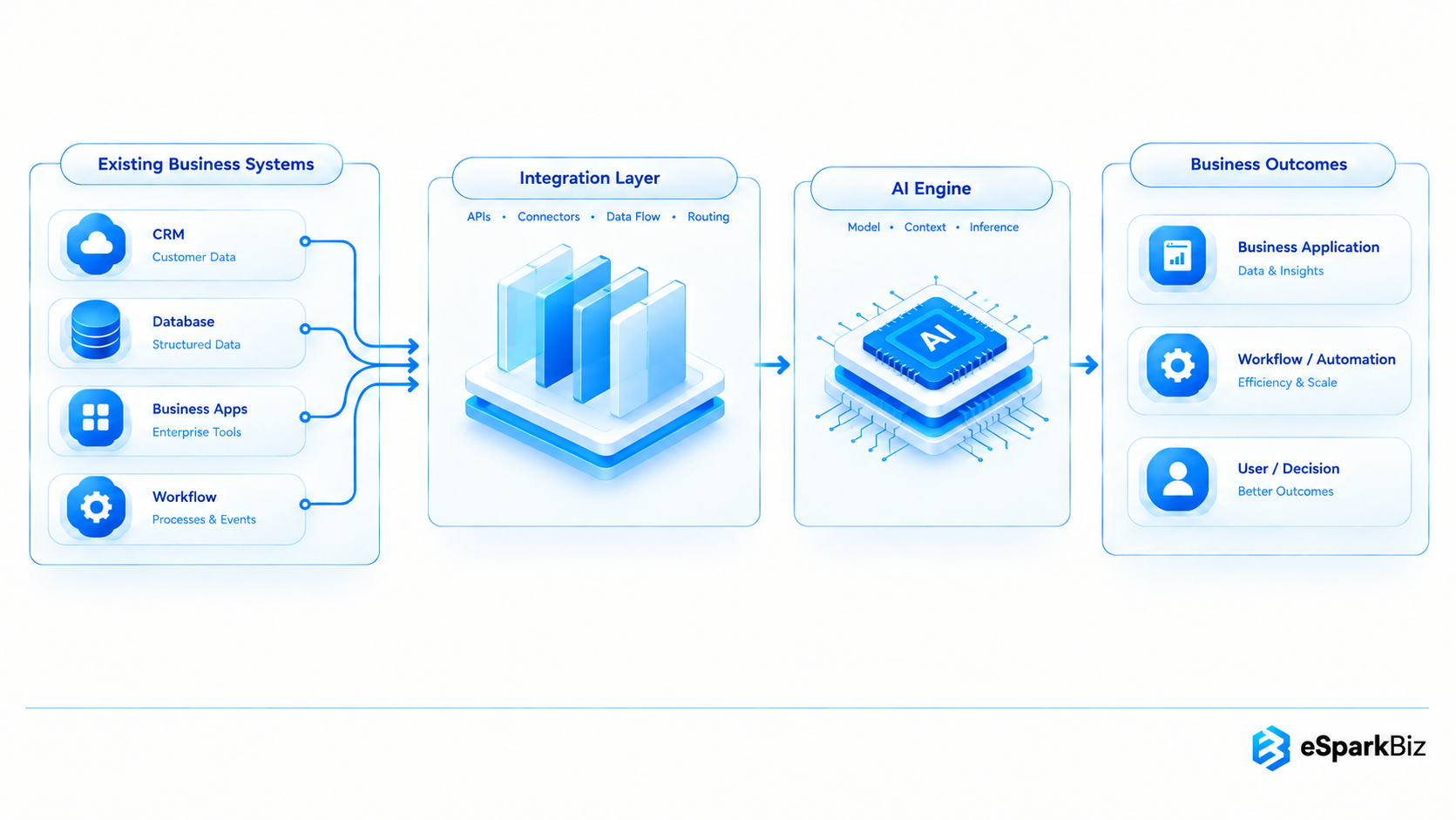
An overreliance on AI can negatively impact a business. However, if a particular AI system is integrated into a business, it can provide a significant advantage over the competition.
- Integration: Check if the AI system can be integrated with the existing applications, databases and workflows.
- API Integration: Check if the AI system can be integrated with other systems and services via APIs.
- Implementation: Check if the AI system is available in the implementation mode of choice.
- Flexibility: Check if the AI system can be updated and/or integrated with other systems to accommodate changes.
Q: How can I test a vendor’s technical approach before committing to the full project?
A: A Proof of Concept (PoC) offers a way to test technical feasibility, key assumptions and delivery risks before committing to the full project.
Production Readiness Shows Whether an AI Vendor Is Ready for Real Work
During a vendor demonstration, one of the most important elements to assess is the team’s ability to work with data and code to address business challenges. Before investing with an AI vendor, you must assess how the team addresses constraints and risks.
A paid discovery sprint is one way to assess the team. The sponsoring organization must provide representative data as well as rules and observe how the vendor team hypothesizes and validates risks, proactively documenting and managing assumptions.
What a Discovery Sprint Reveals about the Vendor
A mid sized retailer in the U.S. engaged with an AI vendor for a two week discovery sprint to identify issues and improve business processes prior to making a larger financial commitment. The process helped the retailer assess the quality of the AI vendor’s data and determine if it was production ready.
This insight is relevant in AI vendor evaluation as the team identified a potential risk factor prior to committing.
Thus, the difference is: A proof of concept evaluates the technical concept, but a discovery sprint can also assess the vendor’s judgment, process and ability to deliver in a real world context.
Production Readiness Shows Whether an AI Vendor Is Ready for Real Work
A successful demo does not prove an AI solution is ready for production. Before choosing a vendor, assess how its team handles real data, technical constraints and delivery risks. Review how the team addresses software development challenges and look for evidence beyond a polished presentation.
A paid discovery sprint helps you evaluate the team before committing to a full development project. Give the vendor representative data, business rules and clear success criteria. Then assess how it checks data quality, tests feasibility, identifies risks and explains the trade-offs behind its recommendations.
What a Discovery Sprint Reveals About the Vendor
eSparkBiz’s work on an enterprise AI governance platform shows the kinds of challenges that matter once an AI system moves beyond a demo. Over a seven-month product engineering engagement, the team brought prompt lifecycle management, audit logging, deployment controls and AI budget management into one platform.
Reported results included an 85% reduction in compliance audit preparation time, 99.9% production application stability and a 60% drop in runaway LLM API expenses.
These results are not outcomes from a discovery sprint. They illustrate why production readiness requires more than a working model. Governance, audit trails, deployment safeguards and cost controls must be considered as part of the solution.
A discovery sprint can help establish whether a vendor has the right approach before the larger investment begins.
| Week | What happens | What you receive |
| 1 | Define the problem, review data access, agree on success measures and identify risks | Agreed scope and documented assumptions |
| 2 | Assess data quality, test feasibility using a representative sample and compare architecture options | Data-quality findings, risk register and architecture recommendation |
| 3, if needed | Estimate implementation effort and plan deployment and MLOps requirements | Delivery roadmap, budget range and go/no-go recommendation |
If the project is viable, the findings can inform the statement of work and delivery plan. If it is not, you have documented reasons to reconsider before committing to the full build. Our AI development team can discuss the requirements for your project.
A proof of concept tests whether an idea works technically. A discovery sprint goes further by assessing the problem, delivery risks, implementation options and the vendor’s approach before you commit to the larger project.
Governance is Scaling
The AI governance market is projected to reach USD 3.59 billion by 2033, illustrating a growing commitment to control and manage AI.
Choosing an AI Development Vendor: In-House Team or External Vendor?
The decision is not only about the budget. It also involves the urgency of the business need, the expertise the team already has and the delivery responsibilities the business can manage internally.
| Factor | In-house AI Team | AI Development Partner |
| Cost | Higher upfront hiring and retention costs | Cost spread across the engagement |
| Speed | Hiring and team setup can take time | Existing specialists can start sooner |
| Specialized talent | Requires recruiting and retaining niche skills | Access to relevant specialists as needed |
| Delivery risk | Managed entirely within the organization | Some delivery responsibility is shared with the partner |
| Control | Direct control over team and priorities | Requires clear governance and communication |
| Working hours | Follows your team’s regular working schedule | Agree on a minimum working-hours overlap with your time zone in the contract |
Q: How do I choose an AI development company for my business?
A: Compare expertise, communication, engagement model and support when choosing an AI development partner.
AI Vendor Evaluation Checklist: What should the Contract Protect?
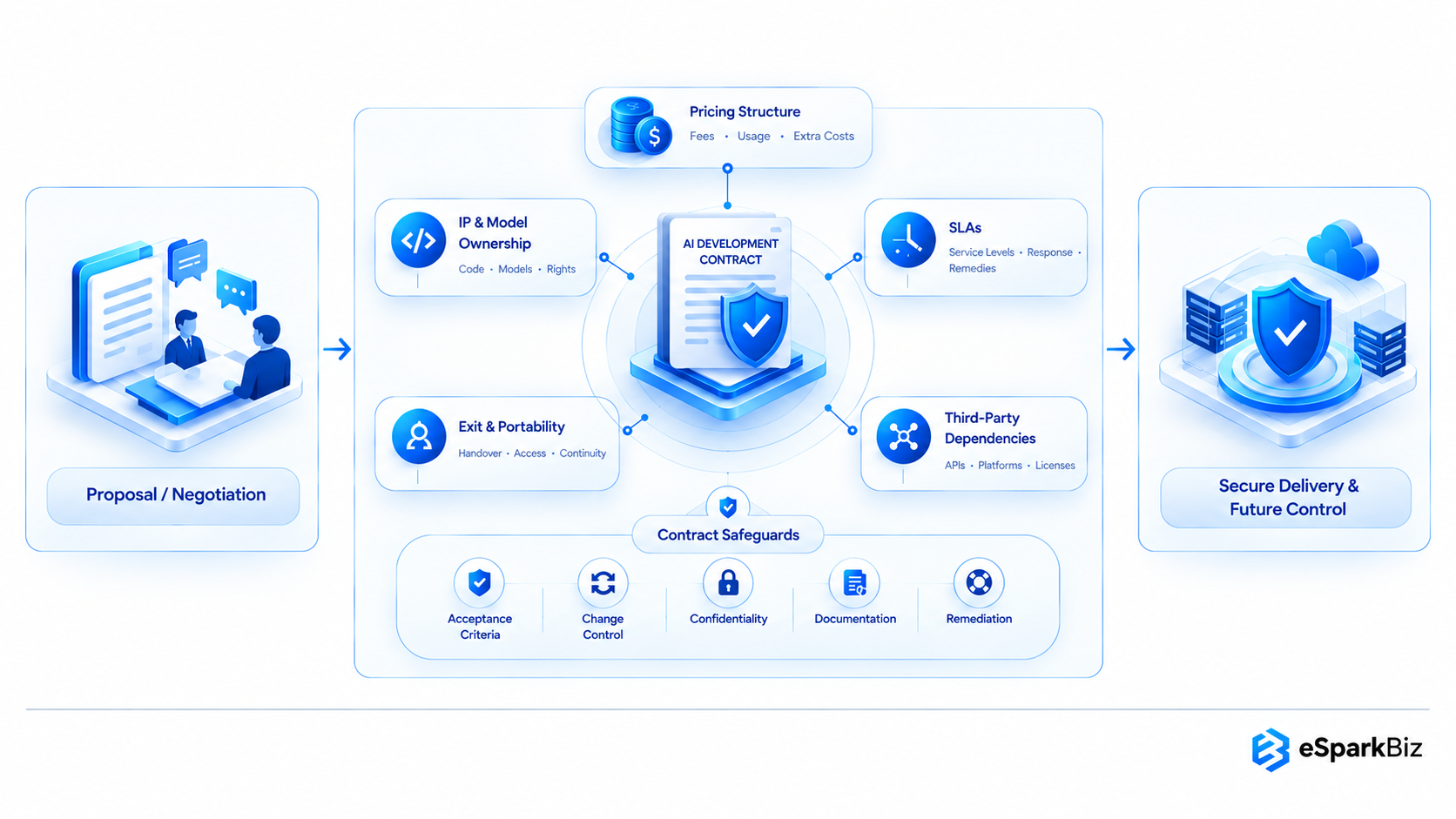
The proposal price represents only one factor. Ownership of IP, type and extent of support, pricing mechanisms and other flexible terms affect the overall cost and risk of developing the solution.
| Term | What to Confirm |
| Pricing structure | Is pricing modular? Are there time-based restrictions? What generates additional costs? |
| IP and model ownership | Who owns the intellectual property? What are the terms for project code, data and other property? |
| SLAs | Uptime target, response and resolution times by severity, support hours, escalation path and credits for missed targets |
| Exit and portability | What are the terms for leaving the vendor? What will the vendor provide to facilitate the transition? |
| Third-party dependencies | Which APIs, platforms or vendor-owned components could affect future use? |
| Support and maintenance | Who handles monitoring, retraining and incident response after launch, and at what cost? |
Typical AI Development Costs by Project Stage
Ask every vendor to price build, MLOps and support separately, so a low build quote does not hide the cost of running the system.
| Stage | Typical duration | Indicative budget | Should deliver |
| Discovery sprint | 1–3 weeks | USD $3,000–$30,000 | Risk log, feasibility findings and go/no-go recommendation |
| Proof of concept | 3–8 weeks | USD $10,000–$75,000 | Working prototype tested on representative data |
| MVP | 6 weeks–4 months | USD $25,000–$150,000 | Usable product for an initial user group |
| Production AI application | 4–8 months | USD $120,000–$500,000+ | Integrated, monitored system with security controls and deployment safeguards |
| MLOps and support | Ongoing | USD $1,000–$25,000+ per month | Monitoring, model updates, cost management and incident response |
Ranges move with data readiness, integrations and compliance scope. Model usage, cloud infrastructure, third-party licences and ongoing maintenance may add to the initial build cost. Ask vendors to itemize these expenses and define what ongoing support includes. For a closer look at contract structures and hidden charges, see IT outsourcing pricing models.
Reddit Insight: Risks Vendors don’t talk about
A discussion on r/SaaS adds a practical angle to AI vendor vetting: one should always ask about model updates, data ownership, predictability of costs, security and how easily one can exit the partnership, prior to making an investment.
Red Flags to Watch Before Choosing an AI Development Partner
Keep an eye out for certain warning signs before proceeding with the evaluation.
- Model Choices: The development partner is unable to explain why a model fits the use case.
- Ownership: There is no clarity on who owns the code, model or data.
- Operation: There is no focus on controlling and protecting the model during operation.
- Risks: Talking about negative implications of their work is difficult.
- Pricing: Costs are too low. Understand what is not included and what level of support will be provided.
Good AI vendor selection criteria recognize these tradeoffs rather than selecting the vendor with the best price or presentation.
Selection mistakes buyers repeat:
- Choosing on the demo.
- Skipping reference calls.
- Settling IP and exit terms after selection.
- Scoring on impressions instead of evidence.
- Skipping a paid discovery sprint.
How to Score the Vendor Vetting Checklist for AI Software Development
A weighted scorecard aids in structuring decisions and choices before investment. Score each category from 1 to 5, multiply the score by its weight and compare the weighted totals.
| Sr. No. | Category | Weight | Score (1-5) |
| 1 | Technical capability and MLOps | 25% | |
| 2 | Data security and compliance | 25% | |
| 3 | Production track record | 20% | |
| 4 | Pricing and IP terms | 15% | |
| 5 | Integration fit | 15% |
An AI vendor scoring well with respect to the weighted scorecard still requires further analysis if a critical criterion scores poorly. This AI vendor evaluation checklist works best when every score is supported by evidence.
Frequently Asked Questions
We’re comparing AI vendors. What should we check before choosing one?
Evaluate technical capability, security, compliance, integration, pricing, IP ownership, delivery processes, references and proven experience taking AI solutions into production.
How do I know if a vendor demo reflects real production capability?
Request a live production example rather than a curated demo. A brief paid discovery sprint is a far more reliable evaluation of real delivery capability than an impressive presentation.
A vendor says they’re “secure and compliant.” What should we verify?
Ask for a current SOC 2 Type II report, the scope of the ISO/IEC 27001 certificate, a data processing agreement and a recent penetration-test summary. Full list in the security table above.
How long should a proper AI vendor evaluation take?
- Initial screening: About 1 week for vendor review and references
- Technical/security review: 1-2 weeks
- Discovery sprint: 2-3 weeks
- Overall: Typically 3-6 weeks, though procurement or legal reviews may extend the timeline
What is a red flag when choosing an AI development partner?
- Vague model, code or data ownership
- No bias testing or post launch monitoring
- Pricing changes near signing
- Reluctance to provide references
Who owns the model and code after an AI project ends?
| Scenario | Typical Ownership |
| Custom build, standard contract | Client owns the trained model and code |
| Vendor platform, licensed use | Vendor retains core IP, client licenses access |
| Open source base, custom tuning | Shared, confirm specifics in writing |
We already have a software vendor checklist. Do we need one for AI?
Yes, vetting AI solutions involves considering governance, transparency and control of biases and risks not typically associated with traditional software development.
Which AI software development companies can buyers consider when evaluating potential partners?
Platforms such as Clutch and DesignRush can support vendor discovery and shortlisting while companies including eSparkBiz, SumatoSoft, Scopic and SoftKraft provide AI and Software Development Services.


 August 17, 2026