

Your technology roadmap may look clear on paper but making it happen takes the right people. In 2026 businesses are under growing pressure to adopt AI, update software and improve cybersecurity while also finding the right talent to support these efforts.
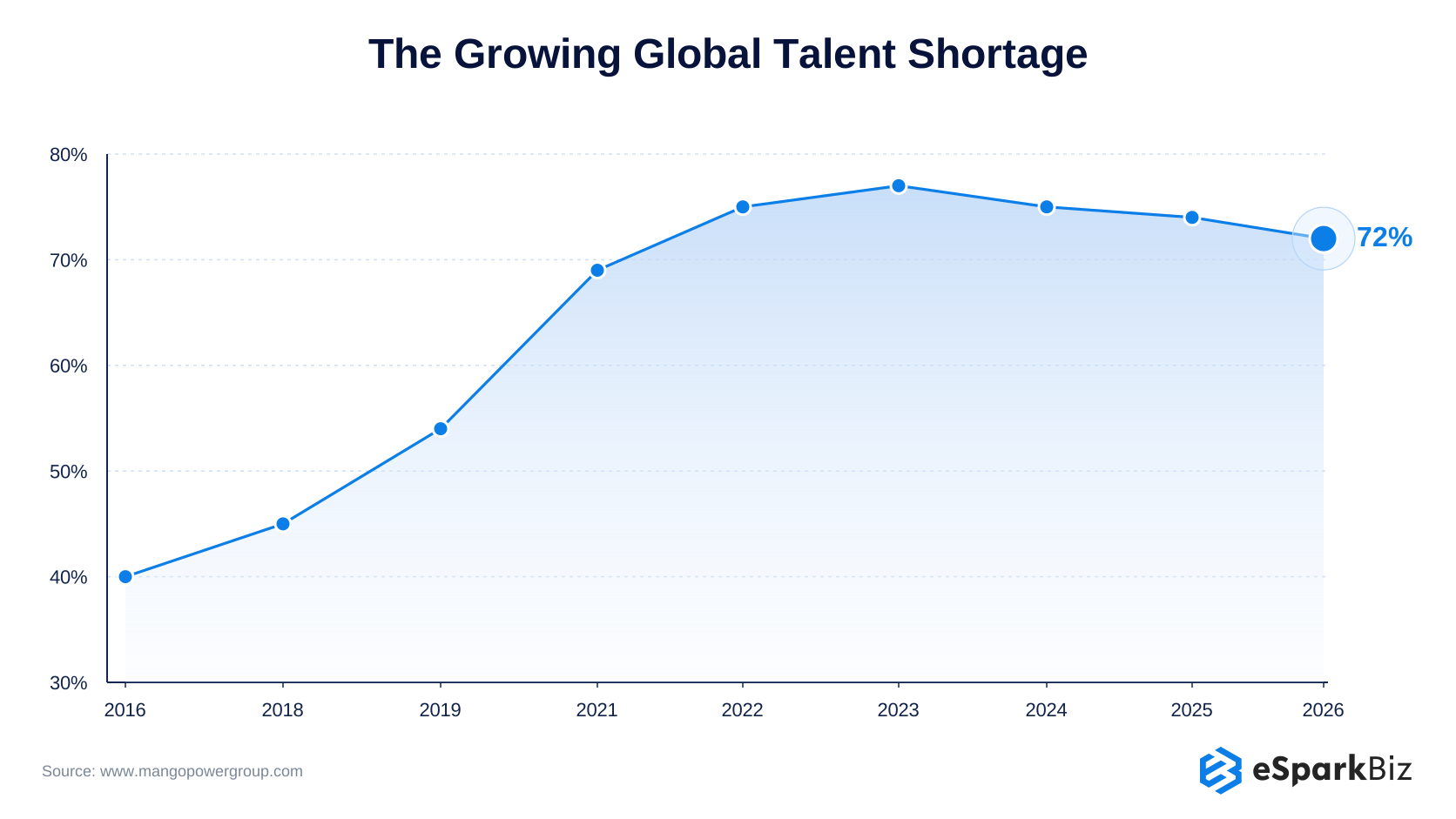
The talent challenge is real. ManpowerGroup’s 2026 Talent Shortage Survey found that 72% of 39,063 employers across 41 countries have difficulty filling roles with AI Model & Application Development ranking as the hardest skill to find globally.
For technology leaders, the question is, how do you build the skills your roadmap needs without letting talent shortages slow you down? One option is to consider IT staff augmentation. The following sections explain its key benefits and how it fits into your workforce strategy.
What Is IT Staff Augmentation?
IT Staff Augmentation is a workforce model where external IT professionals join your existing team and work under your companys direction, priorities and workflows. It gives businesses additional technical talent without adding permanent employees.
Your company manages their tasks and day to day work while they contribute alongside your in-house team. Unlike outsourcing, staff augmentation keeps direct project control with your business.
Common Types of IT Staff Augmentation:
- Short Term: Temporary support for certain projects or emergency needs.
- Long Term: Continuous technical support for ongoing needs.
- Onshore: Experts that work within the same country as your company.
- Nearshore: Expert services from a nearby country or region.
- Offshore: Technicians working from a distant country or region.
- Specialized: Experts hired to provide specific skills, like AI, cloud, DevOps or cybersecurity.
IT Staff Augmentation vs. Agency Hiring
Agency contractors can also work under your company’s direction, so the difference depends on the engagement model and agreement terms. When comparing providers, check who screens candidates, verifies technical skills, manages replacements, and covers replacement fees. These responsibilities and timelines should be clearly defined in the agreement.
10 Benefits that make IT Staff Augmentation a Smart Choice
What does IT Staff Augmentation offer to your business? It does more than fill open roles. It helps you add the skills you need faster, manage your team size and keep important technology work moving.
1. Fill Critical IT Roles Faster
A critical developer or specialist role can become a bottleneck when your project is already underway. Staff Augmentation gives you another way to add qualified professionals without waiting through the entire permanent hiring process.
Some providers report onboarding professionals within days, although actual timelines depend on the role, availability, location, and project requirements.
2. Move Projects from Plan to Launch Faster
Adding talent quickly is only useful if that talent can contribute to the work.
Experienced augmented professionals can join your existing tools, meetings, codebase, and development process. With less recruitment related ramp up, your team can spend more time building and less time waiting for the right capability to arrive.
To help augmented developers ship code within their first two weeks, provide repository access and project documentation upfront. Arrange a codebase walkthrough, assign a small first ticket, pair on the initial code review, and schedule a demo to review progress and resolve blockers.
3. Control IT Hiring Costs
Hiring a full time IT professional costs more than salary alone. Recruiting, benefits, payroll, equipment, and other employment expenses add to the total cost of permanent headcount.
The U.S. Bureau of Labor Statistics reported that private industry employers spent $46.89 per hour on total employee compensation in June 2026 including $14.07 per hour on benefits.
Compared with a full-time US hire, IT staff augmentation costs depend on the developer’s experience, location, and provider rates. Compare monthly engagement fees with total employee compensation, including benefits, to estimate potential savings. Actual costs vary by role and contract terms.
Staff Augmentation can give you more control over technology spending by helping you:
- Pay for technical capacity when you need it
- Avoid permanent headcount for temporary requirements
- Adjust external resources as project needs change
- Compare staffing options based on total employment costs
Also Read: How to Cut AI Software Development Costs by 40% Using Staff Augmentation?
4. Bring in Hard to find Technical Skills
Sometimes your team does not need more people; it needs a specific skill.
Staff augmentation can help you add specialists in areas such as:
- AI and Machine Learning
- LLM Fine-tuning
- AWS, Azure, and Google Cloud
- DevSecOps
- Cybersecurity
- Data Engineering
This is especially useful when a project needs skills that are hard to find through local hiring or does not require a permanent position.
Expert Insight: The Technology Skills Gap
“There is a real issue around skills, reskilling and talent.”
– Satya Nadella, Chairman and CEO, Microsoft
5. Adjust Team Size as Projects Change
Technology work rarely stays the same from planning to launch and maintenance. You may need more developers during a major build and fewer after the release.
Staff Augmentation gives you the option to increase or reduce external team capacity as these needs change. This allows you to keep your team size closer to the project needs without making permanent changes to your headcount.
Did you know?
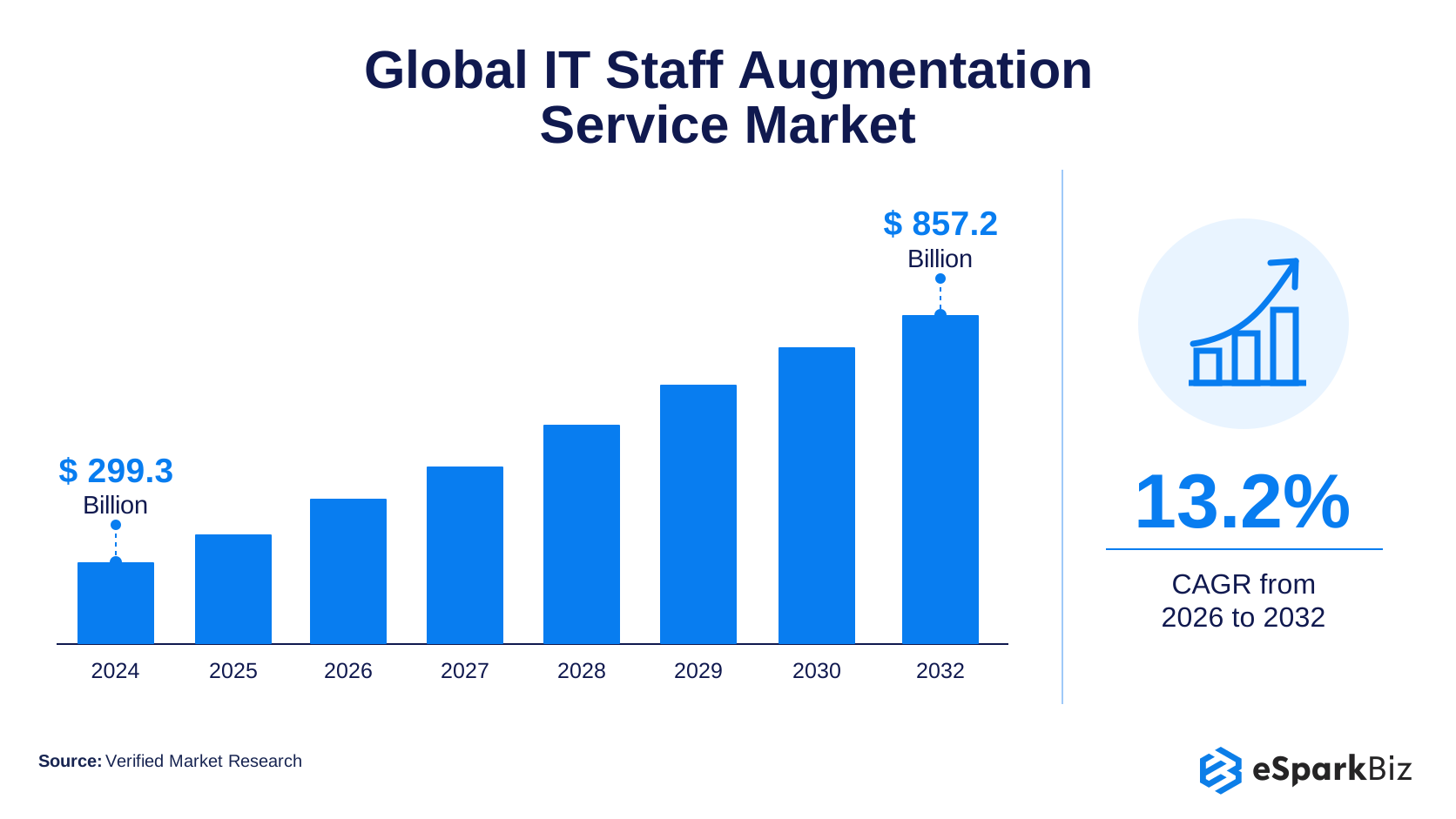
The Global IT Staff Augmentation Service Market is projected to hit USD 857.2 billion by 2033 growing at a 13.2% CAGR as businesses seek flexible access to IT talent.
6. Keep your Team in Control
Staff Augmentation keeps day to day project management with your company. Your managers can assign tasks, set priorities, review code, and make technical decisions while the provider supplies the professionals.
Your company is in charge of the work, and the provider supplies the talent. This is important when comparing staff augmentation with outsourcing because the outsourcing provider usually takes more responsibility for delivery.
7. Reduce the Risk of Permanent Hiring
Not every technology requirement lasts forever. A project can change direction, a technology need can disappear or a specialist may only be required for one phase.
Staff Augmentation gives you more room to evaluate the engagement as the work progresses. You can adjust the team when requirements change instead of immediately committing to permanent headcount.
8. Transfer Knowledge to Your Internal Team
External professionals can contribute more than additional capacity. Experienced engineers can share practical approaches to architecture, testing, code reviews, CI/CD, and development workflows while working alongside your internal team.
That day to day collaboration can help your team build stronger technical practices and retain useful knowledge after the engagement.
Video: How the Skills Gap is Changing the Way Businesses Hire IT Talent
See how changing skill demands are pushing businesses to rethink traditional hiring and talent strategies.
9. Access a Global IT Talent Pool
Your local market may not have enough professionals with the skills or experience your project requires. Staff augmentation can expand your options through onshore, nearshore, and offshore talent models.
A broader talent pool can make specialized roles easier to source. Nearshore teams can also provide closer time zone overlap for regular collaboration, while offshore teams can extend access to professionals across more markets.
10. Give your Core Team more Time to Lead
Your senior engineers and technology leaders should not spend all their time covering capacity gaps.
Additional professionals can handle development, testing, cloud work, or specialized technical tasks while your core team focuses on:
- Product strategy
- System architecture
- Technical leadership
- Business critical decisions
This allows your internal team to spend more time on work that requires its deepest product and business knowledge.
With these benefits clear, the next step is to compare Staff Augmentation with in-house hiring and outsourcing.
When IT Staff Augmentation Fails and How to Fix It
IT staff augmentation may not deliver the expected results when team integration and project expectations are unclear. Three issues can slow progress:
- No clear owner: Assign an internal lead to set priorities, answer questions, and resolve blockers.
- Incomplete onboarding: Provide repository access, project documentation, and a codebase walkthrough before work begins.
- Unclear goals: Define sprint goals, task ownership, deadlines, and acceptance criteria to reduce rework.
Key takeaway: Treat augmented engineers as part of your existing team, with clear responsibilities and shared workflows.
What Reddit says about IT Staff Augmentation
A discussion on Reddit’s r/TechHiringInsights highlights a practical side of IT staff augmentation. It can help businesses fill skill gaps and maintain control but clear communication and disciplined management are important for keeping the collaboration on track.
How eSparkBiz Works With US Engineering Teams
At eSparkBiz, we help US businesses extend their engineering teams with skilled developers while keeping project direction and technical decisions in their hands.
Here’s how we support day-to-day collaboration:
- Faster onboarding: We can onboard engineers within 48–72 hours, depending on the required skills and project needs.
- Time-zone overlap: We offer 4–6 hours of overlap to support real-time communication with US teams.
- Team coordination: We support daily stand-ups, weekly leadership reviews, and sprint reporting to keep work aligned.
- Clear responsibilities: We work within agreed workflows, while clients define priorities, review code, and guide technical decisions.
Before starting, we align on team roles, working hours, communication routines, and delivery expectations.
Staff Augmentation vs. Managed Services vs. Dedicated Team vs. In-House Hiring
Choose the right IT staffing model based on who manages the work, who owns delivery, and whether you need permanent employees.
| Factor | Staff Augmentation | Managed Services | Dedicated Team | In-House Hiring |
| Control | Your team manages daily work. | The provider manages service delivery. | Responsibilities depend on the agreement. | Your company manages employees directly. |
| Cost | Pay for the external professionals you need. | Pay for agreed services or outcomes. | Pay for dedicated team capacity. | Pay salaries, benefits, and hiring costs. |
| Flexibility | Adjust external resources as needs change. | Changes depend on the service contract. | Adjust team capacity under agreed terms. | Hiring changes usually take longer. |
| Best For | Filling skill gaps while retaining project control. | Outsourcing service delivery and accountability. | Ongoing development with a dedicated team. | Building permanent internal capabilities. |
| Choose This When | You need extra skills without adding permanent headcount. | You want a provider to manage delivery outcomes. | You need a stable team for ongoing development. | You need long-term employees within your organization. |
Which Model Fits a Six-Month Product Build With Changing Scope?
Choose staff augmentation if your team wants direct control over developers and flexible staffing. Choose a dedicated development team for ongoing product development, or managed services if you want the provider to manage agreed delivery outcomes.
Key difference: Staff augmentation gives your company day-to-day control without adding permanent headcount. Managed services transfer responsibility for agreed outcomes to a provider. Dedicated teams provide ongoing development capacity under agreed management terms, while in-house hiring builds permanent internal capabilities.
Also Read: In-house Software Development Vs Outsourcing
Common IT Staff Augmentation Mistakes and How to Avoid Them
IT staff augmentation can lose its cost and speed benefits when project expectations, responsibilities, or contract terms are unclear. Avoid these common mistakes to keep your engagement on track.
| Common mistake | How to avoid it |
| Unclear project scope | Define deliverables, deadlines, responsibilities, and acceptance criteria before work begins. |
| No dedicated internal owner | Assign an internal lead to prioritize tasks, answer questions, and resolve blockers. |
| Unclear intellectual property terms | Define code ownership, confidentiality, and intellectual property rights in the agreement. |
| No exit or handover plan | Agree on documentation, knowledge transfer, outstanding tasks, and access revocation before the engagement ends. |
How to Choose a Staff Augmentation Partner
The right partner should be a part of your team not only a service provider. Here’s a quick checklist to consider before signing an agreement:
- Relevant experience: Check the provider’s experience with your industry, technology, and project size.
- Effective vetting: Check how technical skills, experience, communication, and references are reviewed.
- Clear communication: Make sure communication channels, working hours, response times, and escalation processes are clear.
- Security and compliance: Check data security, access controls, confidentiality, IP protection terms, and any applicable compliance requirements.
- Trial engagement: See if you can start with a trial run or limited engagement before moving to a longer one.
Quick Steps to Hire Augmented Developers
- Define your requirements: Identify the roles, technical skills, project scope, and expected duration.
- Review developer profiles: Check candidates’ experience and relevant project work.
- Interview candidates: Assess technical skills, communication, and team fit.
- Plan onboarding: Confirm availability, access, responsibilities, and start dates.
- Set clear goals: Define tasks, deadlines, and acceptance criteria before work begins
Frequently Asked Questions
What is IT Staff Augmentation?
IT Staff Augmentation is a staffing structure where an outside IT professional is added to an existing team and operates under a company's directives, priorities and processes for a defined need or duration.
Is staff augmentation cheaper than hiring full time?
It can be cost efficient if it's a short term solution since you're not paying for some of the long term costs of permanent jobs. Real costs depend on the specific role, the location, the expertise, the time period of engagement and the provider.
How fast can I onboard an augmented developer?
Onboarding can take 3 to 10 days, depending on developer availability, requirements, interviews, project complexity and provider onboarding process.
What’s the difference between staff augmentation and outsourcing?
Staff Augmentation means that you hire the augmented professionals and manage them as part of your staff. In outsourcing, the external vendor generally takes on more responsibility in managing and providing the work.
What industries commonly use IT staff augmentation?
IT staff augmentation can help companies in different industries like:
- Healthcare: Hire developers or data specialists for digital health projects.
- Fintech: Hire experts in financial applications, data, or security.
- Retail: Add technical staff for eCommerce and customer facing platforms.
- Manufacturing: Use technical staff for software, automation, data, and connected device projects.
- SaaS: Bring in engineers when adding to the product or working on new features.
Can startups use IT staff augmentation?
Yes. Startups can hire developers or other technical experts for product development and only hire them for a specific period, rather than hiring permanent engineers. This can be helpful when the technical needs of a product change as it develops.
Can IT staff augmentation work with remote teams?
Yes. The augmented specialists can work remotely with your own team using collaboration and development tools. Teams should have clear communication schedules, access rights, responsibilities, and processes right from the beginning.
What should a staff augmentation agreement include?
To prevent frequent developer changes from disrupting your project, include these terms in your staff augmentation agreement:
- Replacement notice: Require advance notice before replacing a developer.
- Handover overlap: Allow time for outgoing and incoming developers to transfer knowledge.
- Minimum tenure: Agree on a minimum assignment period to reduce frequent team changes.
- Replacement terms: Define replacement timelines, approval rights, and responsibility for handover costs.
Should a SaaS startup hire full-time developers or use IT staff augmentation?
Choose IT staff augmentation if you have limited runway or a short-term project that needs extra developers. Hire full-time when your roadmap is stable and you can support ongoing salaries and benefits. Before adding two remote developers, ensure your senior engineer has enough time to review code and mentor them. If not, start with one developer.
How does eSparkBiz coordinate with US engineering teams?
We align working-hour overlap, communication routines, and progress reporting with each client's needs. Before an engagement begins, we confirm the expected overlap hours, meeting schedule, and reporting cadence so both teams understand how day-to-day collaboration will work.


 August 14, 2026